February 2015 in “American journal of medical and biological research” Balding hair follicles have less growth-promoting factors and more inhibitory factors, leading to hair loss.
 7 citations
,
January 2017 in “Biological & Pharmaceutical Bulletin”
7 citations
,
January 2017 in “Biological & Pharmaceutical Bulletin” Certain compounds from Panax ginseng can block proteins that affect hair growth, potentially helping treat hair loss.
July 2025 in “International Journal of Trichology” Biological factors are crucial for developing new hair restoration treatments.
 March 2018 in “Suez Canal University Medical Journal”
 New drugs targeting the JAK-STAT pathway show promise for treating inflammatory skin diseases.
 21 citations
,
April 2018 in “Journal of Dermatological Science”
21 citations
,
April 2018 in “Journal of Dermatological Science” Cilostazol helps hair grow by making hair root cells grow faster and changing growth factor levels.
1 citations
,
January 2020 in “Seoul National University Open Repository (Seoul National University)” PDE3 inhibitor may help treat hair loss by promoting hair growth.
 July 2026 in “Zenodo (CERN European Organization for Nuclear Research)”
 JAK inhibitors may help treat alopecia areata by restoring hair growth.
 July 2026 in “Zenodo (CERN European Organization for Nuclear Research)”
 JAK inhibitors may help treat alopecia areata by restoring hair growth.
 September 2023 in “JAAD case reports”
 A man developed oral hairy leukoplakia while on baricitinib, a medication for alopecia and arthritis, and doctors should watch for such side effects.
 April 2019 in “The journal of investigative dermatology/Journal of investigative dermatology”
 HDAC inhibitors, like Vorinostat and Entinostat, can help regrow hair in alopecia areata.
39 citations
,
March 2009 in “Dermatology Online Journal” Understanding EGFR roles could lead to new hair loss treatments.
March 2009 in “Dermatology Online Journal” Manipulating EGFR signaling may help treat hair loss and promote hair growth.
 August 1994 in “Journal of dermatological science”
 Different substances affect hair and skin cell growth in various ways.
97 citations
,
June 2013 in “Journal of Dermatological Science” Understanding EGFR's role in skin is crucial for better treatments and managing side effects.
 29 citations
,
September 2017 in “Oncology and therapy”
29 citations
,
September 2017 in “Oncology and therapy” The document provides advice on how to recognize and treat skin-related side effects of cancer drugs known as EGFR inhibitors.
 18 citations
,
July 2008 in “Current Oncology Reports”
18 citations
,
July 2008 in “Current Oncology Reports” EGFR cancer drugs often cause a rash, which can lead to distress and isolation, but may also improve outcomes for some cancer patients. Current treatments for the rash are limited, but a compound called menadione shows promise.
3 citations
,
May 2019 in “Journal of Cosmetic Dermatology” Pro-Ile could be used in cosmetics to improve skin, hair growth, and healing.
 3 citations
,
January 2011 in “Annals of Dermatology”
3 citations
,
January 2011 in “Annals of Dermatology” Blocking EGFR in skin cells doesn't majorly increase inflammation markers.
 1 citations
,
July 2016 in “Livestock science”
1 citations
,
July 2016 in “Livestock science” Nerve growth factor helps cashmere goat hair cells grow and is more active during the hair growth phase.
1 citations
,
December 2014 in “Journal of the Society of Cosmetic Scientists of Korea” CRF can cause hair loss, but blocking its receptors might prevent this.
 April 2026 in “International Journal of Clinical Oncology”
 Combining immune checkpoint inhibitors with other cancer therapies increases skin side effects in Asian patients.
 April 2026 in “Dermatology and Therapy”
 TNFα inhibitors are effective and well-tolerated for treating severe scalp cellulitis.
March 2025 in “Journal of Clinical Medicine” Iron chelators can effectively reduce hair loss and improve hair growth in autoimmune alopecia.
 October 2021 in “Book Publisher International (a part of SCIENCEDOMAIN International)”
 Antioxidants and growth factors may help treat hair loss when combined with LED and Laser therapy.
 April 2018 in “The journal of investigative dermatology/Journal of investigative dermatology”
 Androgens increase growth factors in skin cells, which may lead to acne.
36 citations
,
January 2012 in “Dermatology” Stopping gefitinib improved scalp condition in a woman with lung cancer.
 32 citations
,
June 2012 in “PLoS ONE”
32 citations
,
June 2012 in “PLoS ONE” Blocking IL-8 can reduce skin rashes from cancer treatment.
 20 citations
,
July 2013 in “PLoS ONE”
20 citations
,
July 2013 in “PLoS ONE” Targeting EGFR may help reduce hair loss from chemotherapy.
7 citations
,
January 2017 in “Dermatology Online Journal” TNF-inhibitor induced alopecia can be treated effectively with different therapies.
 4 citations
,
March 2012 in “Annals of oncology”
4 citations
,
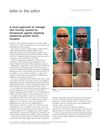
March 2012 in “Annals of oncology” New treatment with green tea polyphenols and nicotinamide improves skin problems from cancer therapy.