
Plum-blossom needle tapping with ginger juice rubbing may help prevent hair loss after bariatric surgery.
 May 2026 in “Physical review. D/Physical review. D.”
 Soft hair on black holes affects their images, but detecting this is difficult with current technology.
 May 2026 in “Clinical Cosmetic and Investigational Dermatology”
 White hair can make the scalp look more visible, which may be mistaken for hair loss.
 January 2026 in “Theoretical and Natural Science”
 Targeting Lgr5+ stem cells and Wnt signaling may effectively treat hair loss.
 January 2026 in “Communications Biology”
 Yak hair follicles adapt to cold through specific gene regulation, enhancing cell growth.
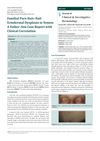 January 2026 in “Journal of Clinical and Investigative Dermatology”
 A father and son in Yemen have a genetic condition causing hair loss and nail problems.
 November 2025 in “Communications Biology”
 Human hair contains many different molecules that change along its length, influenced by personal care products.
 September 2025 in “Journal of Dermatology Research Reviews & Reports”
 Rigenera® effectively improves hair condition in Androgenetic Alopecia, and HairMetrix® tracks progress well.
 February 2025 in “Plastic and Aesthetic Research”
 Minoxidil and finasteride effectively promote hair regrowth within 3 months.

Polarized microscopy helps identify hair irregularities in genetic disorders.
 July 2024 in “Dermatology and Therapy”
 Darker hair colors may increase the risk of alopecia areata, while lighter hair colors may decrease it.
 June 2024 in “International Journal of Pharmaceutical Research and Applications”
 Polyherbal hair serum can hydrate the scalp and promote hair growth safely.
 May 2024 in “bioRxiv (Cold Spring Harbor Laboratory)”
 KAP-depleted hair causes less immune response and is more biocompatible for implants.
 January 2024 in “Seven Editora eBooks”
 Different techniques measure hair properties to ensure cosmetic products work.
The herbal hair dye using Platycladus orientalis effectively prevents hair loss, covers gray, and is gentle and safe for all ages.
 January 2024 in “International Journal of Herbal Medicine”
 Melanin is important for hair color, health, and UV protection.
 December 2023 in “International Journal of Medical Arts”
 Transplanted hair follicles show significant changes after FUE, needing more research.
 September 2023 in “Asian journal of beauty & cosmetology”
 Lipids are important for healthy hair, but their exact role is not fully understood and needs more research.
A new system for classifying curly hair types using precise measurements can improve hair care products and cultural inclusion.
 December 2022 in “Kristu Jayanti Journal of Core and Applied Biology (KJCAB)”
 Scalp hair characteristics vary across different regions of India and can help identify a person's origin.
 January 2022 in “Acta dermatovenerologica Alpina, Pannonica et Adriatica (Tiskana izd.)”
 Uncombable hair syndrome causes frizzy hair and can affect the nervous system, eyes, and ears, often co-occurring with other hair, skin, nail, and teeth conditions, and is linked to three specific gene mutations.
 December 2021 in “Molecular genetics and genomics”
 Cats with abnormal hair had DSG4 gene changes causing hair problems.
 January 2021 in “bioRxiv (Cold Spring Harbor Laboratory)”
 Mothers have more hair proteins than their children, with age-related differences in protein patterns, and some proteins in hair could indicate early childhood development.
 November 2019 in “Harper's Textbook of Pediatric Dermatology”
 Understanding normal hair growth and loss in children is key to diagnosing and treating hair disorders.
 November 2018 in “Springer eBooks”
 The document concludes that specialized hair transplant techniques can be effective, with varying success rates depending on the donor area and patient factors.
 September 2018 in “Cosmetics”
 Inositol and arginine solutions improve hair follicle health and turnover.
 April 2018 in “bioRxiv (Cold Spring Harbor Laboratory)”
 A gene variant causes patched hair loss in mice, similar to alopecia areata in humans.
 January 2017 in “Clinical approaches and procedures in cosmetic dermatology”
 Cosmetic procedures can harm hair, but damage can be minimized with knowledge and care; however, once hair is damaged, it cannot be reliably repaired.
Forensic hair analysis for drugs is now more reliable and accurate.

Keratin hydrogels from human hair show promise for tissue engineering and regenerative medicine.