August 2019 in “Carolina Digital Repository (University of North Carolina at Chapel Hill)” DHT enhances androgen receptor activity more than testosterone, and MAGE-11 influences this activity through specific interactions.
3 citations
,
January 2024 in “Frontiers in Endocrinology” Androgens can affect glucocorticoid signaling in specific mouse brain areas.
 3 citations
,
December 2000 in “International Journal of Cosmetic Science”
3 citations
,
December 2000 in “International Journal of Cosmetic Science” The study created a new method to test drugs that affect hormone processing in skin.
65 citations
,
April 2018 in “Oncotarget” Anabolic androgenic steroids can increase cancer risk and disrupt hormones.
 April 2010 in “The Journal of Urology”
 The research found that androgens help control blood flow in the rat prostate through a specific binding site.
December 2016 in “University of Birmingham Institutional Research Archive (University of Birmingham)” Glucocorticoids reduce fat production in liver cells, while androgens increase it in females; manipulating certain enzymes can influence these effects.
 1 citations
,
January 2022 in “BMC Genomic Data”
1 citations
,
January 2022 in “BMC Genomic Data” The study found that androgen receptors in skin cells mainly affect the focal adhesion pathway and control the caveolin-1 gene, with implications for new treatments for related diseases.
 11 citations
,
November 1982 in “British journal of dermatology/British journal of dermatology, Supplement”
11 citations
,
November 1982 in “British journal of dermatology/British journal of dermatology, Supplement” Testosterone and some of its forms can strongly stimulate oil gland growth in skin.
 November 2022 in “Scientific Data”
 The research identified genes and non-coding RNAs in cells that could be affected by testosterone, which may help understand hair loss and prostate cancer.
309 citations
,
June 2001 in “Molecular and Cellular Endocrinology” Mutations in the androgen receptor gene cause androgen insensitivity, leading to female traits in genetically male individuals.
 3 citations
,
January 2008 in “Endocrine journal”
3 citations
,
January 2008 in “Endocrine journal” A new mutation linked to partial Androgen Insensitivity Syndrome and prostate cancer was found in a patient unhappy with their female gender assignment.
89 citations
,
August 2013 in “PloS one” Androgen receptors are active in many tissues of both male and female mice, not just reproductive organs.
 93 citations
,
February 2009 in “Annals of the New York Academy of Sciences”
93 citations
,
February 2009 in “Annals of the New York Academy of Sciences” 5α‐reductase isozymes are crucial for prostate development and health, and targeting them can help prevent and treat prostate issues.
17 citations
,
February 2014 in “Pediatric Research”  April 2018 in “The journal of investigative dermatology/Journal of investigative dermatology”
 Androgens increase growth factors in skin cells, which may lead to acne.
Androgens increase norepinephrine release, promoting smooth muscle growth in male sex organs, which may contribute to benign prostatic hypertrophy.
 April 2019 in “Journal of Investigative Dermatology”
 Testosterone affects androgen receptors and lipid storage in cells, while DHEA does not convert to testosterone or affect these receptors in the same way.
25 citations
,
November 2005 in “PubMed” Finasteride changes androgen receptor location in rat epididymis without altering tissue structure.
209 citations
,
March 1998 in “Biochemical and biophysical research communications” Scientists found new nonsteroidal compounds that can act like natural male hormones and might help treat male fertility and hormone issues.
55 citations
,
June 2012 in “Steroids” Testosterone affects vascular cells directly without converting to estradiol.
 19 citations
,
October 2017 in “The FASEB Journal”
19 citations
,
October 2017 in “The FASEB Journal” Male hormones cause different growth in identical human hair follicles due to their unique epigenetic characteristics.
22 citations
,
December 1991 in “PubMed”  66 citations
,
January 2001 in “Vitamins and hormones”
66 citations
,
January 2001 in “Vitamins and hormones” Androgen receptors are key for development and health, affecting conditions like prostate cancer and male pattern baldness.
38 citations
,
May 1971 in “Clinical genetics” A specific metabolite, not a receptor protein, triggers the production of certain kidney enzymes, but this process is disrupted in mice with a mutation causing testicular feminization.
 1 citations
,
November 2008 in “Acta crystallographica”
1 citations
,
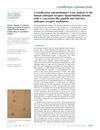
November 2008 in “Acta crystallographica” Scientists successfully created and analyzed the structure of a part of the human androgen receptor with specific modulators and a peptide to understand how it binds differently in various tissues.
 7 citations
,
September 2022 in “Communications biology”
7 citations
,
September 2022 in “Communications biology” Omega-6 fats in certain cells boost male hormone production.
Androgen receptor overexpression can increase prostate cancer cell growth even without hormones.
5 citations
,
January 2024 in “Reproductive Medicine and Biology” Androgen and Wnt signals are crucial for developing and functioning male genitalia and erectile tissues.