 April 2024 in “Journal of wildlife diseases”
 Muskox hair growth rates vary widely, so a single growth rate can't be used for all populations.
 March 2024 in “International journal of pharmaceutical sciences and drug research”
 Androgenetic alopecia is influenced by various factors and can be treated with medications, procedures, and non-drug methods.
 March 2024 in “Asian journal of beauty & cosmetology”
 Derma Genie™-H001 can help prevent hair loss and promote hair growth.
 March 2024 in “Journal of Society of Cosmetic Chemists of Japan”
 The hair tonic with royal jelly extract improved hair growth and scalp health.
 March 2024 in “Research Square (Research Square)”
 Sex steroids affect the MafB gene differently in male and female hamsters.
 February 2024 in “International journal of biology, pharmacy and allied sciences”
 Plant-based treatments can effectively and safely treat hair loss.
 January 2024 in “Archives of dermatological research”
 Both treatments for alopecia areata showed similar modest effectiveness.
 January 2024 in “International Journal of Dermatology Research”
 PRP is more effective than triamcinolone for treating alopecia areata.
 January 2024 in “Institutional Repositories DataBase (IRDB)”
 The method accurately measures steroid hormones in hair to study hormone dynamics related to hair loss.
 January 2024 in “Annals of Dermatology”
 Current treatments for Alopecia Areata don't fully meet patients' needs, indicating a need for better therapies.
 November 2023 in “Research Square (Research Square)”
 Combining calcipotriol and PRP is most effective for treating Alopecia Areata.
 October 2023 in “Dermatology practical & conceptual”
 Pulse corticosteroids help regrow hair in alopecia areata but have side effects, especially betamethasone.
 August 2023 in “Repository of the University of Primorsk (University of Primorska)”
 A Western diet may increase acne risk, while a Mediterranean diet and certain supplements can help reduce it.
 June 2023 in “International Journal of Research in Dermatology”
 Early diagnosis and treatment of alopecia areata in children is crucial to prevent severe progression.
 June 2023 in “Buletin de psihiatrie integrativă”
 Alopecia causes significant emotional distress and psychological issues, requiring combined skin and mental health treatment.
 January 2023 in “Asian Journal of Pediatric Research”
 Trichoscopy is crucial for diagnosing and assessing alopecia areata in children.
 December 2022 in “KSBB Journal”
 Activating TLR3 boosts autophagy gene expression in skin cells.
 September 2022 in “Dermatology and therapy”
 Contact immunotherapy might help treat various skin conditions, but more research is needed to confirm its safety and effectiveness.
 August 2022 in “FAKUMI MEDICAL JOURNAL Jurnal Mahasiswa Kedokteran”
 Dandruff does not significantly affect androgenic alopecia.
 March 2022 in “Nepal Journal of Dermatology Venereology & Leprology”
 Methotrexate with steroids is slightly more effective than azathioprine with steroids for treating severe alopecia areata.
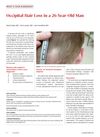 January 2022 in “Consultant”
 The man's occipital hair loss was due to temporal triangular alopecia, not alopecia areata.

Researchers found a genetic link for hereditary hair loss but need more analysis to identify the exact gene.
 April 2021 in “HIV & AIDS Review”
 Glycyrrhizinic acid spray showed limited effectiveness in treating anogenital warts in HIV patients with low CD4 levels.
 April 2021 in “Sohag Medical Journal”
 Alopecia areata is an autoimmune condition causing hair loss, linked to genetic factors and immune system issues, with no cure yet.
Alopecia Areata has no cure, treatments are limited, and the condition often recurs, but new therapies like JAK inhibitors show promise.
 January 2021 in “Online Publication Service of Würzburg University (Würzburg University)”
 Diphenylcyclopropenon treatment for Alopecia areata is effective and safe, improving patients' quality of life.
Encapsulating hair loss drugs in cyclodextrins improves their solubility and reduces scalp irritation.
 November 2020 in “Elsevier eBooks”
 Antiandrogens and androgen inhibitors like spironolactone, finasteride, and dutasteride can treat hair loss and skin conditions, but they have risks and side effects, including potential harm to pregnant women and risks of cancer and heart issues. Herbal remedies also have antiandrogenic effects but lack safety validation.
 August 2020 in “Research Square (Research Square)”
 Neural progenitor cell-derived nanovesicles help hair growth by activating a key signaling pathway.
Low-Level Light Therapy improves quality of life more for women than men with hair loss.