 January 2025 in “Journal of Pharmacognosy and Phytochemistry”
 Plant-based pigments in shampoo offer vibrant colors and scalp benefits, meeting quality standards and providing a natural alternative to synthetic dyes.
 January 2021 in “Journal of clinical and cosmetic dermatology”
 Human skin responds to light with protective mechanisms, but more research is needed to understand these processes and their implications for health and therapy.
4 citations
,
October 2021 in “International Journal of Cosmetic Science” Cirsium japonicum flower extract increases melanin production and could help treat depigmentation conditions.
 32 citations
,
December 2003 in “Planta”
32 citations
,
December 2003 in “Planta” Hypaphorine from a fungus changes the internal structure of Eucalyptus root hairs, stopping their growth.
24 citations
,
June 2012 in “Journal of Feline Medicine and Surgery” Devon Rex cats with skin issues were successfully treated with antifungal medication.
1 citations
,
October 2023 in “Skin Research and Technology” Hair sunscreens were less effective than expected, especially for dark hair.
 108 citations
,
December 2003 in “Lasers in surgery and medicine”
108 citations
,
December 2003 in “Lasers in surgery and medicine” ICG-enhanced NIR laser therapy may be a promising acne treatment with improvement and no side effects.
 11 citations
,
April 2013 in “SpringerPlus”
11 citations
,
April 2013 in “SpringerPlus” Human skin's melanocytes respond to light by changing shape, producing pigments and hormones, which may affect sleep patterns.
![[4-t-Butylphenyl]-N-(4-imidazol-1-yl phenyl)sulfonamide (ISCK03) Inhibits SCF/c-kit Signaling in 501mel Human Melanoma Cells and Abolishes Melanin Production in Mice and Brownish Guinea Pigs](/images/assets/4eb017dc-711d-4926-bcd0-c3b8f48e3a99/small/19974.jpg) 26 citations
,
July 2007 in “Biochemical Pharmacology”
26 citations
,
July 2007 in “Biochemical Pharmacology” ISCK03 stops melanin production in human melanoma cells and lightens skin color in mice and guinea pigs.
27 citations
,
February 2003 in “Cell and Tissue Research” FM dyes effectively stain Merkel cells for long-term observation.
May 2022 in “International Journal of Trichology” February 2026 in “Small Ruminant Research” The IRF2BP2 gene affects sheep fleece quality by influencing fiber traits.
7 citations
,
January 2021 in “Frontiers in genetics” Inherited color dilution in rabbits is linked to DNA methylation changes.
36 citations
,
September 2015 in “Orphanet Journal of Rare Diseases” Revertant cell therapy could be a future treatment for Ichthyosis with confetti.
September 2017 in “The journal of investigative dermatology/Journal of investigative dermatology” Different types of human skin cells respond uniquely to various colors and doses of light, which could lead to specialized light treatments for skin conditions.
 11 citations
,
April 2021 in “Advanced synthesis & catalysis”
11 citations
,
April 2021 in “Advanced synthesis & catalysis” PXX is an effective and affordable photocatalyst for creating new chemical bonds in organic synthesis.
3 citations
,
January 2013 in “Journal of cosmetics, dermatological sciences and applications” HAIRCARECUBE TM (HCC) helps hair products work better by getting active ingredients deeper into the hair.
 6 citations
,
April 2021 in “Scientific Reports”
6 citations
,
April 2021 in “Scientific Reports” Phytochrome A is crucial for normal metabolism and development in tomato seedlings under far-red light.
10 citations
,
November 2018 in “bioRxiv (Cold Spring Harbor Laboratory)” New laser particles can track thousands of cells in 3D models, improving single-cell analysis.
 1 citations
,
February 2024 in “International Journal of Pharmacognosy & Chinese Medicine”
1 citations
,
February 2024 in “International Journal of Pharmacognosy & Chinese Medicine” Hibiscus rosa-sinensis Linn. has many medicinal benefits and needs proper identification for effective use.
 2 citations
,
February 2025 in “Dermatology and Therapy”
2 citations
,
February 2025 in “Dermatology and Therapy” UVF-dermoscopy is a useful tool for accurately diagnosing types of alopecia, especially in people with lighter skin.
 January 2025 in “Journal of Raman Spectroscopy”
 Polarized Raman spectra can reveal changes in hair keratin's protein structures.
 54 citations
,
October 2002 in “Journal of controlled release”
54 citations
,
October 2002 in “Journal of controlled release” Medium lipophilic substances penetrate skin best, and adding ethanol can increase delivery to hair follicles.
 January 2017 in “Bulletin of Pharmaceutical Research”
 Chemical fingerprints can distinguish Eclipta prostrata from Wedelia calendulacea to prevent confusion and adulteration.
 1 citations
,
May 2001 in “Proceedings of SPIE, the International Society for Optical Engineering/Proceedings of SPIE”
1 citations
,
May 2001 in “Proceedings of SPIE, the International Society for Optical Engineering/Proceedings of SPIE” The system helps monitor hair properties using RGB video microscopy.
January 1991 in “Acta Dermato Venereologica” A new method effectively visualizes keratin in hair without harsh chemicals.
 July 2018 in “Journal of The American Academy of Dermatology”
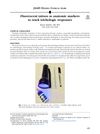
 Fluorescent tattoos are a good way to mark the scalp for hair treatments because they're accurate, invisible in normal light, and have low risk.
20 citations
,
February 1968 in “Journal of Histochemistry & Cytochemistry” A new test more accurately detects citrulline in hair follicles and pilomatrixomas.
 2 citations
,
January 2018 in “International Journal of ChemTech Research”
2 citations
,
January 2018 in “International Journal of ChemTech Research” The two Eclipta alba varieties can be distinguished by their chemical differences.
October 2014 in “Microscopy” The method using ionic liquid improves observation of cell structures with less damage.