November 2009 in “Oncology Times” New standards were created to make chemotherapy safer and improve cancer care.
13 citations
,
April 2021 in “Value in Health” There is a significant need for better-validated quality of life tools in dermatology.
3 citations
,
October 2020 in “Arthritis Care & Research” New tools and criteria have been developed to better assess and treat pediatric lupus.
1 citations
,
March 2025 in “Pediatric Dermatology” New tools help doctors better assess and treat alopecia areata in kids by considering more than just hair loss.
 5 citations
,
October 2021 in “Vlaams Diergeneeskundig Tijdschrift”
5 citations
,
October 2021 in “Vlaams Diergeneeskundig Tijdschrift” The protocol is easy to use, but reliable results need the same person to assess each time.
 January 2024 in “JEADV clinical practice”
 The study helps doctors use patient images to understand and apply SALT scores for treating severe alopecia areata.
 9 citations
,
March 2018 in “Actas Dermo-Sifiliográficas”
9 citations
,
March 2018 in “Actas Dermo-Sifiliográficas” The Spanish version of the Hair Specific Skindex-29 scale is a reliable and valid way to measure the impact of hair loss on women's quality of life.
9 citations
,
February 2018 in “Journal of Patient-Reported Outcomes” New tools were created to help lupus patients report their symptoms and impacts more accurately.
 7 citations
,
December 2014 in “Gynecological Endocrinology”
7 citations
,
December 2014 in “Gynecological Endocrinology” LC-MS/MS is more reliable than immunoassays for diagnosing 21-hydroxylase deficiency.
 January 2013 in “Japan labor review”
 The study created a numerical system to describe and compare 601 jobs in Japan.
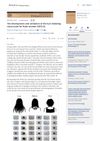 October 2023 in “The Journal of Dermatology”
 The HSVS-A is an effective tool for quickly screening hair shedding in Asian women.
3 citations
,
October 2020 in “UNC Libraries” The new criteria for classifying lupus are more accurate and comprehensive.
January 2026 in “SSRN Electronic Journal”  64 citations
,
July 2016 in “Journal of Immunology”
64 citations
,
July 2016 in “Journal of Immunology” Blocking the CXCR3 receptor reduces T cell accumulation in the skin and prevents hair loss in mice.
18 citations
,
September 2024 in “Journal of the European Academy of Dermatology and Venereology” The DLQI is a key tool for measuring quality of life in dermatology.
 5 citations
,
June 2024 in “Cureus”
5 citations
,
June 2024 in “Cureus” The methods tested are reliable for assessing dandruff reduction.
11 citations
,
January 1983 in “Educational leadership” Teaching thinking skills can improve SAT scores.
July 2025 in “Anais Brasileiros de Dermatologia” The Brazilian version of the Alopecia Areata Quality of Life Index is reliable for assessing patients' quality of life.
 96 citations
,
September 2017 in “Analytica Chimica Acta”
96 citations
,
September 2017 in “Analytica Chimica Acta” Hair elemental analysis could be useful for health and exposure assessment but requires more standardization and research.
22 citations
,
January 2017 in “Journal of steroid biochemistry and molecular biology/The Journal of steroid biochemistry and molecular biology” A new method accurately measures nine specific hormones in human blood.
8 citations
,
October 2021 in “The international journal of risk and safety in medicine” The document sets criteria for diagnosing long-term sexual dysfunctions caused by certain medications.
 2 citations
,
March 2016 in “The Journal of Dermatology”
2 citations
,
March 2016 in “The Journal of Dermatology” The Facial Psoriasis Log-based Area and Severity Index is a more effective way to measure improvements in facial psoriasis than the traditional method.
34 citations
,
December 2007 in “Human Reproduction Update” In vitro bioassays are better than traditional methods for measuring androgen activity but aren't ready for routine use yet.
1 citations
,
August 2025 in “The Egyptian Journal of Internal Medicine” BMI is a simple, cost-effective tool for screening obesity and related diseases.
 August 2024 in “Frontiers in Public Health”
 Alopecia Areata severely impacts mental health, causing anxiety and depression, affecting quality of life.
 March 2026 in “Mendeley Data”
 rwSALT accurately measures hair regrowth in alopecia areata using scalp photos.
November 2024 in “SKIN The Journal of Cutaneous Medicine” Disease-specific tools better assess quality of life in alopecia areata patients.
July 2015 in “International Society of Hair Restoration Surgery”  35 citations
,
June 2005 in “The Milbank Quarterly”
35 citations
,
June 2005 in “The Milbank Quarterly” The conclusion is that formalizing how past decisions influence current health technology assessments could improve the credibility and defense of coverage decisions.
March 2026 in “Journal of the European Academy of Dermatology and Venereology” VESALT improves alopecia areata assessment by including non-scalp areas and is reliable and user-friendly.