5 citations
,
February 2025 in “Pediatric Dermatology” Ritlecitinib was generally well tolerated in children with alopecia areata.
Ruxolitinib cream shows promise for vitiligo, and early melanoma diagnosis is crucial.
25 citations
,
March 2017 in “International Journal of Dermatology” Ruxolitinib effectively and safely regrows hair in alopecia patients.
March 2022 in “Oncology Times” Tebentafusp-tebn improves survival rates in uveal melanoma patients but has common side effects like rash and fatigue.
June 2025 in “Acta Dermato Venereologica” Low-dose Ritlecitinib may help children with stubborn Alopecia Areata.
May 2025 in “Journal of the European Academy of Dermatology and Venereology” Ritlecitinib is effective for long-term hair regrowth in alopecia areata, especially in females and early treatment.
 1 citations
,
March 2026 in “American Journal of Clinical Dermatology”
1 citations
,
March 2026 in “American Journal of Clinical Dermatology” Ritlecitinib effectively regrows hair in severe alopecia areata, especially in adolescents.
December 2025 in “The Journal of Dermatology” Ritlecitinib effectively reduces hair loss in JAK inhibitor-naïve alopecia areata patients.
 1 citations
,
May 2021 in “Annals of the rheumatic diseases”
1 citations
,
May 2021 in “Annals of the rheumatic diseases” Tofacitinib is a promising treatment for children with rheumatic diseases.
February 2026 in “International Journal of Dermatology” Ritlecitinib shows promise in improving hair regrowth in adolescents with alopecia areata.
 June 2026 in “Journal of health economics and outcomes research”
 Ritlecitinib is more effective and cheaper than baricitinib for treating severe alopecia areata.
4 citations
,
April 2024 in “Journal of Drugs in Dermatology” Ruxolitinib cream may help treat severe hair loss in children.
Isotretinoin effectively improved severe pityriasis rubra pilaris with complications.
 September 2022 in “XXXIX Congresso Brasileiro de Reumatologia”
 Tofacitinib may effectively treat skin symptoms in difficult cases of dermatomyositis.
 March 2024 in “Clinical, cosmetic and investigational dermatology”
 Tofacitinib successfully treated vitiligo in a patient with lupus without side effects.
March 2023 in “SKIN The Journal of Cutaneous Medicine” Ritlecitinib helped most alopecia areata patients regrow hair by Week 48.
January 2026 in “Dermatologic Therapy” Ritlecitinib is effective and safe for treating severe alopecia areata, showing significant hair regrowth and improved mental health.
December 2025 in “Actas Dermo-Sifiliográficas” Ritlecitinib is effective and safe for treating severe alopecia areata in people aged 12 and older.
 6 citations
,
November 2023 in “Clinical Pharmacokinetics”
6 citations
,
November 2023 in “Clinical Pharmacokinetics” Ritlecitinib shows promise as a versatile treatment for various autoimmune and inflammatory diseases.
 1 citations
,
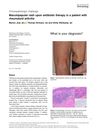
November 2020 in “International Journal of Dermatology”
1 citations
,
November 2020 in “International Journal of Dermatology” Methotrexate caused a rare skin rash in a rheumatoid arthritis patient, which resolved after stopping the drug.
Ritlecitinib significantly regrows scalp hair in people with alopecia areata.
2 citations
,
May 2020 in “JAAD case reports” Ruxolitinib can cause a delayed skin reaction on the nose.
 18 citations
,
May 2013 in “Cutaneous and Ocular Toxicology”
18 citations
,
May 2013 in “Cutaneous and Ocular Toxicology” The cancer drugs bortezomib and lenalidomide cause skin side effects in many patients.
September 2024 in “Annals of Medicine and Surgery” Ritlecitinib is the first FDA-approved pill for treating significant hair loss in alopecia areata patients aged 12 and up.
 August 2009 in “Australian Prescriber”
 Eculizumab helps reduce blood transfusions and stabilize hemoglobin but increases infection risk and is expensive.
 December 2025 in “Frontiers in Medicine”
 Ritlecitinib successfully treated a child's alopecia universalis after baricitinib failed.
November 2023 in “SKIN The Journal of Cutaneous Medicine”  10 citations
,
August 2016 in “Oxford Medical Case Reports”
10 citations
,
August 2016 in “Oxford Medical Case Reports” Tocilizumab therapy may cause skin and hair conditions like halo naevi, vitiligo, and alopecia areata.
7 citations
,
October 2024 in “Journal of the American Academy of Dermatology” Continued ritlecitinib treatment helps sustain hair regrowth in alopecia areata patients.
November 2023 in “SKIN The Journal of Cutaneous Medicine” Ritlecitinib effectively maintains hair regrowth in alopecia areata patients.