 February 2026 in “Indian Journal of Dermatology”
 Upadacitinib may effectively treat twenty-nail dystrophy without causing pain.
11 citations
,
January 1992 in “PubMed” TGF-beta 1 and IGF-II mRNA have specific patterns in pig subcutaneous tissue, affecting fat and muscle development.
November 2025 in “OPAL (Open@LaTrobe) (La Trobe University)” DAB labeling effectively identifies collagen type III and PDGFR in horse skin, but may show false positives.
20 citations
,
January 2017 in “Experimental Dermatology” Igf1r helps regulate hair growth cycles.
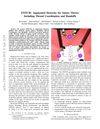 April 2024 in “arXiv (Cornell University)”
 STITCH improves suture accuracy and efficiency, especially with human help.
 1 citations
,
September 2023 in “Journal of the American Academy of Dermatology”
1 citations
,
September 2023 in “Journal of the American Academy of Dermatology” Baricitinib significantly improves hair regrowth in severe alopecia areata.
 52 citations
,
November 2003 in “Journal of Investigative Dermatology”
52 citations
,
November 2003 in “Journal of Investigative Dermatology” Different harmful mutations in the CDH3 gene cause HJMD, but symptoms vary among individuals.
 September 2016 in “Journal of Dermatological Science”
 Both SMS1 and SMS2 are crucial for normal hair growth and cycle in mice.
6 citations
,
October 2024 in “Journal of Family Medicine and Primary Care” Primary care doctors need to monitor JAK and TYK-2 inhibitors carefully for skin conditions.
March 2005 in “Hair transplant forum international”  11 citations
,
October 2001 in “Dermatologic Clinics”
11 citations
,
October 2001 in “Dermatologic Clinics” The document concludes that DAB389-IL2 is promising for treating refractory cutaneous T-cell lymphoma, but more research is needed on its effectiveness and side effect management.
 October 2025 in “Dermatology Practical & Conceptual”
 ChatGPT 4.0 and Gemini 1.5 Flash are effective for educating patients about androgenetic alopecia, while Deepseek R1 is less reliable.
288 citations
,
January 2001 in “Journal of Biological Chemistry” Tgm2 helps stabilize dying cells and aids fibroblast attachment to the extracellular matrix.
29 citations
,
June 2010 in “The Journal of Dermatology” Infants with severe KID syndrome may be more prone to serious infections and need close monitoring.
Meis2 is essential for whisker development, independent of nerve involvement.
1 citations
,
December 2023 in “Molecules/Molecules online/Molecules annual” JAK inhibitors show promise for treating various skin diseases.
 July 2008 in “Hair transplant forum international”
 The document cannot be understood or processed.
1 citations
,
January 2025 in “Journal of Cosmetic Dermatology” Inhibiting ACE2 improves skin regeneration during tissue expansion.
 66 citations
,
June 2021 in “Journal of The American Academy of Dermatology”
66 citations
,
June 2021 in “Journal of The American Academy of Dermatology” Baricitinib is effective and safe for treating severe alopecia areata.
18 citations
,
February 1992 in “Molecular Biology Reports” A specific type II hair keratin was identified and found in hair cortex and tongue cells.
 November 2020 in “Journal of The American Academy of Dermatology”
 Oral JAK inhibitors help regrow hair in alopecia patients.
 39 citations
,
March 2008 in “Journal of biological chemistry/The Journal of biological chemistry”
39 citations
,
March 2008 in “Journal of biological chemistry/The Journal of biological chemistry” GLI2 increases follistatin production in human skin cells.
 54 citations
,
July 2017 in “Scientific Reports”
54 citations
,
July 2017 in “Scientific Reports” JMJD3 and NF-κB activate Notch1, which is essential for skin cell movement and wound healing.
 29 citations
,
January 2017 in “Journal of Investigative Dermatology”
29 citations
,
January 2017 in “Journal of Investigative Dermatology” The Msi2 protein helps keep hair follicle stem cells inactive, controlling hair growth and regeneration.
4 citations
,
September 2025 in “Journal of the American Academy of Dermatology” April 2020 in “The FASEB journal” Poncirin is a promising inhibitor of Janus Kinase 3, potentially better than tofacitinib.
Patients with alopecia areata using Janus kinase inhibitors are not following lab monitoring guidelines.