 26 citations
,
January 2019 in “Expert Opinion on Investigational Drugs”
26 citations
,
January 2019 in “Expert Opinion on Investigational Drugs” New treatments for hair loss show promise, but more research is needed to confirm their safety and effectiveness.
15 citations
,
January 2022 in “Immune Network/Immune network” New targeted immunotherapies are improving treatment for inflammatory skin diseases.
6 citations
,
May 2022 in “Journal of Cosmetic Dermatology” Lagerstroemia indica extract can help prevent hair loss and promote hair growth.
3 citations
,
July 2023 in “International journal of molecular sciences” Stress may contribute to hair loss in alopecia areata by affecting immune responses and cell death in hair follicles.
 3 citations
,
May 2023 in “Clinical drug investigation”
3 citations
,
May 2023 in “Clinical drug investigation” JAK inhibitors for alopecia areata are linked to minor side effects like headache and acne, but not to an increased risk of serious adverse events.
 2 citations
,
April 2018 in “Journal of Investigative Dermatology”
2 citations
,
April 2018 in “Journal of Investigative Dermatology” Frontal fibrosing alopecia shows increased inflammation and JAK-STAT pathway activity without reduced hair proteins.
 2 citations
,
September 2021 in “Curēus”
2 citations
,
September 2021 in “Curēus” Tofacitinib may be safe for COVID-19 patients with alopecia without worsening symptoms, based on two cases.
 2 citations
,
September 2022 in “Dermatologic Therapy”
2 citations
,
September 2022 in “Dermatologic Therapy” Tofacitinib is a promising treatment for severe alopecia areata, with many patients experiencing complete or partial hair regrowth.
 1 citations
,
January 2023 in “Portuguese Journal of Dermatology and Venereology”
1 citations
,
January 2023 in “Portuguese Journal of Dermatology and Venereology” JAK inhibitors effectively treat skin conditions and topical forms are safer.
 1 citations
,
August 2022 in “Journal of Dermatology and Dermatologic Surgery”
1 citations
,
August 2022 in “Journal of Dermatology and Dermatologic Surgery” A patient developed nerve problems as a side effect of a hair loss treatment called tofacitinib.
 1 citations
,
February 2021 in “Farmacja Polska”
1 citations
,
February 2021 in “Farmacja Polska” Janus kinase inhibitors show promise in treating autoimmune skin diseases.
 1 citations
,
October 2018 in “InTech eBooks”
1 citations
,
October 2018 in “InTech eBooks” Only minoxidil and finasteride are FDA-approved for hair loss, with other treatments available but less effective or with side effects.
October 2025 in “International Journal of Dermatology” JAK inhibitors may help treat certain types of hair loss, but more research is needed.
January 2021 in “Digital Commons - PCOM (Philadelphia College of Osteopathic Medicine)” Sebaceous glands are essential for skin health but can contribute to conditions like acne and hair loss.
April 2020 in “The FASEB journal” Poncirin is a promising inhibitor of Janus Kinase 3, potentially better than tofacitinib.
 February 2025 in “International Journal of STD & AIDS”
 Tofacitinib can cause unusual hair growth, requiring careful monitoring and possible laser hair removal.
August 2024 in “Bioorganic Chemistry” Cedrol from ginger can promote hair growth when taken orally.
July 2024 in “Journal of Investigative Dermatology” OR101 may effectively treat atopic dermatitis and similar skin conditions.
 November 2020 in “Dubai medical journal”
 Tofacitinib may effectively regrow hair in alopecia totalis patients.
46 citations
,
October 2018 in “JCI insight” CD8+ T cells are involved in alopecia areata and may cause disease relapse.
26 citations
,
October 2016 in “American journal of clinical dermatology” New treatments like JAK inhibitors show promise for reversing alopecia areata.
 16 citations
,
January 2017 in “Acta dermatovenerologica Alpina, Pannonica et Adriatica (Tiskana izd.)”
16 citations
,
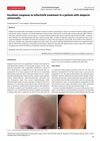
January 2017 in “Acta dermatovenerologica Alpina, Pannonica et Adriatica (Tiskana izd.)” A patient with complete hair loss regrew all her hair using tofacitinib.
11 citations
,
February 2022 in “JAAD case reports” Abrocitinib, a JAK inhibitor, may help treat atopic dermatitis and alopecia universalis together.
 3 citations
,
January 2015 in “Nasza Dermatologia Online”
3 citations
,
January 2015 in “Nasza Dermatologia Online” Some treatments for autoimmune hair loss work, but JAK inhibitors like tofacitinib are promising for regrowth.
July 2024 in “Journal of Investigative Dermatology” Tailored treatments for alopecia areata show promising results, with pulse steroids effective for mild cases and Ritlecitinib, Dupilumab, or methotrexate and prednisone effective for severe cases.
 May 2024 in “Journal of cosmetic dermatology”
 Tofacitinib is an effective and safe treatment for alopecia areata.
 January 2024 in “Revista de la Asociación Colombiana de Dermatología y Cirugía Dermatológica/Revista de la Asociacion Colombiana de Dermatologia y Cirugia Dermatologica”
 Baricitinib successfully treated severe hair loss.
 November 2023 in “Research Portal Denmark”
 Baricitinib shows promise for severe alopecia areata but isn't a cure and has side effects.
Alopecia Areata has no cure, treatments are limited, and the condition often recurs, but new therapies like JAK inhibitors show promise.
 March 2018 in “Suez Canal University Medical Journal”
 New drugs targeting the JAK-STAT pathway show promise for treating inflammatory skin diseases.