Search
for
Sort by
Research
330-360 / 1000+ resultsresearch Differences in activation of β-catenin in outer root sheath cells between the type of JAK inhibitor: An alternative mechanism promoting hair growth by JAK inhibitors in alopecia areata
research Reduced SMAD2/3 activation independently predicts increased depth of human cutaneous squamous cell carcinoma
Lower SMAD2/3 activation predicts more severe skin cancer.

research Janus Kinase Inhibitors against Other Biological Treatments in Alopecia Areata
Janus kinase inhibitors show promise in treating alopecia areata but need more safety research.
research Post-marketing safety signals of four JAK inhibitors for alopecia areata: an indication-restricted FAERS pharmacovigilance study
JAK inhibitors for alopecia areata have different safety risks, requiring specific monitoring for each drug.
research Pyruvate Kinase M2 Accelerates Cutaneous Wound Healing via Glycolysis and Wnt/β-Catenin Signaling
Activating PKM2 and Wnt/β-catenin signaling speeds up wound healing.
research Author response: Intercellular propagation of extracellular signal-regulated kinase activation revealed by in vivo imaging of mouse skin
ERK activation spreads between cells, influencing cell division and wound healing.
research Keratinocyte integrin α3β1 induces expression of the macrophage stimulating factor, CSF-1, through a YAP/TEAD-dependent mechanism.
research PROTACs: A novel strategy for cancer drug discovery and development
PROTAC technology shows promise for cancer treatment but needs more effective E3 ligase recruiters.

research 1108 Comparison of ruxolitinib and a collagen-targeted PTH-based hair cycle stimulant on hair follicle counts and hair growth in the C3H/HeJ engrafted mouse model of alopecia areata
A PTH-based treatment improved hair regrowth better than ruxolitinib in a mouse model of hair loss.
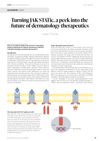
research Turning JAK STATic, a peek into the future of dermatology therapeutics
JAK inhibitors show promise for treating skin diseases effectively and safely.

research Significant improvement with ivarmacitinib after suboptimal response to tofacitinib in severe alopecia areata: a case report and literature review
Ivarmacitinib significantly improved hair regrowth in severe alopecia areata after tofacitinib was less effective.
research APECED: JAK Inhibition in an Adult Case with Long-Term Follow-up
JAK inhibitors may help improve symptoms in adults with APECED.
research Innovative Therapeutic Strategies in TYK2-Targeted Treatments: From Cancer to Autoimmune Disorders
TYK2 inhibitors show promise for treating cancer and autoimmune disorders.

research 277 An open label pilot clinical trial of the JAK inhibitor tofacitinib for alopecia areata
Tofacitinib, a JAK inhibitor, improved hair regrowth in most patients with severe alopecia areata and had minimal side effects.
research Topical JAK Inhibitors for the Treatment of Alopecia Areata and Vitiligo
Topical JAK inhibitors can effectively treat alopecia areata and vitiligo by modulating immune responses.
research Towards the Development of AgoKirs: New Pharmacological Activators to Study Kir2.x Channel and Target Cardiac Disease
New compounds may help treat heart disease by activating specific potassium channels.
research Human tissue kallikreins as promiscuous modulators of homeostatic skin barrier functions
Human tissue kallikreins help regulate skin barrier functions and affect skin health.

research Protein kinase C is a key target for attenuation of Leigh syndrome by rapamycin
Rapamycin may help treat Leigh syndrome by targeting protein kinase C.

research Exploring the Complexities of TGF-beta Signaling in Keloids: Beyond the Classical Smad Pathway
Targeting non-Smad pathways in TGF-β signaling may improve keloid treatment.

research DNA dioxygenases Tet2/3 regulate gene promoter accessibility and chromatin topology in lineage-specific loci to control epithelial differentiation
The enzymes Tet2 and Tet3 are important for skin cell development and hair growth.
research 0749 Serine and arginine-rich splicing factor 3 regulates epidermal differentiation in cutaneous squamous cell carcinoma

research Kinase Inhibition with BAY 43–9006 in Renal Cell Carcinoma
BAY 43-9006 helps control kidney cancer growth but doesn't significantly increase overall survival.

research Exploring caspase functions in mouse models
Caspases affect many cell functions and could help treat various diseases.
research Tissue Regeneration: Hair Follicle as a Model
Stat3 is essential for hair growth and wound healing.

research 12-O-Tetradecanoylphorbol-13-acetate Induces Apoptosis in Renal Epithelial Cells through a Growth Signal Conflict Which Is Prevented by Activated ras1
Activated ras can protect kidney cells from a certain substance that causes cell death.

research PKC downregulation upon rapamycin treatment attenuates mitochondrial disease
Rapamycin treatment helps with mitochondrial disease by reducing PKC levels.

research 865 Conditional ablation of JAK-STAT5 signaling induces anagen hair growth
Blocking JAK-STAT5 signaling in mice leads to hair growth.

research Ruxolitinib reverses alopecia areata via a triple mechanism: JAK-STAT inhibition, localized oxidative stress attenuation and selective apoptosis modulation
Ruxolitinib helps regrow hair in alopecia areata by blocking inflammation, reducing stress, and controlling cell death.
research Theoretical investigation on the construction of hair follicle membranes and the transdermal drug delivery mechanisms of JAK inhibitors via distinct pathways
JAK inhibitors can enter the skin through hair follicles using a unique pathway.