1 citations
,
October 2024 in “JCEM Case Reports” 5α-reductase deficiency can cause ambiguous genitalia and gender dysphoria, treatable with testosterone.
46 citations
,
September 2007 in “Journal of Investigative Dermatology” October 2025 in “Clinical Chemistry” Juniperus communis extract enhances the effectiveness of oral cancer treatment when combined with chemotherapy.
18 citations
,
January 2018 in “BMC dermatology” A new mutation in the PLEC gene causes a rare condition with skin blistering, muscle weakness, and hair loss.
7 citations
,
August 2019 in “JAAD Case Reports” Hidradenitis suppurativa may be more severe in people with Mediterranean fever gene mutations.
 November 2020 in “International journal of contemporary pediatrics”
 Two siblings had a rare immune disorder caused by a FOXN1 gene mutation.
 134 citations
,
January 2011 in “Development”
134 citations
,
January 2011 in “Development” Adam10 enzyme is crucial for healthy skin and proper Notch signaling.
6 citations
,
March 1996 in “Journal of Investigative Dermatology”  March 2025 in “American Journal of Medical Genetics Part A”
 A rare genetic variant linked to skin cysts was found in blood DNA, suggesting its role in cyst formation.
 4 citations
,
September 2020 in “Cell division”
4 citations
,
September 2020 in “Cell division” XMU-MP-1 stops cell growth in a human mini-organ and reduces the effectiveness of the chemotherapy drug paclitaxel.
February 2026 in “International Journal of Clinical Dermatology” A multi-drug treatment can effectively clear extensive calcinosis in juvenile dermatomyositis.
December 2021 in “Figshare” BBS7 is crucial for maintaining healthy gums by regulating important signaling pathways.
September 2022 in “Indian Journal of Paediatric Dermatology” Clouston syndrome is inherited in an autosomal dominant pattern and caused by a specific gene mutation, with no current treatment available.
Arabidopsis Formin 2 stabilizes actin filaments to aid cell-to-cell trafficking.
 6 citations
,
August 2020 in “JCRPE”
6 citations
,
August 2020 in “JCRPE” A boy with a rare form of early puberty caused by a new gene mutation responded well to treatment aimed at reducing testosterone and preserving adult height.
 2 citations
,
January 2000 in “Journal of Toxicologic Pathology”
2 citations
,
January 2000 in “Journal of Toxicologic Pathology” A single recessive gene causes sparse hair in certain Japanese White rabbits.
34 citations
,
December 2022 in “Biomedical Technology” Janus membranes could greatly improve medical treatments like wound healing and bone regeneration.
February 2026 in “Toxicology Letters” MK-0773 is a moderate inhibitor of the SRD5A2 enzyme.
1 citations
,
April 2023 in “International journal of molecular sciences” Certain skin proteins can form anchoring structures without the protein AMACO.
147 citations
,
August 2005 in “The Plant Cell” The TIP1 gene is crucial for normal plant cell growth in Arabidopsis.
3 citations
,
May 2024 in “BMC Medical Genomics” A new ARID1B gene variation causes Coffin-Siris syndrome 1 and early high myopia in a Chinese family.
 42 citations
,
May 2013 in “Oral Diseases”
42 citations
,
May 2013 in “Oral Diseases” Kennedy's disease leads to muscle weakness without a cure, but exercise and managing symptoms may help patients live a normal lifespan.
 4 citations
,
July 2021 in “bioRxiv (Cold Spring Harbor Laboratory)”
4 citations
,
July 2021 in “bioRxiv (Cold Spring Harbor Laboratory)” BLMP-1 is important for regular molting and gene expression cycles in worms.
 April 2018 in “Journal of Investigative Dermatology”
 CENPV, a new partner of CYLD, helps regulate ciliary acetylated tubulin and is overexpressed in certain skin tumors.
11 citations
,
December 2013 in “Clinical and experimental dermatology” A child with skin and heart issues had rare genetic mutations affecting skin and heart cell cohesion.
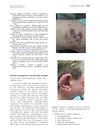
A 72-year-old man was diagnosed with a rare skin form of Rosai-Dorfman disease after years of misdiagnosis.
4 citations
,
July 2022 in “The Journal of Clinical Endocrinology & Metabolism” A specific genetic mutation causes POMC deficiency, leading to symptoms like weight gain and red hair.
 November 2022 in “bioRxiv (Cold Spring Harbor Laboratory)”
 MOF controls skin development by regulating genes for mitochondria and cilia.
August 2023 in “Journal of the American Academy of Dermatology” CCCA affects Black men too, with a genetic link found in the PADI3 gene.