5 citations
,
July 2017 in “Molecular Medicine Reports” Lygodium japonicum spores can reduce inflammation by blocking certain cell signals.
 October 2025 in “JEADV Clinical Practice”
 The name Janus is fitting for JAK inhibitors as they revolutionize dermatology treatments.
13 citations
,
June 2020 in “International Journal of Molecular Sciences” HNG helps hair grow by keeping hair in the growth phase longer.
 65 citations
,
June 2003 in “EMBO journal”
65 citations
,
June 2003 in “EMBO journal” Noggin overexpression delays eyelid opening by affecting cell death and skin cell development.
November 2025 in “Journal of the European Academy of Dermatology and Venereology” JAK inhibitors may reduce depression in people with alopecia areata.
 1 citations
,
January 2023 in “Portuguese Journal of Dermatology and Venereology”
1 citations
,
January 2023 in “Portuguese Journal of Dermatology and Venereology” JAK inhibitors effectively treat skin conditions and topical forms are safer.
22 citations
,
May 2011 in “Molecular Biology of the Cell” Integrin-linked kinase is crucial for normal skin healing.
 April 2026 in “Laboratory Animal Research”
 The new Hairless R/J mice model improves imaging for tumor monitoring and cancer therapy evaluation.
 January 2019 in “Proceedings for Annual Meeting of The Japanese Pharmacological Society”
 Nε-(carboxymethyl) lysine delays hair growth by blocking a key protein.
April 2019 in “The journal of investigative dermatology/Journal of investigative dermatology” Blocking JAK1 or JAK3 helps reverse hair loss in a mouse model of alopecia areata.
January 2026 in “Aging and Disease” DKK proteins could help diagnose and treat various non-cancerous diseases.
April 2025 in “Journal of Diabetes & Metabolic Disorders” Monitoring TGF-β and linc-PINT expression may help identify and treat high-risk heart arrhythmia patients.
19 citations
,
November 2017 in “General and comparative endocrinology” BMP2 and BMPR-IA may stop hair growth while Noggin may encourage it in yak skin.
 9 citations
,
May 2012 in “PLOS ONE”
9 citations
,
May 2012 in “PLOS ONE” ILK is essential for skin development, pigmentation, and healing.
 August 2024 in “New Zealand Medical Student Journal”
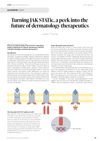
 JAK inhibitors show promise for treating skin diseases effectively and safely.
5 citations
,
April 2022 in “Cell Biology International” JAM-A modification speeds up skin wound healing by boosting fibroblast growth.
 11 citations
,
October 2020 in “Plant biotechnology journal”
11 citations
,
October 2020 in “Plant biotechnology journal” Overexpressing SIMK in alfalfa boosts root hair growth, nodule clustering, and shoot biomass.
 26 citations
,
December 2017 in “Journal of Investigative Dermatology”
26 citations
,
December 2017 in “Journal of Investigative Dermatology” Disrupting Notch signaling in blood vessels increases scarring during wound healing in mice.
8 citations
,
March 2023 in “PubMed” JAK inhibitors show promise in treating difficult skin diseases.
11 citations
,
June 2019 in “Journal of dermatology” New medicines that block a specific pathway are showing promise for treating severe hair loss but need more testing for safety and effectiveness.
 159 citations
,
October 2015 in “Science Advances”
159 citations
,
October 2015 in “Science Advances” Blocking JAK-STAT signaling can lead to hair growth.
January 2025 in “SSRN Electronic Journal” April 2025 in “The Journal of Dermatology” Janus kinase inhibitors may help treat cutaneous T-cell lymphoma, but more research is needed.
 February 2026 in “Zenodo (CERN European Organization for Nuclear Research)”
 N-K Geometric Medicine heals wounds, pain, and burns better and faster than current treatments, without side effects.
 February 2026 in “Zenodo (CERN European Organization for Nuclear Research)”
 N-K Geometric Medicine heals wounds, pain, and burns better and faster than current treatments, without side effects.
December 2009 in “Faculty Opinions – Post-Publication Peer Review of the Biomedical Literature” Noggin promotes skin tumors by activating Wnt and Shh pathways.
 16 citations
,
March 2016 in “The journal of investigative dermatology/Journal of investigative dermatology”
16 citations
,
March 2016 in “The journal of investigative dermatology/Journal of investigative dermatology” The Notch signaling pathway helps in mouse hair development through a noncanonical mechanism that does not rely on RBPj or transcription.
70 citations
,
December 2004 in “Proceedings of the National Academy of Sciences” BMP signaling affects hair color by interacting with the MC-1R pathway.
17 citations
,
November 2000 in “Journal of Investigative Dermatology” ZPK helps skin cells mature and may affect skin health.
 April 2023 in “Journal of Investigative Dermatology”
 Dkk4 protein helps control how hair grows and its arrangement.