 February 2026 in “Indian Journal of Dermatology”
 Upadacitinib may effectively treat twenty-nail dystrophy without causing pain.
 40 citations
,
January 2017 in “Intestinal Research”
40 citations
,
January 2017 in “Intestinal Research” Genotyping for NUDT15 p.Arg139Cys can help predict thiopurine side effects in Japanese IBD patients.
 March 2023 in “Journal of pharmacognosy and phytochemistry”
 Unripe fruits of three banana species have many health-boosting compounds useful for medicine.
2 citations
,
November 2019 in “Journal of Medicinal Food” July 2025 in “Journal of Food Chemistry and Nanotechnology” Snake gourd has health benefits and potential for use in medicine and supplements.
 March 2026 in “Food Science and Biotechnology”
 Blue honeysuckle fruit extract helps hair grow by activating a specific signaling pathway.
 July 2026 in “Frontiers in Pediatrics”
 An 11-year-old girl with severe hair loss regrew and repigmented her hair after JAK inhibitor treatment.
1 citations
,
August 2016 in “Hanbang an'i'bi'in'hu pibu'gwa haghoeji” YangHyulEum Gami-Bang extract may help treat hair loss.
2 citations
,
October 2023 in “JURNAL ILMU KEFARMASIAN INDONESIA” Kenikir leaf extract nanosuspension may help inhibit breast cancer cell growth.

Baricitinib shows promise for treating alopecia areata with mild side effects.
11 citations
,
November 2011 in “The Journal of Dermatology” Connexin-26 gene mutations may increase cancer risk in KID syndrome patients.
 August 2018 in “Journal of Investigative Dermatology”
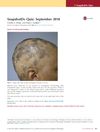
 Tofacitinib may help regrow hair in alopecia areata patients.
 January 2024 in “Academic Journal of Medicine & Health Sciences”
 The herbal tea blend may improve hair health and overall well-being, but more research is needed.
 January 2025 in “Journal of Pharmacognosy and Phytochemistry”
 Vitex negundo has potential health benefits, including anti-inflammatory and anti-cancer effects.
 9 citations
,
January 2023 in “Dermatology and therapy”
9 citations
,
January 2023 in “Dermatology and therapy” A 14-year-old girl with severe hair loss regrew her hair using upadacitinib.
August 2024 in “Panggung Kebaikan” Education increased awareness of using clove leaves for hair growth.
May 2025 in “OPAL (Open@LaTrobe) (La Trobe University)” Jamogenin and other molecules from plants may help treat hair loss.
 May 2023 in “Acta Universitatis Agriculturae et Silviculturae Mendelianae Brunensis”
 Royal Jelly gel is stable and may help with scar treatment.
 4 citations
,
September 2020 in “Cell division”
4 citations
,
September 2020 in “Cell division” XMU-MP-1 stops cell growth in a human mini-organ and reduces the effectiveness of the chemotherapy drug paclitaxel.
 May 2026 in “Journal of Dermatological Treatment”
 Patients with alopecia areata prefer treatments that regrow scalp hair quickly over how often they need to take the medication.
 11 citations
,
April 2015 in “EBioMedicine”
11 citations
,
April 2015 in “EBioMedicine” JAK inhibitors may help treat Alopecia Areata but need careful monitoring due to side effects.
 January 2024 in “Jurnal Ilmiah Ibnu Sina (JIIS) Ilmu Farmasi dan Kesehatan”
 The F2 hair tonic with shallot extract is effective and stable for hair growth.
January 2026 in “Zenodo (CERN European Organization for Nuclear Research)” January 2026 in “Zenodo (CERN European Organization for Nuclear Research)”  2 citations
,
April 2019 in “Dermatologic Therapy”
2 citations
,
April 2019 in “Dermatologic Therapy” A patient with alopecia had hair regrowth with tofacitinib but developed a skin reaction, choosing to continue the treatment despite the side effect.
42 citations
,
December 2018 in “International Journal of Phytocosmetics and Natural Ingredients” Olive and Brazil nut oils improve hair strength, shine, and softness better than silicone.
 2 citations
,
June 2016 in “Journal of Medical Science And clinical Research”
2 citations
,
June 2016 in “Journal of Medical Science And clinical Research” Barever Natural Hair Inhibitor can help reduce unwanted body hair growth long-term when used with waxing or hair removal cream.
 May 2026 in “Scientific Reports”
 Kukui nut oil helps hair and eyelash growth.