 4 citations
,
October 2021 in “Scientific Reports”
4 citations
,
October 2021 in “Scientific Reports” NKIRAS2 can suppress certain skin tumors but its effect on cancer varies with context and expression level.
 July 2026 in “bioRxiv (Cold Spring Harbor Laboratory)”
 ACA2 is crucial for root hair growth by controlling calcium levels in cells.
July 2017 in “Cancer Research” Krt15+ cells in mice can resist radiation, regenerate tissue, and start tumors, suggesting new cancer treatment targets.
June 2023 in “bioRxiv (Cold Spring Harbor Laboratory)” Scientists created cell lines to study a genetic skin disorder using CRISPR technology.
18 citations
,
January 2018 in “BMC dermatology” A new mutation in the PLEC gene causes a rare condition with skin blistering, muscle weakness, and hair loss.
 December 2024 in “Kırıkkale Üniversitesi Tıp Fakültesi Dergisi”
 Chromosomal microarray analysis is important for diagnosing rare genetic variations and guiding treatment.
79 citations
,
June 1993 in “Molecular and Cellular Biology” The K5 promoter controls gene expression in skin cells, with specific DNA segments crucial for targeting and regulation.
 35 citations
,
May 2008 in “Journal of Clinical Oncology”
35 citations
,
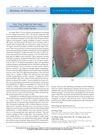
May 2008 in “Journal of Clinical Oncology” A cancer patient died from a severe skin reaction after taking the drug cetuximab.
9 citations
,
July 2022 in “Journal of Biological Chemistry” WWP2 is crucial for tooth development in mice.
January 2000 in “Dermatology” December 2025 in “The Journal of Nutritional Biochemistry” Kaempferol may help treat hair loss by promoting hair growth and protecting hair cells.
5 citations
,
February 2005 in “Journal of the American Academy of Dermatology” Focal palmoplantar callosities may help diagnose non-Herlitz junctional epidermolysis bullosa.
133 citations
,
June 1993 in “Molecular and Cellular Biology” The human K5 promoter controls specific gene expression in skin cells, with key regulatory elements near the TATA box.
 October 2024 in “Journal of the Endocrine Society”
 Certain genetic variants impair enzyme activity, contributing to non-classic congenital adrenal hyperplasia.
38 citations
,
October 2001 in “British Journal of Dermatology” Keratin K6irs is a marker for the inner root sheath of hair follicles in mice and humans.
1 citations
,
January 2015 in “The Journal of Dermatology” Genetic testing is crucial for diagnosing and managing non-Herlitz junctional epidermolysis bullosa.
 April 2023 in “Journal of Investigative Dermatology”
 Dkk4 protein helps control how hair grows and its arrangement.
 August 2016 in “Journal of Investigative Dermatology”
  September 2025 in “Experimental & Molecular Medicine”
 Small molecules KY19382 and KY19334 may help treat skin cancer by reducing CDK1 levels and blocking harmful cell signals.

Different androgen concentrations affect wool-related gene expression differently in Hetian and Karakul sheep breeds.
 18 citations
,
February 2025 in “Drug Delivery and Translational Research”
18 citations
,
February 2025 in “Drug Delivery and Translational Research” The microneedle patches effectively treat allergic conjunctivitis with controlled, sustained release of medication.
6 citations
,
May 2000 in “Pediatric Dermatology” KID syndrome should be reclassified as an ectodermal dysplasia.
 July 2004 in “Hair transplant forum international”
 The document's conclusion cannot be provided because the document is not available for parsing.
June 2026 in “BULLETIN OF STOMATOLOGY AND MAXILLOFACIAL SURGERY” Keratoacanthoma should be accurately diagnosed and treated based on its characteristics, often using surgery or tissue-preserving methods.
 1 citations
,
January 1996 in “Hair transplant forum international”
1 citations
,
January 1996 in “Hair transplant forum international” The document's conclusion cannot be provided because the document is not available or cannot be parsed.
March 2010 in “European Journal of Cancer Supplements” 17 citations
,
June 2003 in “The journal of investigative dermatology. Symposium proceedings/The Journal of investigative dermatology symposium proceedings” Mutations in hKAP1 genes may cause hereditary hair disorders.
13 citations
,
January 2002 in “Biological chemistry” Different conditions affect how hair proteins assemble, and certain mutations can change their structure.
December 2025 in “Zenodo (CERN European Organization for Nuclear Research)”