 2 citations
,
December 2022 in “Scientific Data”
2 citations
,
December 2022 in “Scientific Data” The study maps how genes are regulated during mouse hair growth.
Ganoderma lucidum extract and microneedle therapy promote hair growth in mice.
 November 2022 in “The journal of investigative dermatology/Journal of investigative dermatology”
 Deleting the CD271 gene in mouse skin cells leads to disorganized skin and increased hair growth, suggesting CD271 is important for skin health.
August 2015 in “한국식품영양과학회 산업심포지움발표집” 10 citations
,
November 2008 in “Veterinary Dermatology” The mouse hairy ears mutation causes longer ear hair due to changes in gene expression.
May 2009 in “고려인삼학회 학술대회” 32 citations
,
February 2019 in “eLife” BMP signaling is essential for the development of touch domes.
125 citations
,
August 2003 in “Development” Mice with human-like EGFR had growth issues, skin defects, heart problems, and unusual bone development.
April 2019 in “Journal of Investigative Dermatology” Researchers created a new mouse model for studying scleroderma.
99 citations
,
February 2000 in “PubMed” Overexpressing PKCepsilon in mice reduces papillomas but increases carcinomas.
April 2022 in “Medical Molecular Morphology” January 2015 in “대한미용학회지” Sandalwood oil promotes hair growth in mice.
The scant hair in snthr-1Bao mice is likely caused by a deletion affecting the Plcd1 gene.
63 citations
,
April 2005 in “Mechanisms of development” Mice with too much Claudin-6 have skin barrier problems and abnormal hair growth.
 31 citations
,
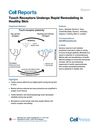
November 2016 in “Cell Reports”
31 citations
,
November 2016 in “Cell Reports” Touch sensitivity in mouse skin decreases during hair growth due to changes in touch receptors.
11 citations
,
January 1977 in “Archives of dermatological research” Mouse tail skin has different keratinization near hair follicles and scales.
 April 2019 in “Journal of Investigative Dermatology”
 Increasing COX-2 in mouse skin causes bigger sebaceous glands and thinner hair, but stopping COX-2 can reverse hair thinning.
76 citations
,
February 1993 in “Journal of Biological Chemistry” KAP6 genes are conserved across species and active in hair follicles.
17 citations
,
November 1967 in “American Journal of Anatomy” Hairless mice have longer hair follicles and abnormal structures during the catagen phase.
7 citations
,
October 1988 in “Clinics in Dermatology” Minoxidil can promote hair growth in hairless mice.
 16 citations
,
February 2014 in “Journal of Investigative Dermatology”
16 citations
,
February 2014 in “Journal of Investigative Dermatology” Researchers developed a mouse model that tracks hair growth using bioluminescence, improving accuracy in studying hair cycles.
10 citations
,
August 2023 in “The EMBO Journal” Kdm6b is crucial for skin cell differentiation.
 77 citations
,
February 2017 in “Stem Cell Reports”
77 citations
,
February 2017 in “Stem Cell Reports” SHISA6 helps maintain certain stem cells in mouse testes by blocking signals that would otherwise cause them to differentiate.
5 citations
,
March 2022 in “STAR Protocols” The method helps study hair follicle stem cells and calcium signals in mouse skin.
6 citations
,
July 1994 in “Journal of Dermatological Science” Introducing the rat OTC gene normalized hair growth in SPF-ASH mice.
67 citations
,
September 2001 in “American Journal Of Pathology” Inhibiting ODC can prevent UV-induced skin cancer.
1 citations
,
October 1988 in “Clinics in Dermatology” Scientists identified and cloned specific keratin proteins in mouse hair.
Researchers made a mouse model with curly hair and hair loss by editing a gene.
 May 2023 in “Tạp chí Y Dược học Cần Thơ”
 The shampoo with grapefruit peel and Gleditsia sinensis helps mice grow hair faster, more, and longer.
January 2014 in “대한미용학회지” Sandalwood oil promotes hair growth and delays hair loss in mice.