 July 2022 in “New Zealand journal of agricultural research”
 The KRTAP27-1 gene variations in sheep may affect wool length and weight.
9 citations
,
November 2022 in “Biology” Key genes and pathways influence wool traits in Merino sheep.
September 2023 in “Journal of the American Academy of Dermatology” July 2025 in “Carbohydrate Polymers” The green alga Parachlorella sp. has potential for use in cosmetics and health products due to its antioxidant, anti-hypertensive, and hair growth properties.
1 citations
,
May 2024 in “Journal of Dermatological Science” Injecting specific cells into the skin can help improve skin structure and reduce blisters in a genetic skin disorder.
 October 2024 in “Frontiers in Oncology”
 Keratin 18 helps diagnose and predict cancer progression and affects cancer growth and spread.
41 citations
,
January 2001 in “Journal of Investigative Dermatology”  November 2022 in “Journal of Investigative Dermatology”
 Scientists found a new type of skin cell that could help with skin repair and these cells work better with a certain protein.
January 2022 in “Social Science Research Network” Potassium channel modulators mostly increase the activity of rat whisker mechanoreceptors.
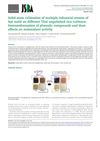 June 2024 in “Okayama University Scientific Achievement Repository (Okayama University)”
 Koji mold on unpolished Thai-colored rice boosts antioxidant activity more than on other rice types.
 March 2024 in “Hair transplant forum international”
 I'm unable to summarize the document because it cannot be parsed.
April 2016 in “한국고분자학회 학술대회 연구논문 초록집” The scant hair in snthr-1Bao mice is likely caused by a deletion affecting the Plcd1 gene.
 November 1999 in “Hair transplant forum international”
 The document could not be understood or processed.
May 2020 in “The journal of investigative dermatology/Journal of investigative dermatology” BIVV009 is a safe treatment for bullous pemphigoid that reduces C3 deposition without harmful side effects.
1 citations
,
January 2025 in “Poultry Science” Pekin duck skin quality improves with age, peaking at 5-6 weeks.
75 citations
,
July 2016 in “New phytologist” The protein RSL4 is crucial for making root hairs longer by controlling genes related to cell growth.
6 citations
,
October 2023 in “Animal Biotechnology” A specific gene variation in goats is linked to better growth traits.
 September 2016 in “Journal of Dermatological Science”
 The protein aPKCλ is crucial for keeping hair follicle stem cells inactive and for hair growth and regeneration.
 5 citations
,
August 2013 in “InTech eBooks”
5 citations
,
August 2013 in “InTech eBooks” KLF4 is important for maintaining stem cells and has potential in cancer treatment and wound healing.
104 citations
,
July 1994 in “The Journal of Cell Biology” Basonuclin helps keratinocytes multiply and prevents them from fully maturing.
12 citations
,
November 2007 in “Journal of Investigative Dermatology” CD200 is not a reliable marker for identifying stem cells in all skin types.
 January 2021 in “Hair transplant forum international”
 The document's content could not be processed.
37 citations
,
August 2024 in “Current Issues in Molecular Biology” Keratins 6, 16, and 17 increase in damaged or diseased skin and may help diagnose skin issues.
December 2025 in “Zenodo (CERN European Organization for Nuclear Research)” December 2025 in “Zenodo (CERN European Organization for Nuclear Research)” 118 citations
,
January 2013 in “Biomaterials” Keratin from human hair shows promise for medical uses like wound healing and tissue engineering.
Collagen VI is crucial for nerve function and affects wound-induced hair regrowth.
 February 2026 in “Pharmaceuticals”
 KRDQN effectively predicts adverse drug reactions with high accuracy and clear explanations.
27 citations
,
October 1998 in “Differentiation” Basonuclin helps identify and track hair follicle development and cycling in mice.