 4 citations
,
September 2024 in “BMC Cancer”
4 citations
,
September 2024 in “BMC Cancer” Adding dutasteride to therapy may improve treatment for advanced salivary duct cancer.
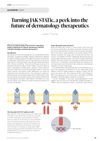 August 2024 in “New Zealand Medical Student Journal”
 JAK inhibitors show promise for treating skin diseases effectively and safely.
9 citations
,
November 2013 in “Journal of Investigative Dermatology” Overexpressing CtBP1 in skin cells causes skin and hair problems.
2 citations
,
September 2024 in “PLoS ONE” Bendamustine combined with tucidinostat may effectively treat adult T-cell leukemia.
1 citations
,
December 2023 in “Molecules/Molecules online/Molecules annual” JAK inhibitors show promise for treating various skin diseases.
 May 2023 in “Stem cell research & therapy”
 New method efficiently isolates hair growth cells from newborn mouse skin.
 May 2026 in “Journal of Skin and Sexually Transmitted Diseases”
 Upadacitinib effectively treats skin conditions like eczema and psoriasis and is becoming more widely used and affordable.
 1 citations
,
April 2018 in “Journal of Investigative Dermatology”
1 citations
,
April 2018 in “Journal of Investigative Dermatology” PRC1 is essential for proper skin development and stem cell formation by controlling gene activity.
Extracted pectin from immature durian shows potential for use in cosmetics due to its strong antioxidant and protective properties.
2 citations
,
April 2021 in “JAAD International” 6.4% of patients had undiagnosed cicatricial alopecia, highlighting the need for thorough evaluations by trained dermatologists before treatment.
 23 citations
,
January 2020 in “Frontiers in Pharmacology”
23 citations
,
January 2020 in “Frontiers in Pharmacology” Dihydrotestosterone affects hair growth by changing the Wnt/β-catenin pathway, with low levels helping and high levels hindering growth.
September 2024 in “Journal of the American Academy of Dermatology”  October 2025 in “Buletin Veteriner Udayana”
 Early diagnosis and treatment of Notoedres cati in cats is crucial for recovery and preventing reinfestation.
1 citations
,
July 2022 in “Frontiers in Pharmacology” Dutasteride may help protect neurons and reduce inflammation in Parkinson's disease.
5 citations
,
July 1996 in “Journal of Cutaneous Medicine and Surgery” TTD patients don't have a higher skin cancer risk because their main issue is with transcription, not DNA repair.
 August 2015 in “MOJ proteomics & bioinformatics”
 ePUKs could be valuable for regenerative medicine due to their wound healing abilities.
2 citations
,
December 2021 in “Korean Journal of Clinical Pharmacy” 70 citations
,
December 2008 in “Cancer Research” CXCR2 in skin cells promotes tumor growth.
 February 2016 in “The journal of allergy and clinical immunology/Journal of allergy and clinical immunology/The journal of allergy and clinical immunology”
 A new TP63 mutation was found in a baby with EEC syndrome, showing the need for TREC testing to check for immune issues.
 8 citations
,
December 2009 in “Journal of The European Academy of Dermatology and Venereology”
8 citations
,
December 2009 in “Journal of The European Academy of Dermatology and Venereology” Researchers found a new mutation in the FERMT1 gene in a Spanish family with Kindler syndrome.

Platelet-rich plasma (PRP) can help with hair loss and improve hair transplant results.
1 citations
,
October 2025 in “Micromachines” Portable point-of-care testing can improve quick and accurate genetic disorder detection.
 19 citations
,
May 2016 in “Clinical, cosmetic and investigational dermatology”
19 citations
,
May 2016 in “Clinical, cosmetic and investigational dermatology” FGF-2&D/P nanoparticles can help treat hair loss.
 July 2022 in “The journal of investigative dermatology/Journal of investigative dermatology”
 Tet2 and Tet3 enzymes are essential for controlling hair growth by affecting DNA demethylation and gene expression in mice.
July 2026 in “Journal of the European Academy of Dermatology and Venereology”  15 citations
,
July 2016 in “Biochemical Journal”
15 citations
,
July 2016 in “Biochemical Journal” Wnt proteins from certain skin cells are crucial for normal hair growth and renewal.
 October 2020 in “Journal of bio innovation”
 DanEraTM hair tonic effectively treats dandruff and hair fall using natural ingredients.
September 2024 in “Вопросы современной педиатрии” Dupilumab helped an 11-year-old boy regrow hair and reduce skin rashes.
11 citations
,
May 2008 in “British journal of dermatology/British journal of dermatology, Supplement” Identical p53 gene mutations in different cancers suggest the need for careful treatment.
188 citations
,
June 1998 in “Molecular cell” Researchers created a mouse with the same mutation as humans with trichothiodystrophy, showing similar symptoms and confirming the condition is due to defects in DNA repair and gene activity.