Search
for
Sort by
Research
600-630 / 1000+ results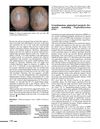
research Granulomatous pigmented purpuric dermatosis containing Propionibacterium acnes
A medication may help with hair growth in psoriasis, and a skin condition might be linked to a specific bacteria.

research Pityriasis versicolor on the scalp: An unusual distribution of a common disease
A boy's scalp infection, usually found on the body, was effectively treated with antifungal cream.
research Diagnosis and Management of Primary Cicatricial Alopecia: Part II
Accurate diagnosis and tailored treatment are crucial for managing complex hair loss conditions.
research Dermpath & Clinic: Telangiectasia macularis eruptiva perstans
Brodalumab is more effective than ustekinumab in treating psoriasis.
research Localized Scleroderma morphea-like in a cat.
The cat's skin condition was resistant to treatment and did not improve.
research Why don't we have more effective treatment for keloids?
We lack effective keloid treatments because their causes are not well understood.
research Tinea Capitis
Tinea capitis, a scalp fungal infection in children, is best treated with newer antifungal agents for shorter periods.

research Multi-dermatomal unilateral nevus comedonicus along the lines of Blaschko: a rare presentation
A rare skin disorder, nevus comedonicus, can appear on one side of the body following Blaschko's lines.

research Dermatitis cruris pustulosa et atrophicans revisited: our experience with 37 patients in south India
DCPA is a chronic leg infection often related to Staphylococcus aureus, affecting mostly young men in India.
research Getting ahead of tinea capitis
Oral griseofulvin for 6-12 weeks cures most scalp fungal infections in children.
research Scarring alopecia in patients with discoid lupus erythematosus versus patients with follicular lichen planus- A comparative study of clinicopathological features
Hair regrowth is more likely in discoid lupus erythematosus than in follicular lichen planus.
research ‘Corkscrews’ on the patchy alopecia of a girl
The girl's hair started regrowing after 6 weeks of treatment.

research Acne Keloidalis Nuchae Successfully Treated with Halobetasol 0.01% and Tazarotene 0.045% Lotion
A new lotion with halobetasol and tazarotene successfully treats acne keloidalis nuchae.

research Clinicopathologic Case 2: Multiple Intraoral White Lesions in a 55-year-old Female
The patient was diagnosed with oral lichen sclerosus and needs long-term monitoring.
research Psychiatric Comorbidities in Pseudofolliculitis Barbae: A Cross-Sectional Study of the All of Us Database
Pseudofolliculitis barbae is linked to higher rates of anxiety and depression.

research BH10 Granulomatous scarring alopecia associated with rheumatoid arthritis: a case report with distinct folliculocentric granulomas histologically mimicking granulomatous alopecia areata
A woman with rheumatoid arthritis had a unique type of scarring hair loss not caused by infection, requiring early treatment to avoid permanent hair loss.
research Efficacy of Punch Excision Combined With Superficial X‐Ray for the Treatment of Keloids: A Single‐Center Retrospective Study
Combining punch excision with superficial X-ray effectively improves keloid scars safely.

research A Classic Presentation of Acne Keloidalis Nuchae in a Black Male
Acne keloidalis nuchae causes scarring on the scalp, mainly in African American males, and early treatment is important to prevent lasting damage.
research Concurrent follicular dysplasia and interface dermatitis in Boxer dogs
Boxer dogs may have a genetic skin condition that worsens seasonally and can be treated with certain medications.
research Solitary fibrofolliculoma: a retrospective case series review over 18 years
The conclusion is that surgical removal of solitary fibrofolliculoma is effective with no relapses, and diagnosis requires a biopsy due to varied symptoms.

research Folliculotropic mycosis fungoides
Folliculotropic mycosis fungoides has a worse prognosis than other types, with survival rates varying significantly based on subtype and organ involvement.

research Intralesional Triamcinolone Acetonide in the Management of Acne Keloidalis Nuchae
Intralesional triamcinolone acetonide effectively treats acne keloidalis nuchae with minimal side effects.
research Dermpath Quiz: Which alopecia does the patient have?
The patient has frontal fibrosing alopecia (FFA).
research Huge Proliferating Trichilemmal Tumors of the Scalp: Report of Six Cases
Complete removal of scalp tumors is crucial, but malignant cases may recur or metastasize, requiring a multidisciplinary approach and close follow-up.
research An epidemiological study of 97 cases of primary cicatricial alopecia in Iran
Middle-aged women in Iran are most affected by primary cicatricial alopecia, especially discoid lupus erythematous.
research Pseudopelade of Brocq
Pseudopelade of Brocq is a unique hair loss condition, but its cause and development are still not fully understood.

research Correlation between clinical, histopathological and direct immunoflourescence findings in cases of cicatricial alopecias
The study found no significant link between the symptoms, tissue analysis, and immunofluorescence results in scarring hair loss conditions.
research Primary cutaneous follicle center lymphoma presenting as frontal fibrosing alopecia
Biopsy is crucial for diagnosing unusual hair loss causes like lymphoma.

research Rare Concurrence of Alopecia Areata in the Setting of the Lipedematous Scalp
A patient with a thick scalp and hair loss was correctly diagnosed with alopecia areata and a thick scalp fat layer, not lipedematous alopecia, and regrew hair after treatment.