 1 citations
,
July 2012 in “Nasza Dermatologia Online”
1 citations
,
July 2012 in “Nasza Dermatologia Online” IL-1α levels are higher in alopecia areata patients, suggesting a role in the disease.
November 2025 in “Journal of Investigative Dermatology” Chronic refractory alopecia areata has more skin-resident memory T cells, and JAK inhibitors may help reduce them.
1 citations
,
December 2024 in “The Journal of Dermatology” Traumatic stress and alexithymia may contribute to alopecia areata.
June 2020 in “Journal of skin and stem cell” The patient's hair loss from alopecia totalis returned despite initial successful treatment.
 1 citations
,
January 2026 in “Dermatology Reports”
1 citations
,
January 2026 in “Dermatology Reports” Tildrakizumab may cause alopecia areata, but stopping it and using corticosteroids can regrow hair.
 1 citations
,
May 2023 in “Journal of the American Academy of Dermatology”
1 citations
,
May 2023 in “Journal of the American Academy of Dermatology” Younger patients and those with more hair loss are less likely to benefit from oral steroid treatment for hair loss, and low vitamin D may predict relapse.
 December 2024 in “Clinical Cosmetic and Investigational Dermatology”
 Alopecia areata might help slow down certain cancers.
1 citations
,
June 2025 in “Frontiers in Immunology” Higher IgE levels may play a role in alopecia areata, especially in males, children, and severe cases.
2 citations
,
May 2004 in “SKINmed/Skinmed” Proper shaving techniques and treatments can help prevent and manage ingrown hairs and inflammation in people with curly hair.
December 1972 in “Archives of Dermatology” The girl has an inflammatory type of scarring hair loss.
 July 2015 in “Actas Dermo-Sifiliográficas”
 A young woman with a rare fungal infection showed significant improvement after treatment with antifungal medication.
7 citations
,
September 1980 in “Zoological Journal of the Linnean Society” Dendritic cells help regulate skin development and hair growth in mice.
April 2023 in “Journal of Investigative Dermatology” Increased TEMRA cells can predict treatment outcomes in rapidly progressive alopecia areata.
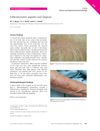 May 2014 in “Clinical and Experimental Dermatology”
 A 70-year-old woman with a rare skin condition improved after treatment with topical steroids and acitretin.
 January 2012 in “The Year book of dermatology”
 Many treatments for alopecia areata have inconsistent results; for under 10s, use minoxidil with a corticosteroid, and for over 10s, add ILC and consider diphenylcyclopropenone for widespread cases.
9 citations
,
October 2020 in “Journal of the American Academy of Dermatology” Patients with central centrifugal cicatricial alopecia may have a higher risk of breast and colorectal cancer.
12 citations
,
April 2017 in “Experimental and Therapeutic Medicine” Patients with severe active alopecia areata have lower CD200 expression and an imbalance in their immune system.
23 citations
,
August 2022 in “JAMA Dermatology” Patients with alopecia areata feel less regret about treatment decisions when they are involved in the decision-making process.
 January 2025 in “International Journal of Dermatology Sciences”
 Skin issues in PCOS worsen quality of life and are linked to hormonal imbalances.
 June 2017 in “International Journal of Research in Dermatology”
 Skin problems in Timbi were linked to jobs, education, and often improved by treating related health issues, but were worsened by steroid misuse.
 1 citations
,
September 2023 in “Rheumatology advances in practice”
1 citations
,
September 2023 in “Rheumatology advances in practice” A woman's rare scalp condition worsened after using a specific arthritis medication, suggesting such medications can sometimes trigger or aggravate psoriasis.
9 citations
,
June 2017 in “The American journal of dermatopathology/American journal of dermatopathology” The study found increased skin pigmentation and variable melanocyte density in a patient with Addison's disease.
 87 citations
,
December 2016 in “British journal of dermatology/British journal of dermatology, Supplement”
87 citations
,
December 2016 in “British journal of dermatology/British journal of dermatology, Supplement” Cancer patients treated with immune checkpoint inhibitors may develop alopecia, but some hair regrowth is possible with treatment.
 1 citations
,
June 2023 in “Journal of Dermatology”
1 citations
,
June 2023 in “Journal of Dermatology” People with Alopecia Areata are more likely to have autoimmune diseases, inflammatory diseases, and mental health issues like anxiety and depression.
June 2025 in “American Journal of Dermatopathology” Granulomatous Alopecia Areata is rare and may be caused by hair antigens or follicle destruction.
January 2024 in “Acta dermato-venereologica”  44 citations
,
November 2011 in “The Journal of Dermatology”
44 citations
,
November 2011 in “The Journal of Dermatology” New understanding of the causes of primary cicatricial alopecia has led to better diagnosis and potential new treatments.
January 2023 in “Journal of Cosmetic Dermatology” Alopecia areata gained more interest on social media than pattern hair loss, with TikTok showing more personal stories and YouTube offering higher quality educational content.
38 citations
,
January 2017 in “PPAR Research” PPAR-γ helps control skin oil glands and inflammation, and its disruption can cause hair loss diseases.
 22 citations
,
June 2013 in “Australasian Journal of Dermatology”
22 citations
,
June 2013 in “Australasian Journal of Dermatology” Early stage bald spots are linked to skin inflammation and damage to the upper part of the hair follicle.