87 citations
,
September 2012 in “Journal of Cell Science” Keratins are crucial for tissue strength, and mutations in keratin genes can lead to various diseases, highlighting the need for targeted therapies.
87 citations
,
July 2009 in “Journal of Cell Science” Deleting the CDSN gene causes severe skin and hair problems, leading to death.
86 citations
,
May 2002 in “Journal of Investigative Dermatology” A new keratin, hK6irs1, is found in all layers of the hair follicle's inner root sheath.
 86 citations
,
December 2001 in “Experimental dermatology”
86 citations
,
December 2001 in “Experimental dermatology” Mutant mice help researchers understand hair growth and related genetic factors.
80 citations
,
June 2002 in “Molecular Biology of the Cell” Type II keratins are uniquely phosphorylated during stress and mitosis, affecting their structure and function.
 68 citations
,
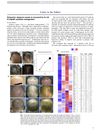
November 2015 in “The Journal of Allergy and Clinical Immunology”
68 citations
,
November 2015 in “The Journal of Allergy and Clinical Immunology” Blocking IL-12/IL-23p40 helped reverse severe hair loss in patients.
 59 citations
,
June 2008 in “Journal of The American Academy of Dermatology”
59 citations
,
June 2008 in “Journal of The American Academy of Dermatology” The article explains the genetic causes and symptoms of various hair disorders and highlights the need for more research to find treatments.
52 citations
,
May 2006 in “Journal of Structural Biology” Keratin-associated proteins help link filaments and affect keratin's strength.
45 citations
,
December 2007 in “The FASEB journal” There are two types of stem cells in rodent hair follicles, each with different keratin proteins.
 42 citations
,
July 2014 in “Journal of biological chemistry/The Journal of biological chemistry”
42 citations
,
July 2014 in “Journal of biological chemistry/The Journal of biological chemistry” Heparan sulfate is important for hair growth, preventing new hair formation in mature skin, and controlling oil gland development.
41 citations
,
October 2001 in “Experimental Dermatology” The nude gene is important for skin and hair development.
40 citations
,
November 2021 in “International Journal of Molecular Sciences” Mutant keratins cause inflammation in Epidermolysis Bullosa Simplex, suggesting targeting them could help treat the disorder.
38 citations
,
November 2020 in “International journal of biochemistry & cell biology” Keratin proteins are essential for keeping the cells in the human colon healthy and stable.
38 citations
,
December 2006 in “Journal of Investigative Dermatology” Keratin patterns in hair follicles help understand hair growth and potential hair and nail disorders.
37 citations
,
August 2024 in “Current Issues in Molecular Biology” Keratins 6, 16, and 17 increase in damaged or diseased skin and may help diagnose skin issues.
36 citations
,
December 1991 in “Journal of Dermatological Science” Human nails contain both skin and hair keratins, each needing different extraction methods.
35 citations
,
June 2012 in “PloS one” Keratin 15 expression in skin cells is regulated by two mechanisms involving PKC/AP-1 and FOXM1.
28 citations
,
June 2012 in “International Journal of Molecular Medicine” Radiation damages hair stem cells and changes keratin expression, with Krt5 as a potential marker for radiation effects.
 26 citations
,
July 2012 in “Biochimica et Biophysica Acta (BBA) - General Subjects”
26 citations
,
July 2012 in “Biochimica et Biophysica Acta (BBA) - General Subjects” The review found that different stem cell types in the skin are crucial for repair and could help treat skin diseases and cancer.
 26 citations
,
December 2011 in “Journal of Investigative Dermatology”
26 citations
,
December 2011 in “Journal of Investigative Dermatology” New gene identification techniques have improved the understanding and classification of inherited hair disorders.
25 citations
,
August 2020 in “Experimental eye research/Experimental Eye Research” Different types of cells in the eye express specific keratins at various stages of development.
 20 citations
,
June 2012 in “British Journal of Dermatology”
20 citations
,
June 2012 in “British Journal of Dermatology” Bleaching hair damages protein structure, especially keratin, leading to weakened hair.
 19 citations
,
April 2015 in “Developmental Dynamics”
19 citations
,
April 2015 in “Developmental Dynamics” The conclusion is that skin and hair patterns are formed by a mix of cell activities, molecular signals, and environmental factors.
16 citations
,
April 2021 in “Biomedicines” Ferulic acid helps wounds heal faster by reducing inflammation and promoting skin cell movement.
16 citations
,
December 2020 in “PloS one” Researchers found WNT10A to be a key gene in developing goat hair follicles.
 16 citations
,
April 2018 in “Animal Genetics”
16 citations
,
April 2018 in “Animal Genetics” Researchers found two genes that may explain why some Casertana pigs don't have hair.
16 citations
,
January 2018 in “Advances in experimental medicine and biology” Hair and wool have diverse keratins and keratin-associated proteins.
 16 citations
,
March 2016 in “The journal of investigative dermatology/Journal of investigative dermatology”
16 citations
,
March 2016 in “The journal of investigative dermatology/Journal of investigative dermatology” The Notch signaling pathway helps in mouse hair development through a noncanonical mechanism that does not rely on RBPj or transcription.
 15 citations
,
February 2015 in “Cell & tissue research/Cell and tissue research”
15 citations
,
February 2015 in “Cell & tissue research/Cell and tissue research” P-cadherin is important for hair growth and health, and its problems can cause hair and skin disorders.
14 citations
,
October 2006 in “Journal of Investigative Dermatology” The keratin naming system was updated to include 54 genes, especially for hair-related keratins.