 3 citations
,
April 2016 in “Dermatologic Surgery”
3 citations
,
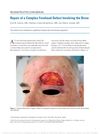
April 2016 in “Dermatologic Surgery” A man's forehead and eyebrow were successfully reconstructed with a skin and hair graft that matched his other eyebrow, without needing frequent trimming.
January 2010 in “Chinese Journal of Aesthetic Medicine” Melasma skin has more melanin and signs of aging, with strong CK10 expression linked to cell differentiation and aging.
1 citations
,
November 2022 in “Indian Journal of Dermatology/Indian journal of dermatology” Dermoscopy helps accurately diagnose and treat benign skin cysts.
 12 citations
,
February 2010 in “Journal of The American Academy of Dermatology”
12 citations
,
February 2010 in “Journal of The American Academy of Dermatology” A cancer drug caused unusual hair growth on a 100-year-old man's scalp and eyelashes.
 August 2023 in “bioRxiv (Cold Spring Harbor Laboratory)”
 The research found that specific stem cells maintain skin gland openings and that disrupting their activity can cause blockages or early cancer signs, indicating a need for targeted treatments.
2 citations
,
January 2017 in “Clinical approaches and procedures in cosmetic dermatology” The document concludes that understanding skin structure is essential for effective cosmetic treatments.
April 2018 in “Journal of Investigative Dermatology” Ceramide synthase 4 is essential for maintaining skin barrier health.
July 1974 in “Archives of dermatology” The woman's widespread skin condition did not improve despite various treatments.
July 2023 in “Cosmoderma” August 2024 in “Clinical Case Reports” Pilomatricoma is a rare, benign skin tumor that requires surgical removal for best results.
5 citations
,
January 2019 in “Methods in molecular biology” Multiphoton microscopy can effectively image live cells in cornea, skin, and hair follicles over time.
33 citations
,
February 2009 in “European journal of pharmaceutics and biopharmaceutics” Pig ear skin is better than human skin for testing how well barrier creams block allergens from entering hair follicles.
4 citations
,
August 2008 in “Plastic & Reconstructive Surgery” The flap effectively sealed leaks and served as a barrier, with minor complications, for anterior skull base surgery.
35 citations
,
September 1994 in “Journal of Investigative Dermatology” 157 citations
,
October 2002 in “Journal of Cutaneous Pathology” p63 may influence skin cancer development and cell differentiation.
6 citations
,
May 2000 in “Pediatric Dermatology” KID syndrome should be reclassified as an ectodermal dysplasia.
October 1998 in “RePub (Erasmus University, Rotterdam)” Basal cell carcinoma cases are rising globally.
January 2025 in “Regenerative Biomaterials” The cerium-polypeptide hydrogel effectively heals drug-resistant bacterial wounds by fighting bacteria, reducing inflammation, and promoting tissue repair.
July 2025 in “Journal of Investigative Dermatology” Tissue-engineered skin substitutes can model junctional epidermolysis bullosa and may help develop gene therapy.
 April 2025 in “Veterinary Dermatology”
 Dermoscopy is useful for identifying skin lesions in dogs, with specific features distinguishing infundibular keratinising acanthomas from follicular cysts.
18 citations
,
January 2018 in “Advances in experimental medicine and biology” Hair keratins evolved from ancient proteins, diversifying through gene changes, crucial for forming claws and later hair in mammals.
Keratin gel may help repair damaged nerves.
 3 citations
,
June 2020 in “Developmental Cell”
3 citations
,
June 2020 in “Developmental Cell” Feather patterns are influenced by enhancers and chromatin looping, and the structure of protein complexes important for hair growth has been detailed.
22 citations
,
December 2013 in “Stem cells and development” Horse skin stem cells combined with platelet-rich plasma improve skin healing.
87 citations
,
January 1999 in “British Journal of Dermatology” Trichoblastic fibroma and basal cell carcinoma are similar but different from trichoepithelioma.
4 citations
,
June 2007 in “PubMed” Engineered skin with specific cells can effectively repair skin and restore its function.
 1 citations
,
November 2002 in “Journal of dermatology”
1 citations
,
November 2002 in “Journal of dermatology” The antibody created from BCC tissues reacts similarly to both BCC and hair follicles, suggesting BCC may come from hair follicle cells.
 2 citations
,
January 2011 in “Dental Medicine Research”
2 citations
,
January 2011 in “Dental Medicine Research” Keratin 75 might be important in oral cancer progression.