 January 2008 in “Journal of The American Academy of Dermatology”
 Trichoscopy is a helpful and quick method to identify different types of hair loss in women.
 2 citations
,
April 2016 in “Journal of The American Academy of Dermatology”
2 citations
,
April 2016 in “Journal of The American Academy of Dermatology” Dutasteride more effective than finasteride for hair growth; SM04554 safe and potentially effective for hair loss.
 November 2022 in “The journal of investigative dermatology/Journal of investigative dermatology”
 New imaging technology can show up to 40 different markers in hair loss tissue, helping to understand hair disease better.
 170 citations
,
December 2009 in “Histopathology”
170 citations
,
December 2009 in “Histopathology” The conclusion is that accurate diagnosis of different types of hair loss requires good teamwork between skin doctors and lab experts.
47 citations
,
June 2017 in “Journal of dermatology” New treatments for alopecia areata show promise, but no cure exists and responses to treatments vary.
November 2023 in “SKIN The Journal of Cutaneous Medicine”  July 2025 in “International Journal of Pharmaceutical Sciences Review and Research”
 Individualized treatment and psychological support improved the patient's quality of life and appearance despite medication side effects.

Blood cell counts could help predict and treat alopecia areata and telogen effluvium.
1 citations
,
January 2017 in “대한피부과학회지” Male pattern hair loss is diagnosed and treated earlier and is milder, possibly due to early puberty.
July 2025 in “Anais Brasileiros de Dermatologia” The Brazilian version of the Alopecia Areata Quality of Life Index is reliable for assessing patients' quality of life.
 1 citations
,
January 1997 in “Archives of Dermatology”
1 citations
,
January 1997 in “Archives of Dermatology” Hair loss from alopecia areata can sometimes regrow in a pattern similar to androgenetic alopecia.
December 2023 in “Minia Journal of Medical Research” Transverse sectioning is more reliable for diagnosing alopecia areata.
Cicatricial alopecia can progress to complete hair loss, making diagnosis and management difficult.
July 2024 in “Journal of Investigative Dermatology” 71 citations
,
December 2013 in “The journal of investigative dermatology. Symposium proceedings/The Journal of investigative dermatology symposium proceedings” There are no FDA-approved treatments for Alopecia Areata, and current options have varying success and relapse rates.
 February 2026 in “JOURNAL OF CLINICAL AND DIAGNOSTIC RESEARCH”
 Trichoscopy effectively detects early hair follicle changes before visible baldness in men under 40.
 January 2025 in “International Journal of Dermatology Sciences”
 Androgenetic alopecia is the most common type of non-scarring hair loss, especially in young males, and early diagnosis and treatment are important.
 7 citations
,
September 2017 in “Biomedical and Pharmacology Journal”
7 citations
,
September 2017 in “Biomedical and Pharmacology Journal” Growth factors greatly affect hair loss, with different levels seen in men, women, younger patients, and at the start of the condition.
 May 2025 in “Journal of Cutaneous Medicine and Surgery”
 Online resources for hair loss need better quality and readability.
 January 2000 in “대한피부과학회지”
 Hair loss was most commonly due to alopecia areata, androgenetic alopecia, and telogen effluvium, with a higher number of cases in the 1990s and equal occurrence in men and women.
April 2014 in “The FASEB Journal” Women with androgenetic alopecia often have other symptoms of high androgen levels, requiring further hormone testing.
July 2016 in “IP Indian journal of clinical and experimental dermatology” PRP is effective in treating male pattern baldness.
 March 2026 in “Open MIND”
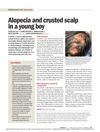
 Early treatment of scalp infections can prevent permanent hair loss.
 9 citations
,
December 2012 in “The Journal of Dermatology”
9 citations
,
December 2012 in “The Journal of Dermatology” Wearing wigs or hairpieces improves self-esteem, adaptability, and competence in women with alopecia areata.
September 2013 in “Canadian Medical Association Journal” Alopecia areata causes sudden hair loss, often resolves within a year, but can recur.
 February 2026 in “South Asian Research Journal of Biology and Applied Biosciences”
 Alopecia areata patients have higher hormone levels, suggesting hormonal screening could help in treatment.
 January 2014 in “International Journal of Trichology”
 A man had an unusual type of hair loss that didn't match known patterns and didn't improve with treatment.
 June 2003 in “Journal of Investigative Dermatology Symposium Proceedings”
 Advancements in hair biology include new treatments and tools for hair growth and alopecia.
 September 2024 in “Journal of the American Academy of Dermatology”
 Baricitinib helps long-term hair regrowth in severe alopecia areata patients.