 3 citations
,
September 2020
3 citations
,
September 2020 Dyclonine can effectively reduce skin issues by inhibiting the TRPV3 channel.
 1 citations
,
May 2025 in “Natural Products and Bioprospecting”
1 citations
,
May 2025 in “Natural Products and Bioprospecting” PEVIII is a promising treatment for Pseudomonas aeruginosa keratitis.
November 2025 in “Journal of Medicinal Chemistry” Topical PROTACs show promise for treating skin conditions but need better stability and delivery methods.
 September 1995 in “American Journal of Contact Dermatitis”
 Antiyeast treatments work better for seborrheic dermatitis than steroids, and other findings include increased skin bacteria under plastic wrap, a nasal cell defect in Staphylococcus aureus carriers, quick resolution of certain skin reactions, high rubber latex allergy in spina bifida patients, and glyceryl monopentadecanoate's effectiveness for male hair loss.
 19 citations
,
March 2011 in “Cutaneous and Ocular Toxicology”
19 citations
,
March 2011 in “Cutaneous and Ocular Toxicology” Some chemicals absorbed through the skin can cause serious health problems.
 1 citations
,
June 2023 in “Cureus”
1 citations
,
June 2023 in “Cureus” Spironolactone may help improve symptoms and tear quality in dry eye disease.
 August 2010 in “The Journal of Dermatology”
 The document concludes that low-dose acne treatment is most suitable for moderate acne, with high patient satisfaction and low relapse rates.
 54 citations
,
March 1987 in “Journal of The American Academy of Dermatology”
54 citations
,
March 1987 in “Journal of The American Academy of Dermatology” 3% topical minoxidil effectively treats extensive alopecia areata with few side effects.
 December 2024 in “Pharmaceutics”
 Spironolactone nano-formulations show promise for treating skin disorders, but more research is needed for safety and effectiveness.
October 2025 in “Australasian Journal of Dermatology” Combination therapies may be more effective for treating Folliculitis Decalvans than antibiotics alone.
 December 2024 in “International Journal For Multidisciplinary Research”
 Topical creams are commonly used for treating non-infective skin diseases in children, with antifungals being the most prescribed.
April 2021 in “Cermin Dunia Kedokteran” Two siblings with tinea capitis improved after treatment with ketoconazole.
 33 citations
,
April 1990 in “Dermatologic Clinics”
33 citations
,
April 1990 in “Dermatologic Clinics” Minoxidil effectively treats hair loss, with better results in women.
January 2010 in “Annals of King Edward Medical University” The combination of minoxidil and betamethasone is more effective for hair regrowth than minoxidil alone.
 April 2024 in “Skin health and disease”
 Using a special skin cream with gabapentin helped reduce symptoms of a certain scalp condition but didn't change nerve fibers or skin chemicals.
 February 2006 in “Journal of The American Academy of Dermatology”
 Terbinafine is more effective than itraconazole for toenail fungus, especially in older patients, and debridement improves its effectiveness.
 August 2018 in “Journal of the American Academy of Dermatology”
 A new cosmetic cream reduced facial redness and skin temperature after 4 weeks of use.
1 citations
,
February 2005 in “The Journal of Laryngology & Otology” A fungal infection in the neck caused severe breathing issues, treated successfully with antibiotics and antifungal medication.
20 citations
,
November 2014 in “JAMA dermatology” The 810-nm diode laser improves skin texture in keratosis pilaris but not redness.
7 citations
,
April 2021 in “Journal of Pharmacy and Pharmaceutical Sciences” Cetirizine 1% helps hair growth in men with no major side effects, but minoxidil 5% works better.
2 citations
,
October 2021 in “Clinical and experimental dermatology” Cyperus rotundus essential oil effectively treats underarm darkening, reduces inflammation, and slows hair growth.
 July 2022 in “المجلة العراقية للصيدلة”
 Azelaic acid 20% cream works well for treating scalp alopecia areata and can be an alternative to clobetasol ointment.
3 citations
,
October 2013 The new hydrogel and microemulsion could be better for hair loss treatment than current solutions.
March 2001 in “Zenodo (CERN European Organization for Nuclear Research)” March 2001 in “Zenodo (CERN European Organization for Nuclear Research)”  July 1988 in “Journal of The American Academy of Dermatology”
 Various dermatologic treatments were effective for skin conditions like acne, rosacea, hair loss, and psoriasis from December 1986 to December 1987.
11 citations
,
February 1986 in “Archives of Dermatology” A 5% minoxidil solution led to better hair regrowth in severe alopecia areata than a 1% solution, but results were often not cosmetically acceptable.
January 2008 in “Journal of Clinical Dermatology” Scalp medⓇ effectively and safely improves hair growth in men with androgenetic alopecia.
 12 citations
,
November 2011 in “International Journal of Dermatology”
12 citations
,
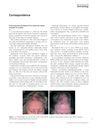
November 2011 in “International Journal of Dermatology” A woman developed a scalp condition from using minoxidil, which improved with a different treatment but left scarring.