 87 citations
,
January 2017 in “PLoS Genetics”
87 citations
,
January 2017 in “PLoS Genetics” Removing both KLK5 and KLK7 proteins can prevent death and skin issues in Netherton syndrome.
90 citations
,
February 2001 in “The journal of investigative dermatology/Journal of investigative dermatology” Interleukin-1 increases keratin K6 production in skin cells.
13 citations
,
July 1994 in “PubMed” Keratins K6 and K16 are expressed more freely in regenerating mouse skin than K1 and K10.
2 citations
,
May 2019 in “Small ruminant research” Mutations in specific llama genes may affect fiber quality for textiles.
33 citations
,
March 2015 in “Experimental Dermatology” LHX2 and SOX9 identify unique hair follicle cell groups, crucial for hair maintenance.
3 citations
,
December 2024 in “Stem Cell Reports” Low fucosylation boosts stem cell growth in the eye.
KRTAP6 genes affect wool quality in sheep.
 12 citations
,
January 2015 in “Indian Journal of Dermatology, Venereology and Leprology”
12 citations
,
January 2015 in “Indian Journal of Dermatology, Venereology and Leprology” A mother and daughter with similar hair loss conditions and identical HLA types suggest a genetic link between the conditions.
 126 citations
,
April 2006 in “International Journal of Dermatology”
126 citations
,
April 2006 in “International Journal of Dermatology” The conclusion is that FFA and LPP have similar scalp biopsy features, making them hard to distinguish histologically, and FFA may be a specific kind of scarring hair loss.
2 citations
,
March 2016 in “International Journal of Dermatology” Kikuchi–Fujimoto disease can cause scarring alopecia and should be considered in diagnosis.
 10 citations
,
June 2020 in “Journal of Cosmetic Dermatology”
10 citations
,
June 2020 in “Journal of Cosmetic Dermatology” Frontal fibrosing alopecia may be linked to genital Lichen sclerosus through an autoimmune process.
15 citations
,
January 1993 in “DNA sequence” KRT2.13 gene is similar to KRT2.9 but not expressed in hair follicles.
34 citations
,
November 1998 in “Journal of Investigative Dermatology” A common mutation in the hHb6 gene is linked to monilethrix, but other factors may also play a role.
 1 citations
,
September 2021 in “CRC Press eBooks”
1 citations
,
September 2021 in “CRC Press eBooks” Frontal Fibrosing Alopecia is a hair loss condition mainly affecting postmenopausal women, with unclear causes and various clinical patterns.
 89 citations
,
February 2002 in “Australasian journal of dermatology”
89 citations
,
February 2002 in “Australasian journal of dermatology” A premenopausal woman had hair loss and skin issues, treated with topical steroids.
March 2026 in “World Rabbit Science” DKK4 can be used to improve wool quality in Zhexi Angora rabbits.
75 citations
,
September 2007 in “Journal of Heredity” FGF5 gene mutations cause long hair in domestic cats.
6 citations
,
March 1996 in “Journal of Investigative Dermatology” 13 citations
,
January 2002 in “Biological chemistry” Different conditions affect how hair proteins assemble, and certain mutations can change their structure.
 62 citations
,
January 2004 in “The journal of investigative dermatology/Journal of investigative dermatology”
62 citations
,
January 2004 in “The journal of investigative dermatology/Journal of investigative dermatology” A second domain of high sulfur KAP genes on chromosome 21q23 is crucial for hair structure.
January 2016 in “Indian dermatology online journal” The patient has frontal fibrosing alopecia (FFA).
 6 citations
,
July 2018 in “Advances in Clinical and Experimental Medicine”
6 citations
,
July 2018 in “Advances in Clinical and Experimental Medicine” Different body parts have varying levels of certain hair follicle markers.
1 citations
,
October 2010 in “2010 3rd International Conference on Biomedical Engineering and Informatics” The LEF-1 gene in cashmere goats was successfully cloned and analyzed, showing potential for improving cashmere production.
 February 2026 in “Clinical Cosmetic and Investigational Dermatology”
 Inverted Follicular Keratosis is rare but should be considered in scalp lesion diagnoses for all ages.
January 2004 in “uO Research (University of Ottawa)” Claudin 6 is crucial for normal skin and hair development.
 September 2025 in “Annals of Plastic Surgery”
 Inverted follicular keratosis on the eyelid can be cured with surgery and has a great prognosis.
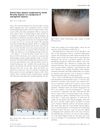 25 citations
,
March 2013 in “British Journal of Dermatology”
25 citations
,
March 2013 in “British Journal of Dermatology” Woman has discoid lupus, frontal fibrosing, and androgenetic alopecia.
19 citations
,
April 2013 in “Drug Development and Industrial Pharmacy” Hair follicles are important for the absorption of certain drugs into the skin.
57 citations
,
July 2000 in “Toxicology Letters” K6/ODC transgenic mice are effective for quickly identifying cancer-causing chemicals.
June 2026 in “Strathprints: The University of Strathclyde institutional repository (University of Strathclyde)” Topical IKKα inhibitors may help prevent CCS tumours.