 1 citations
,
May 2018 in “Psychology, Health & Medicine”
1 citations
,
May 2018 in “Psychology, Health & Medicine” The two-factor model fits better for Chinese patients' understanding of illness causes than the original four-factor model.
 109 citations
,
January 2011 in “Frontiers in Systems Neuroscience”
109 citations
,
January 2011 in “Frontiers in Systems Neuroscience” Choosing the right model order in brain connectivity analysis can affect the detection of differences between healthy individuals and those with seasonal affective disorder.
 November 2022 in “Journal of Investigative Dermatology”
 Human-induced stem cell-created skin models can help understand skin diseases by studying the skin's layers.
32 citations
,
February 2019 in “eLife” BMP signaling is essential for the development of touch domes.
1 citations
,
January 2015 ERK activation spreads between cells, influencing cell division and wound healing.
 14 citations
,
January 2012 in “Proteins”
14 citations
,
January 2012 in “Proteins” Electrostatic interactions mainly stabilize the binding of peptides to hair keratin.
January 2000 in “Neuroscience Research”  5 citations
,
March 2022 in “Frontiers in Endocrinology”
5 citations
,
March 2022 in “Frontiers in Endocrinology” A model using hormone levels, cycle length, and BMI can help identify PCOS in Chinese women but isn't for screening teens.
4 citations
,
February 2021 in “Journal of Pharmaceutical Sciences” The model can help predict how finasteride and minoxidil work when applied to the scalp.
March 2007 in “Journal of Plastic Reconstructive & Aesthetic Surgery” A new method was developed to create better skin models for healing and reconstruction.
40 citations
,
July 2008 in “PROTEOMICS” A new model helps study acne and test treatments.
 May 2015 in “Journal of Investigative Dermatology”
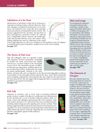
 Melanoma risk tools need improvement, a gene mutation causes a hair disorder that might be treated by managing cell stress, a potential therapy for a skin-ear disorder involves blocking cell channels, skin wrinkling may indicate lung aging regardless of smoking, and oxidative stress might contribute to common baldness.
 May 2026 in “The Journal of Headache and Pain”
 Inhibiting certain brain neurons may reduce pain and anxiety in trigeminal neuralgia.
 December 2024 in “Frontiers in Genetics”
 EGFR and mTOR inhibitors may help manage Olmsted syndrome symptoms.
2 citations
,
January 2007 in “Jounal of The Korean Society of cosmetology” 20 citations
,
May 2011 in “Journal of Clinical Investigation” The study created a mouse model to mimic degenerative diseases for testing tissue repair and new therapies.
June 1967 in “Journal of Cellular Physiology” The 3D hair follicle model improves understanding of hair growth and drug testing.
 19 citations
,
March 2017 in “PLoS ONE”
19 citations
,
March 2017 in “PLoS ONE” PSU are better than THF at regenerating skin layers in lab models.
 February 2019 in “PubMed”
 The research found that twisting hair fibers can show changes in stiffness and damage, and help tell apart different hair treatments.
 April 2019 in “Journal of Investigative Dermatology”
 Merkel cell carcinoma is most likely to recur within two years of diagnosis, and factors like immune suppression, being over 75, and male sex increase this risk.
 60 citations
,
August 2008 in “Human molecular genetics online/Human molecular genetics”
60 citations
,
August 2008 in “Human molecular genetics online/Human molecular genetics” A position effect on the TRPS1 gene causes excessive hair growth in humans and mice.
January 2014 in “Journal of Guangdong Pharmaceutical University” The new rabbit model better mimics human acne symptoms.

Erk signaling helps zebrafish fins regrow to the right size by using memory of the original size.
July 2025 in “PNAS Nexus” A new tool accurately identifies human cornea cell states and key factors.
July 2026 in “Research Square” March 2026 in “Experimental Dermatology” The new model helps understand and develop treatments for genetic skin disorders like AEC.
23 citations
,
January 1985 in “Journal of Neuropathology & Experimental Neurology” Cupric chloride treatment corrected abnormal Purkinje cell development in brindled mice.
July 2025 in “Journal of Investigative Dermatology” Schwann cell and M2 macrophage interactions contribute to keloid growth by increasing matrix deposition.
 5 citations
,
December 2017 in “The Journal of Dermatology”
5 citations
,
December 2017 in “The Journal of Dermatology” A new gene mutation caused a man's rare skin condition, Schöpf-Schulz-Passarge syndrome.
 29 citations
,
February 2013 in “Proceedings of the National Academy of Sciences of the United States of America”
29 citations
,
February 2013 in “Proceedings of the National Academy of Sciences of the United States of America” Loss of Fz6 disrupts hair follicle and associated structures' orientation.