68 citations
,
December 2010 in “The journal of investigative dermatology/Journal of investigative dermatology” HOXC13 is essential for hair and nail development by regulating Foxn1.
59 citations
,
February 2019 in “BMC Genomics” Hair length in rabbits is linked to differences in lipid metabolism and cell death.
51 citations
,
September 2012 in “Biomacromolecules” Disulfide bonds make keratin in hair stronger and tougher.
39 citations
,
January 2020 in “Frontiers in Genetics” PDGFC gene may help select goats with desirable curly wool traits.
37 citations
,
May 2018 in “Frontiers in physiology” Certain RNA molecules are important for the development of wool follicles in sheep.
36 citations
,
December 2021 in “The journal of allergy and clinical immunology/Journal of allergy and clinical immunology/The journal of allergy and clinical immunology” Two drugs, ritlecitinib and brepocitinib, improved scalp hair loss condition markers.
10 citations
,
November 2024 in “Animals” More research is needed to improve wool and cashmere quality through genetics.
 10 citations
,
July 2022 in “The journal of investigative dermatology/Journal of investigative dermatology”
10 citations
,
July 2022 in “The journal of investigative dermatology/Journal of investigative dermatology” Human nails and hair follicles have similar gene activity, especially in the cells that contribute to their growth and development.
 9 citations
,
February 2022 in “BMC Genomics”
9 citations
,
February 2022 in “BMC Genomics” Melatonin affects gene expression in goat hair follicles, potentially increasing cashmere production.
 6 citations
,
August 2023 in “BMC genomics”
6 citations
,
August 2023 in “BMC genomics” The study found that genetic differences related to hair growth and other traits help cashmere goats adapt to high-altitude environments.
5 citations
,
April 2022 in “Genes” miR-129-5p affects hair growth by targeting the HOXC13 gene.
3 citations
,
October 2024 in “Animals” Crimped wool has proteins linked to crimp formation, while straight wool has proteins linked to fiber fineness, which can improve wool quality and value.
2 citations
,
May 2023 in “Veterinary Pathology” Understanding genetic variations in mice is crucial for studying skin, hair, or nail abnormalities.
1 citations
,
September 2024 in “Animals” Specific gene variants affect wool traits in Chinese Tan sheep.
1 citations
,
October 2023 in “Animals” Certain DNA regions in alpacas are linked to fiber diameter.
March 2026 in “World Rabbit Science” DKK4 can be used to improve wool quality in Zhexi Angora rabbits.
 January 2025 in “BMC Genomics”
 Key genes and RNA networks regulate hair growth and follicle density in Rex rabbits.
 October 2024 in “BMC Genomics”
 Understanding hair follicle development can help improve cashmere quality.
December 2021 in “INDIGO (University of Illinois at Chicago)” Sheep hair follicle development and wool curvature are influenced by specific cell types and gene expressions.
 February 2025 in “Animals”
 Understanding proteins in skin structures like claws and hair is crucial for future research.
Protein profiling of forehead skin can help distinguish between frontal fibrosing alopecia and androgenetic alopecia.
 January 1999 in “Journal of the European Academy of Dermatology and Venereology”
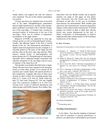
 RAPK is a rare skin disorder with pigmented spots, mainly on hands and feet, starting in youth.
60 citations
,
March 2006 in “Journal of Medical Genetics” A mutation in the KRTHB5 gene causes hair and nail issues.
 27 citations
,
June 2005 in “The journal of investigative dermatology/Journal of investigative dermatology”
27 citations
,
June 2005 in “The journal of investigative dermatology/Journal of investigative dermatology” The study found that variations in hair protein genes are likely due to evolutionary deletions or duplications.
 2 citations
,
September 2020 in “Biomedical materials”
2 citations
,
September 2020 in “Biomedical materials” Recombinant keratin materials may better promote skin cell differentiation than natural keratin.
 9 citations
,
January 2011 in “EXPERIMENTAL ANIMALS”
9 citations
,
January 2011 in “EXPERIMENTAL ANIMALS” A new rat strain with a specific gene mutation causes hair loss and kidney issues.
22 citations
,
September 2014 in “JAMA dermatology” Ichthyosis with confetti is a genetic skin disorder with consistent ectodermal malformations and various KRT10 gene mutations.
September 2023 in “Journal of the American Academy of Dermatology” July 2024 in “Journal of Investigative Dermatology” CRISPR/Cas9 and prime editing can potentially fix skin disorder genes safely and effectively.
 1 citations
,
November 2023 in “Rice”
1 citations
,
November 2023 in “Rice” PRX102 is essential for rice root hair growth by helping transport substances to the tips.