 86 citations
,
December 2001 in “Experimental dermatology”
86 citations
,
December 2001 in “Experimental dermatology” Mutant mice help researchers understand hair growth and related genetic factors.
 52 citations
,
October 2012 in “Journal of Dermatological Science”
52 citations
,
October 2012 in “Journal of Dermatological Science” The document concludes that mouse models are crucial for studying hair biology and that all mutant mice may have hair growth abnormalities that require detailed analysis to identify.
22 citations
,
July 2016 in “Cellular and Molecular Life Sciences” Genetic changes in mice help understand skin and hair disorders, aiding treatment development for acne and hair loss.
38 citations
,
November 2005 in “The journal of investigative dermatology. Symposium proceedings/The Journal of investigative dermatology symposium proceedings” Understanding normal hair follicle development helps analyze abnormalities in mutant mice.
 22 citations
,
May 2021 in “Nature Communications”
22 citations
,
May 2021 in “Nature Communications” Tissue stiffness affects hair follicle regeneration, and Twist1 is a key regulator.
June 2021 in “Faculty Opinions – Post-Publication Peer Review of the Biomedical Literature” April 2019 in “The journal of investigative dermatology/Journal of investigative dermatology” Spiny mice regenerate skin better than laboratory mice due to larger hair bulges, more stem cells, and different collagen ratios.
 37 citations
,
February 2019 in “Experimental Dermatology”
37 citations
,
February 2019 in “Experimental Dermatology” Spiny mice are better at regenerating hair after injury than laboratory mice and could help us understand how to improve human skin repair.
 16 citations
,
April 1978 in “Genetics Research”
16 citations
,
April 1978 in “Genetics Research” Mice with the ab gene have abnormal sebaceous gland development, affecting sebum production.
October 2005 in “The Journal of clinical investigation/The journal of clinical investigation” Genetic manipulations that extend lifespan in mice may not work as effectively in humans.
2 citations
,
July 1994 in “Journal of Dermatological Science” Grafted human scalp samples on mice can produce human hair, useful for studying hair genetics.
4 citations
,
January 2025 in “Molecules and Cells” Use ethical and humane practices in mouse research.
 40 citations
,
November 2021 in “npj Regenerative Medicine”
40 citations
,
November 2021 in “npj Regenerative Medicine” Adult spiny mice recover better from heart attacks than common lab mice.
 73 citations
,
June 2001 in “Endocrinology”
73 citations
,
June 2001 in “Endocrinology” Prolactin affects when mice shed and grow hair.
 14 citations
,
June 2001 in “Endocrinology”
14 citations
,
June 2001 in “Endocrinology” Prolactin affects when mice shed and grow hair.
Contraceptives may affect hair growth due to estrogen, with effects varying by individual.
 2 citations
,
September 1980 in “Experientia”
2 citations
,
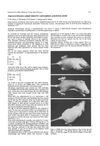
September 1980 in “Experientia” Polyethylene alanine caused hair loss in young lab animals but not in adults, with hair regrowth occurring within 20 days.
 28 citations
,
January 2000 in “Medical Mycology”
28 citations
,
January 2000 in “Medical Mycology” Fungal infections in lab animals can interfere with research.
126 citations
,
October 1998 in “Experimental Dermatology” The hr gene is crucial for skin and hair health, with mutations causing hair disorders.
 April 2017 in “Journal of Investigative Dermatology”
 Fisetin may help treat psoriasis and reduce skin inflammation.
 April 2018 in “Journal of Investigative Dermatology”
 Older mice healed wounds better but lost more weight and might have weaker immune systems afterward.
 12 citations
,
January 2024 in “Editora In Vivo eBooks”
12 citations
,
January 2024 in “Editora In Vivo eBooks” Environmental enrichment improves lab mice welfare and research outcomes.
Spiny mice have resilient, large mitochondria that help them regenerate tissue.
 December 2023 in “International journal of high dilution research”
 Melatonin and Lissotriton improved hair quality and increased activity in mice.
May 2019 in “Clinica chimica acta” The study developed methods to measure biomarkers in mice and found differences in hormone levels linked to gut microbiota diversity and stress response.
 2 citations
,
October 2021 in “Egyptian Journal of Chemistry”
2 citations
,
October 2021 in “Egyptian Journal of Chemistry” Iron nanoparticles made from pumpkin extract effectively treated burns and promoted healing in mice.
135 citations
,
May 1994 in “Medical Entomology and Zoology” Mouse models help study genetic skin diseases.
 November 2023 in “Scientific Reports”
 A gene mutation in Lama3 is linked to a common type of hair loss.
53 citations
,
June 2020 in “The journal of allergy and clinical immunology/Journal of allergy and clinical immunology/The journal of allergy and clinical immunology” Animal models help study psoriasis but have limitations and don't fully mimic the human disease.
Hair bulb cells can create skin-like tissues for potential skin repair.