January 2026 in “Case Reports in Dermatological Medicine” Intralesional steroids effectively treated a young female's scalp nodules without recurrence.
July 2025 in “Journal of Investigative Dermatology” Scarring alopecia involves increased immune cells and specific gene changes near damaged hair follicles.
January 2025 in “Dermatology Research and Practice” Higher activity in lichen planopilaris is linked to certain immune and tissue genes.
June 2023 in “Journal of Biosciences and Health” Healthy dogs and cats often carry skin fungi without showing symptoms, which can spread to others.
December 2022 in “Journal of Paediatrics and Child Health” The girl's itchy armpit and pubic lesions didn't improve with antifungal cream.
1 citations
,
January 2015 in “Journal of Arthritis” Lupus pneumonitis can mimic tuberculosis and should be considered in diagnoses.
 5 citations
,
January 2016 in “Skin appendage disorders”
5 citations
,
January 2016 in “Skin appendage disorders” A rare skin condition called linear lichen planopilaris caused itchy red bumps and hair loss on a man's face.
January 2016 in “Elsevier eBooks” Dermatophycosis is a treatable fungal skin infection spread by contact with infected animals.
4 citations
,
July 2014 in “The Journal of Dermatology” Plaque-type herpetic folliculitis affects eccrine glands.
January 2025 in “Indian Journal of Dermatopathology and Diagnostic Dermatology” Dermoscopy helps diagnose rare GLPLS in males.
 23 citations
,
January 2005 in “Nihon Ishinkin Gakkai zasshi”
23 citations
,
January 2005 in “Nihon Ishinkin Gakkai zasshi” Nested PCR can reliably identify fungal infections when traditional methods fail.
January 2026 in “Case Reports in Dermatological Medicine” Lichen Planus in siblings may be influenced by genetics and environment.
 April 2021 in “Journal of Investigative Dermatology”
 People with atopic dermatitis have more CD4+ T cells that respond to a certain bacterial lipid, which may play a role in the skin condition's inflammation.

Clinical signs don't match inflammation levels in lichen planopilaris and frontal fibrosing alopecia.
 August 2016 in “Journal of Investigative Dermatology”
 Researchers found a new genetic mutation linked to a hair condition in a Japanese boy.
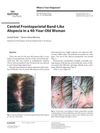 January 2018 in “Skin appendage disorders”
 A woman's hair loss was correctly diagnosed as Lichen planopilaris after initial misdiagnosis, highlighting the usefulness of trichoscopy in diagnosing hair disorders.
January 2026 in “Clinical Case Reports” Early diagnosis and treatment of Lichen Planopilaris are crucial to prevent permanent hair loss.
1 citations
,
June 2011 in “Journal of Dermatological Case Reports” Shaving and applying erythromycin cream and clotrimazole powder effectively treated trichomycosis axillaris.
 March 2020 in “Clinical research in dermatology”
 Two unusual cases showed that Lichen Planopilaris can look like other skin conditions and need early treatment to protect hair.
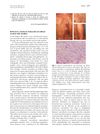 7 citations
,
June 2010 in “Journal of The American Academy of Dermatology”
7 citations
,
June 2010 in “Journal of The American Academy of Dermatology” Tranilast successfully treated a man's skin sarcoidosis when other treatments failed.
Treat active lichen planopilaris early to prevent permanent hair loss.
 7 citations
,
December 2021 in “Annals of Phytomedicine An International Journal”
7 citations
,
December 2021 in “Annals of Phytomedicine An International Journal” Silver nanoparticles from Laurus nobilis leaves may be a new, safer antiarthritic treatment.
 April 2023 in “The journal of investigative dermatology/Journal of investigative dermatology”
 The study suggests that changes in immune system receptors and their interaction with a cell component may be important in the development of a type of hair loss condition.
 3 citations
,
May 2018 in “The American Journal of Medicine”
3 citations
,
May 2018 in “The American Journal of Medicine” A woman's long-term scalp issues were diagnosed as a rare skin disorder called cutaneous Langerhans cell histiocytosis.
 March 2024 in “Case Reports in Dermatology”
 A woman's hair loss was misdiagnosed as alopecia areata but was actually lichen planopilaris, needing immediate and ongoing treatment.
 February 2013 in “Journal of the American Academy of Dermatology”
 A woman's hair loss looked like a different condition due to her hairstyle, and treatment stopped further hair loss but didn't regrow hair.
June 2025 in “British Journal of Dermatology” Lichen planopilaris may have a genetic link.
May 2022 in “Journal of Cutaneous Immunology and Allergy” Asymptomatic cats can spread scalp infections to humans.
1 citations
,
May 2024 in “Skin Appendage Disorders” Early detection of Lichen Planopilaris is important to prevent worsening and misdiagnosis.
32 citations
,
July 2001 in “Journal of the American Academy of Dermatology” SLHA can be hard to diagnose and needs teamwork between specialists.