August 2004 in “Veterinary Dermatology” Cats with internal diseases can develop skin issues that may require specific treatments.
January 2022 in “Figshare” lncRNA MTC helps goat skin cells grow and may aid hair growth by controlling proteins linked to cell growth.
 38 citations
,
July 1998 in “Journal of surgical oncology”
38 citations
,
July 1998 in “Journal of surgical oncology” A woman with breast cancer developed a rare condition causing excessive fine hair growth on her face and body.
1 citations
,
May 2016 in “Journal of Veterinary Diagnostic Investigation” Exotic lice infest 45% of California mule deer, with younger and selenium-deficient deer more vulnerable.
July 2025 in “Indian Dermatology Online Journal” Switching insulin brands caused skin lesions in a diabetic woman, resolved by changing to oral medication.
21 citations
,
March 2018 in “American Journal Of Pathology” Mutations in NIPAL4 cause skin issues by disrupting lipid layers, but some improvement is seen with topical treatment.
 13 citations
,
September 1989 in “International Journal of Dermatology”
13 citations
,
September 1989 in “International Journal of Dermatology” Carbamazepine may cause reversible nail detachment.
 September 2025 in “Cermin Dunia Kedokteran”
 Candida nail infections need lab tests for accurate diagnosis and treatment.
36 citations
,
July 2005 in “Journal of Neuroendocrinology” Blocking certain brain processes reduces mating behavior in female rats.
 January 2014 in “Jaypee Brothers Medical Publishers (P) Ltd. eBooks”
 Bimatoprost may help with hair loss.
3 citations
,
May 2017 in “BMJ Case Reports” A 15-year-old boy's skin and hair condition worsened due to improper treatment, leading to severe health issues.
 1 citations
,
December 2022 in “Pediatric dermatology”
1 citations
,
December 2022 in “Pediatric dermatology” A boy developed a rare skin condition after recovering from a severe skin reaction, and it improved with lotion treatment.
March 2020 in “The Thai Journal of Veterinary Medicine” A Thai Bangkaew dog with diabetes and pancreatic issues improved with insulin, enzymes, and vitamins.
14 citations
,
June 2009 in “Journal of veterinary internal medicine” High doses of albendazole can be deadly for alpacas.
83 citations
,
January 1980 in “Veterinary Pathology” Canine leishmaniasis is present in Oklahoma, USA.
January 2025 in “Dusunen Adam The Journal of Psychiatry and Neurological Sciences”  2 citations
,
March 2018 in “INDONESIAN JOURNAL OF CLINICAL PATHOLOGY AND MEDICAL LABORATORY”
2 citations
,
March 2018 in “INDONESIAN JOURNAL OF CLINICAL PATHOLOGY AND MEDICAL LABORATORY” A pregnant woman with Cushing Syndrome got worse and sadly passed away.
 149 citations
,
June 2002 in “Veterinary record/The veterinary record”
149 citations
,
June 2002 in “Veterinary record/The veterinary record” Trilostane effectively improved symptoms in dogs with a certain adrenal gland disorder.
18 citations
,
August 2012 in “Clinical and Experimental Dermatology” Liposomal IGF-1 safely and effectively treats hair loss in hamsters.
 January 2021 in “Social Science Research Network”
 The new treatment using tiny lipid carriers to deliver minoxidil and latanoprost directly to hair follicles shows promise for alopecia.
April 2011 in “Companion Animal” Feline pododermatitis is less common in cats than in dogs.
 162 citations
,
August 2002 in “Survey of Ophthalmology”
162 citations
,
August 2002 in “Survey of Ophthalmology” Latanoprost can make eyelashes longer, thicker, and darker.
 January 2025 in “JCEM Case Reports”
 Ketoconazole improved symptoms of ACTH-independent Cushing syndrome despite inconclusive initial scans.
3 citations
,
October 2020 in “Case Reports in Veterinary Medicine” A dog with a rare heart clot died despite treatment, highlighting the need for better clot treatments in dogs.
 2 citations
,
May 2009 in “Medicine”
2 citations
,
May 2009 in “Medicine” Hair and nails can help diagnose diseases, with nail issues often linked to skin conditions and hair loss having various causes and treatments.
 January 2025 in “Pakistan Veterinary Journal”
 A cat had a rare, aggressive pancreatic cancer that spread quickly and led to its death.
 June 2018 in “Acta Scientiae Veterinariae”
 Tailored treatment plans are crucial for managing canine dermatomyositis-like disease.
 41 citations
,
November 1987 in “British Journal of Dermatology”
41 citations
,
November 1987 in “British Journal of Dermatology” Ketoconazole cured about 70% of cutaneous leishmaniasis cases caused by Leishmania major.
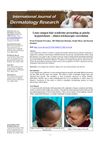 January 2026 in “International Journal of Dermatology Research”
 Early recognition of loose anagen hair syndrome is important to prevent misdiagnosis and unnecessary treatments.