December 2019 in “Reproduction Fertility and Development” A new method helps grow skin stem cells better, which could improve skin grafts for burn victims.
24 citations
,
October 2019 in “Genes” A new sheep gene, KRTAP36-1, may help breed sheep with better wool by reducing prickle factor.
 May 2026 in “AAPS PharmSciTech”
 PEGylated flavonoid Aspasomes improve brain protection and memory in stress-related disorders.
 3 citations
,
November 2021 in “Frontiers in Genetics”
3 citations
,
November 2021 in “Frontiers in Genetics” Certain genes are linked to the quality of cashmere in goats.
29 citations
,
January 2003 in “Genomics” A new mouse mutation causes skin and hair issues, influenced by another gene.
17 citations
,
October 2005 in “Journal of Biological Chemistry” Early involution in Hirosaki hairless rats' mammary glands is linked to a unique modification of STAT5A.
 81 citations
,
October 2014 in “The journal of investigative dermatology/Journal of investigative dermatology”
81 citations
,
October 2014 in “The journal of investigative dermatology/Journal of investigative dermatology” Certain genes control the color of human hair by affecting pigment production.
 April 2025 in “Natural Product Communications”
 Angelica sinensis and Ligusticum sinense essential oils promote hair growth safely.
 August 2023 in “Jurnal Pharmacia Mandala Waluya”
 Albizia saponaria bark extract at 20% concentration promotes hair growth in rabbits.
November 2025 in “Probiotics and Antimicrobial Proteins” 49 citations
,
July 2007 in “Ophthalmic Plastic and Reconstructive Surgery” Surgical excision is an effective treatment for persistent nodules from poly-L-lactic acid injections.
 April 1981 in “Pediatric research”
 Copper treatments increase copper in all tissues, but brindled female mice accumulate much more copper in their kidneys without clinical effects, unlike brindled male mice where brain copper deficiency is clinically significant.
 14 citations
,
January 2016 in “Experimental and molecular pathology”
14 citations
,
January 2016 in “Experimental and molecular pathology” Giving immune serum from vaccinated mice to mice without T cells prevents infection and tumor growth.
 5 citations
,
April 2014 in “The American Journal of Dermatopathology”
5 citations
,
April 2014 in “The American Journal of Dermatopathology” Foreign-body granuloma may be a marker for late-stage Lichen Planopilaris and should be considered in diagnosis.
 12 citations
,
July 2016 in “British journal of dermatology/British journal of dermatology, Supplement”
12 citations
,
July 2016 in “British journal of dermatology/British journal of dermatology, Supplement” Different hair fiber development might explain why hair loss severity varies in patients with a specific genetic mutation, and treatments that thicken hair could help.
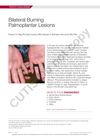
The woman was diagnosed with lichen sclerosus, a rare skin condition, after initial misdiagnosis and ineffective treatments.
16 citations
,
January 2019 in “Aging” Lack of functional CYLD in mice leads to early aging and cancer.
 November 2024 in “Journal of Cosmetic Dermatology”
 Valproic acid microemulsions improve skin delivery compared to regular solutions.
 14 citations
,
October 2020 in “Journal of ethnopharmacology”
14 citations
,
October 2020 in “Journal of ethnopharmacology” Lepidium sativum seed extracts helped reduce inflammation and improve insulin response in obese rats on a high-fat diet.
 6 citations
,
January 2016 in “Skin appendage disorders”
6 citations
,
January 2016 in “Skin appendage disorders” A man with rare Lichen Planopilaris lost body hair, not scalp hair, and treatment stopped itching but didn't regrow hair.
35 citations
,
January 2006 in “Dermatology Online Journal” Lipedematous scalp may be underdiagnosed and doesn't improve with finasteride.
2 citations
,
November 2023 in “Skin Appendage Disorders” Lipedematous scalp may have a genetic link and could be associated with psychiatric conditions.
 14 citations
,
April 2021 in “Heliyon”
14 citations
,
April 2021 in “Heliyon” Pomegranate leaf extract may help with hair growth, dandruff, and lice.
 41 citations
,
September 2011 in “Journal of Ethnopharmacology”
41 citations
,
September 2011 in “Journal of Ethnopharmacology” Panax ginseng extract helps mice grow hair.
28 citations
,
September 2013 in “European Journal of Histochemistry” Keratins in Malayan pangolins vary by region, suggesting scales evolved from the tail towards the head.
January 2005 in “Jukuri (Natural Resources Institute Finland (Luke))” A low-protein diet with methionine is cost-effective and supports normal growth and high-quality pelts in blue foxes.
 March 2025 in “Formosa Journal of Sustainable Research”
 Mangkokan leaf extract at 7% concentration speeds up wound healing.
 20 citations
,
March 2013 in “Journal of Lipid Research”
20 citations
,
March 2013 in “Journal of Lipid Research” The research explains how a human enzyme binds and processes its substrate, which could relate to its role in biological functions and hair loss.
 1 citations
,
June 2024 in “British Journal of Dermatology”
1 citations
,
June 2024 in “British Journal of Dermatology” Mycophenolate mofetil effectively improved skin pigmentation and itching in a woman with lichen planus pigmentosus and frontal fibrosing alopecia.
1 citations
,
December 2016 in “Revista română de medicină de laborator” The NIPAL4 mutation c.527C>A is common in Romanian patients with autosomal recessive congenital ichthyosis.