 October 2022 in “Journal of Pediatric and Adolescent Gynecology”
 A special blood test helped find the overactive ovary in a teen with PCOS, and removing that ovary improved her condition.
 May 2023 in “The journal of sexual medicine”
 Ovarian Hyperthecosis caused hypersexuality in an older woman and was successfully treated with surgery.
 April 2019 in “Journal of the Endocrine Society”
 A woman's severe male-like symptoms were caused by a rare, benign tumor in her ovary that produced male hormones.
 3 citations
,
June 2016 in “Gynecological Endocrinology”
3 citations
,
June 2016 in “Gynecological Endocrinology” Doctors used a special blood sampling technique to diagnose a woman's rare ovarian tumor that was producing male hormones.
 12 citations
,
March 2018 in “Medicine”
12 citations
,
March 2018 in “Medicine” A postmenopausal woman's hirsutism and high testosterone levels improved after surgery for an ovarian tumor not seen on ultrasound.
December 2024 in “AACE Clinical Case Reports” Ovarian hyperthecosis can cause polycythemia, and surgery can normalize symptoms.
 April 2020 in “Journal of the Endocrine Society”
 A woman's severe hirsutism was caused by Leydig cell tumors in her ovaries, which improved after surgery.
 October 2023 in “Journal of the Endocrine Society”
 The document concludes that doctors should thoroughly check postmenopausal women with sudden increased male traits for rare conditions like androgen-producing endometrial cancer.
 4 citations
,
December 2012 in “Arquivos Brasileiros De Endocrinologia E Metabologia”
4 citations
,
December 2012 in “Arquivos Brasileiros De Endocrinologia E Metabologia” A postmenopausal woman's masculine symptoms improved after surgery for a hormone-producing ovarian tumor.
1 citations
,
August 2023 in “Case Reports in Women s Health” Leydig cell hyperplasia can cause virilization in postmenopausal women and is treatable with surgery.
 1 citations
,
February 2016 in “European Journal of Obstetrics & Gynecology and Reproductive Biology”
1 citations
,
February 2016 in “European Journal of Obstetrics & Gynecology and Reproductive Biology” An 84-year-old woman's hair loss was due to a rare condition called Leydig cell hyperplasia, which was treated with surgery.
A thorough diagnostic process and teamwork are crucial for managing complex hyperandrogenism in postmenopausal women.
 November 2018 in “Endocrine Abstracts”
 A woman's high testosterone levels were caused by a rare ovarian tumor, not the initially diagnosed condition.
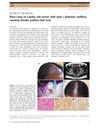 August 2019 in “Journal of Dermatology”
 Woman with diabetes had hair loss due to rare ovarian tumor; surgery improved hair growth.
 4 citations
,
January 2019 in “Obstetrics & gynecology science”
4 citations
,
January 2019 in “Obstetrics & gynecology science” A PET-CT scan successfully located a hard-to-find Leydig cell tumor in a woman with hormonal symptoms.
 October 2014 in “Journal of Minimally Invasive Gynecology”
 Genetic testing for cancer risk can lead to early and life-saving treatments in people without symptoms.
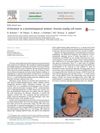 January 2014 in “European Geriatric Medicine”
 A postmenopausal woman's virilization was caused by a rare ovarian tumor that was hard to detect but was successfully treated with surgery.
 2 citations
,
October 2015 in “The New England Journal of Medicine”
2 citations
,
October 2015 in “The New England Journal of Medicine” The woman's surgery lowered her testosterone and improved scalp hair loss but did not change her excessive body hair.
 January 2020 in “Journal of South Asian Federation of Obstetrics and Gynaecology”
 Removing the ovaries can help treat hair loss caused by high androgen levels in postmenopausal women.
 May 2025 in “International Journal of Reproduction Contraception Obstetrics and Gynecology”
 Ovarian tumors should be considered when postmenopausal women show signs of virilization.
January 2025 in “Case Reports in Endocrinology” Accurate diagnosis of rare hyperandrogenism conditions requires detailed testing and sometimes invasive procedures.
 20 citations
,
October 2017 in “Clinical Endocrinology”
20 citations
,
October 2017 in “Clinical Endocrinology” The conclusion is that removing both ovaries is the best treatment for excess male hormones in postmenopausal women, with medication as another option, and managing insulin resistance is important for diagnosis and treatment.
 2 citations
,
May 2018 in “Diagnosis”
2 citations
,
May 2018 in “Diagnosis” A 68-year-old woman developed male traits due to a tumor in her ovary, which was removed, returning her hormone levels to normal.
July 2025 in “AACE Endocrinology and Diabetes” Ovarian hyperthecosis caused high testosterone and virilization symptoms in a 60-year-old woman, which improved after surgery.
April 2020 in “Journal of the Endocrine Society” A rare ovarian tumor caused high male hormone levels, but surgery fixed it.
 December 2021 in “Aegean journal of obstetrics and gynecology”
 A woman's male-like physical changes were caused by two rare ovarian conditions.
 December 2014 in “Endocrinología y nutrición”
 The woman's rare combination of diseases suggests an unknown factor may predispose individuals to multiple endocrine diseases.
 1 citations
,
January 2018 in “Journal of Gynecologic Surgery”
1 citations
,
January 2018 in “Journal of Gynecologic Surgery” Removing both ovaries can treat increased testosterone and related symptoms in postmenopausal women with ovarian hyperthecosis.
 January 2026 in “Frontiers in Oncology”
 Thorough evaluation and surgery are crucial for managing rare ovarian tumors in postmenopausal women with high androgen levels.
January 2020 in “Case reports in endocrinology” Removing one ovary helped treat a woman's severe PCOS symptoms when medicine didn't work.