 43 citations
,
June 2012 in “Lasers in Medical Science”
43 citations
,
June 2012 in “Lasers in Medical Science” Low-level laser treatment helped rats regrow hair faster after chemotherapy.
 26 citations
,
May 2015 in “Lasers in Surgery and Medicine”
26 citations
,
May 2015 in “Lasers in Surgery and Medicine” Laser treatment helped regrow hair in mice by activating a key growth pathway.
Low-level laser therapy combined with Neoptide improved hair regrowth better than either treatment alone in rats.
 7 citations
,
June 2019 in “Cureus”
7 citations
,
June 2019 in “Cureus” Fractional lasers and microneedling, combined with topical agents, could potentially treat Alopecia Areata effectively, but more research is needed due to limited data.
 15 citations
,
May 2017 in “Lasers in Medical Science”
15 citations
,
May 2017 in “Lasers in Medical Science” Low-level laser treatment helps mice grow hair by increasing certain protein levels linked to hair growth.
 9 citations
,
January 2016 in “Journal of cosmetology & trichology”
9 citations
,
January 2016 in “Journal of cosmetology & trichology” Fractional laser treatment helped hair regrowth in patients with alopecia areata.
 20 citations
,
April 2011 in “Dermatologic Surgery”
20 citations
,
April 2011 in “Dermatologic Surgery” Laser therapy helped new hair grow in scarred skin for three patients.
 June 2025 in “Journal of Cosmetic Dermatology”
 Exosome therapy with laser treatment helped hair regrowth in a child with a rare skin condition.
 April 2017 in “Journal of Investigative Dermatology”
 Laser treatment may help with hair growth in some people with frontal fibrosing alopecia, but results vary and the exact way it works is unclear.
63 citations
,
January 2006 in “Journal of cosmetic and laser therapy” The pulsed infrared diode laser is effective for treating hair loss in alopecia areata.
 February 2024 in “Journal of Cosmetic Dermatology”
 Using a laser with bimatoprost solution works better for hair regrowth in alopecia areata than bimatoprost alone.
 47 citations
,
April 2016 in “Lasers in Surgery and Medicine”
47 citations
,
April 2016 in “Lasers in Surgery and Medicine” Low-level laser therapy may improve hair regrowth and thickness for androgenetic alopecia, but more research is needed.
 January 2023 in “Skin appendage disorders”
 Laser treatment for hair loss works equally well on different skin types, but more research is needed for very dark skin.
Exosome therapy successfully regrew and restored natural hair color in a man with stress-related hair loss.
 August 2015 in “Advances in Small Animal Medicine and Surgery”
 Low-level laser therapy may help regrow hair in dogs with non-inflammatory hair loss.
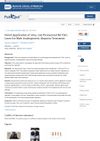
A new laser treatment may help regrow hair in men with pattern baldness and has minimal side effects.
October 2022 in “Dermatologic Therapy” Both treatments for resistant alopecia areata were equally effective.
 January 2018 in “Clinical approaches and procedures in cosmetic dermatology”
 Low-Level Laser Therapy might be an effective alternative hair loss treatment for some people.
 79 citations
,
September 2009 in “Pediatric dermatology”
79 citations
,
September 2009 in “Pediatric dermatology” The 308-nm Excimer laser is effective and safe for treating patchy alopecia areata in children.
July 2024 in “Zagazig University Medical Journal” Excimer laser can effectively treat mild to moderate patchy alopecia areata.
 15 citations
,
July 2019 in “Lasers in surgery and medicine”
15 citations
,
July 2019 in “Lasers in surgery and medicine” The erbium-glass laser effectively promotes hair regrowth in alopecia areata.
 8 citations
,
June 2019 in “Journal of Cosmetic Dermatology”
8 citations
,
June 2019 in “Journal of Cosmetic Dermatology” Using a nonablative fractional laser with topical minoxidil can effectively and safely promote hair regrowth in alopecia areata patients.
 January 2017 in “Clinical approaches and procedures in cosmetic dermatology”
 Low-Level Laser Therapy might be a good alternative for hair loss when other treatments fail, but its effectiveness varies and more research is needed.
 September 2025 in “PubMed”
 Thulium laser therapy is a safe and effective short-term treatment for hair regrowth in androgenic alopecia patients.
 February 2025 in “Journal of Biophotonics”
 Dual-wavelength laser therapy promotes better hair regrowth than single-wavelength treatments.
October 2022 in “Dermatology practical & conceptual” Both treatments help hair regrowth, with PRP being slightly better.
 2 citations
,
January 2022 in “Lasers in Medical Science”
2 citations
,
January 2022 in “Lasers in Medical Science” Using a carbon dioxide laser and platelet-rich plasma together can effectively restore hair and patients are generally satisfied with the results.
 February 2023 in “International Journal of Pharmaceutics”
 A new version of minoxidil, a hair loss treatment, was made using nanotechnology. This version, called minoxidil cubosomes, works better and causes fewer skin reactions than the old version. It also penetrates and stays in the skin better, promoting hair regrowth. It's safe and could be a good alternative to current treatments.
6 citations
,
January 2019 in “Journal of lasers in medical sciences” Using a fractional CO2 laser helps Minoxidil work better for hair regrowth.
 August 2025 in “Dermatological Reviews”
 Stem cells, natural oils, and laser therapy may help hair regrowth, but more research is needed.