March 2026 in “Journal of Burn Care & Research” Folliculitis and pseudofolliculitis barbae are common but often overlooked issues in burn survivors, needing better awareness and treatment strategies.
 April 2025 in “Diagnostics”
 Managing inflammation and using vitamins can improve PRP therapy for better hair growth.
 April 2025 in “International Journal For Multidisciplinary Research”
 Hypertrichosis causes excessive hair growth and can be managed with treatments like laser, electrolysis, or new topical solutions.
 February 2025 in “Stem Cell Research & Therapy”
 Maintaining healthy mitochondria may help treat hair loss.
 June 2024 in “IP Indian journal of clinical and experimental dermatology”
 Hair loss has many causes and treatments, but future research aims for better solutions.
January 2024 in “ResearchWorks at the University of Washington (University of Washington)” LA-ICP-MS effectively measures zinc, lead, and mercury in hair.
 July 2023 in “International journal of dermatology, venereology and leprosy sciences”
 Current treatments for common male hair loss have limited effectiveness and can cause side effects.
 June 2023 in “Brazilian Journal of Health Review”
 Common baldness is a hereditary condition that can be treated with medications or surgery to prevent progression and improve self-esteem.
January 2022 in “The Pan African medical journal” Hypertrichosis causes excessive hair growth and needs psychological support due to its impact on self-esteem.
 April 2019 in “Advances in Cosmetic Surgery”
 The document concludes that ongoing medical therapy is crucial for preventing hair loss, and surgical options can restore hair, with future treatments for hair loss being promising.

Female hair loss is often hereditary and can be treated with medication, hair transplants, and lasers.
 April 2016 in “Journal of Aesthetic Nursing”
 Men are increasingly removing body hair for looks and cleanliness, and while hair loss can cause distress, it doesn't affect their self-esteem as much as it does in women.
 January 2009 in “Actas dermo-sifiliográficas/Actas dermo-sifiliográficas”
 Lasers and light treatments are now the most common ways to remove hair.
 December 2008 in “The American Journal of Cosmetic Surgery”
 Multi-pass laser skin treatments improved healing, reduced pain, and had no major complications.
 May 2006 in “Women's Health Medicine”
 Excessive hair growth in women, often from high androgen levels, is usually caused by PCOS, and can be treated with hair removal, medication, and possibly weight loss.
 May 2004 in “Facial Plastic Surgery Clinics of North America”
 Better understanding of hair patterns and advanced techniques are crucial for improving hair restoration and removal outcomes.
May 2002 in “Therapeutische Umschau” Hypertrichosis and hirsutism can cause psychological issues, with laser treatments being the most promising for permanent hair removal.
41 citations
,
January 2006 in “Dermatology” Noncultured epidermal cell transplantation is effective for repigmenting stable vitiligo.
 14 citations
,
July 2011 in “Clinics in plastic surgery”
14 citations
,
July 2011 in “Clinics in plastic surgery” Dermabrasion is a safe, effective way to improve skin appearance with minimal recovery time.
 13 citations
,
January 1995 in “Journal of the American Institute for Conservation”
13 citations
,
January 1995 in “Journal of the American Institute for Conservation” Researchers developed a less damaging way to extract red dyes from wool using EDTA and DMF, preserving the fiber's strength for further analysis.
8 citations
,
April 2012 in “Laser Physics Letters” Antiseptic particles penetrate deeper into hair follicles than non-antiseptic ones.
6 citations
,
January 2006 in “Journal of dermatological science” Runx1 helps control the KAP5 gene in human hair follicles.
 1 citations
,
October 2025 in “Frontiers in Bioengineering and Biotechnology”
1 citations
,
October 2025 in “Frontiers in Bioengineering and Biotechnology” The bilayer wound dressing significantly improves skin healing by preventing bacteria and promoting cell growth.
January 2026 in “International Journal of Surgery Case Reports” Home IPL devices safely and effectively reduce hair and prevent pilonidal disease recurrence.
December 2025 in “Indian Journal of Dermatology” Extraction videodermoscopy is an effective, non-invasive diagnostic tool for eruptive vellus hair cysts.
November 2016 in “Oncology Letters” Milia may come from the outer part of the hair follicle.
January 2007 in “Zhonghua shiyan waike zazhi” Basal layer skin cells help form the epidermis and hair follicles.
1 citations
,
January 2007 in “AIP conference proceedings” High-resolution x-ray images showed three main structures in human hair: medulla, cortex, and cuticle.
 211 citations
,
February 2009 in “European journal of pharmaceutics and biopharmaceutics”
211 citations
,
February 2009 in “European journal of pharmaceutics and biopharmaceutics” Hair follicles help absorb and store topical compounds, aiding targeted drug delivery.
 2 citations
,
May 2009 in “Medicine”
2 citations
,
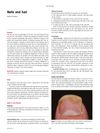
May 2009 in “Medicine” Hair and nails can help diagnose diseases, with nail issues often linked to skin conditions and hair loss having various causes and treatments.