4 citations
,
January 2025 in “Clinical Nutrition” Irregular breakfast and late-night snacking increase the risk of liver disease.
92 citations
,
September 2013 in “Journal of Investigative Dermatology” BMAL1 and Period1 genes can influence human hair growth.
January 2026 in “Hormones and Behavior” Pregnancy affects fear memory and brain activity in female rats.
26 citations
,
August 1995 in “The journal of experimental zoology/Journal of experimental zoology” Melatonin treatment made ferrets grow their fur earlier and affected their breeding time.
 40 citations
,
May 2010 in “Australasian Journal of Dermatology”
40 citations
,
May 2010 in “Australasian Journal of Dermatology” Chronic hair shedding may be caused by less variation in hair growth times and might stop on its own after several years.
31 citations
,
April 2005 in “American journal of ophthalmology” Latanoprost can cause eyelash drooping as a side effect.

The man had myotonia, which caused delayed hand grip relaxation.
 38 citations
,
August 2012 in “Biochemical and biophysical research communications”
38 citations
,
August 2012 in “Biochemical and biophysical research communications” Human leukocytes and beard hair follicle cells have internal daily clocks, and PER1 and PER3 genes may indicate individual circadian rhythms.
18 citations
,
March 2015 in “Journal of Investigative Dermatology” Silencing certain circadian clock genes increases skin pigmentation.
April 2012 in “The FASEB Journal” LPA 4 helps control blood and lymph vessel development in zebrafish.
5 citations
,
November 2023 in “Journal of Investigative Dermatology” Microthermal wounds heal with less scarring due to delayed collagen production and minimal inflammation.
 4 citations
,
July 2021 in “bioRxiv (Cold Spring Harbor Laboratory)”
4 citations
,
July 2021 in “bioRxiv (Cold Spring Harbor Laboratory)” BLMP-1 is important for regular molting and gene expression cycles in worms.
 12 citations
,
January 2019 in “Sleep medicine”
12 citations
,
January 2019 in “Sleep medicine” Night shift work disrupts the body's natural clock genes.
 9 citations
,
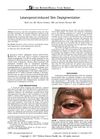
November 2017 in “Journal of Glaucoma”
9 citations
,
November 2017 in “Journal of Glaucoma” Latanoprost eye drops may cause skin depigmentation.
 17 citations
,
October 2006 in “Molecular and Cellular Endocrinology”
17 citations
,
October 2006 in “Molecular and Cellular Endocrinology” The L457(3.43)R mutation in the human lutropin receptor causes increased activity and hormone insensitivity, leading to precocious puberty.
 4 citations
,
July 2024 in “European Archives of Oto-Rhino-Laryngology”
4 citations
,
July 2024 in “European Archives of Oto-Rhino-Laryngology” Platelet-rich plasma (PRP) significantly improves long-lasting post-viral smell dysfunction.
 162 citations
,
August 2002 in “Survey of Ophthalmology”
162 citations
,
August 2002 in “Survey of Ophthalmology” Latanoprost can make eyelashes longer, thicker, and darker.
Older men with late-onset lupus have a higher mortality rate than women.
22 citations
,
April 2004 in “Journal of Neurochemistry” Acute stress increases Y1 receptor gene expression in certain brain areas, but repeated stress does not.
3 citations
,
March 2023 in “bioRxiv (Cold Spring Harbor Laboratory)” Neurospectrum effectively analyzes neural signals to predict and identify brain activity patterns better than traditional methods.
28 citations
,
October 1987 in “PubMed” Lithium temporarily stops cell division in plant cells, but this can be reversed with certain chemicals.
 1 citations
,
January 2024 in “Journal of Community Medicine & Public Health”
1 citations
,
January 2024 in “Journal of Community Medicine & Public Health” Non-hospitalized COVID-19 patients often have lingering symptoms for at least 30 days.
 May 2023 in “Frontiers in chemistry”
 Zolpidem shows up in hair from the top back of the head after one dose and fades over time, suggesting it gets into hair through blood and sweat.
 4 citations
,
January 2026 in “Cell Discovery”
4 citations
,
January 2026 in “Cell Discovery” Understanding wound healing involves coordinating different phases and areas to improve treatment strategies.
 1 citations
,
August 2022 in “JAMMI”
1 citations
,
August 2022 in “JAMMI” Some people still have COVID-19 symptoms after 90 days, especially older patients and those with severe initial symptoms, but most return to normal.
36 citations
,
August 2020 in “Polymers” The patch delivers more drugs through the skin effectively.
July 2025 in “Journal of Investigative Dermatology” AI-09 is safe, effective, and reduces wrinkles for up to 6 months.
 May 2025 in “The Journal of Rheumatology”
 Catatonia can be a rare sign of lupus, needing careful diagnosis and treatment.
January 2009 in “Chinese Journal of Evidence-Based Pediatrics” Neonatal lupus symptoms usually resolve, but some children may develop other autoimmune diseases later.
 30 citations
,
March 2015 in “PLoS ONE”
30 citations
,
March 2015 in “PLoS ONE” Thyroxine can adjust the body's peripheral clock, potentially helping treat clock-related diseases.