May 2025 in “The Open Biomedical Engineering Journal” Adipose tissue and PRP together improve healing and surgery outcomes but need more research for consistent use.
 January 2025 in “AAPS PharmSciTech”
 Transethosomes improve drug delivery through the skin and show promise for treating various conditions.
 December 2024 in “JEADV Clinical Practice”
 Androgenetic alopecia is linked to a higher risk of varicose veins, especially in men, but not to major vascular diseases.
 November 2024 in “Frontiers in Medicine”
 Cirrhosis affects quality of life with various symptoms, requiring a holistic, multidisciplinary approach for management.
May 2024 in “IntechOpen eBooks” More oxygen isn't always better and can sometimes be worse.
April 2024 in “International journal of molecular sciences” Light-based treatment, Photobiomodulation, shows promise for non-invasive skin therapy with few side effects.
December 2023 in “Indian Journal of Endocrinology and Metabolism” Early diagnosis, genetic testing, and innovative treatments are crucial for managing complex medical conditions.
September 2023 in “Animals” Genes linked to wool fineness in sheep have been identified.
 July 2023 in “The Journal of Clinical Endocrinology and Metabolism”
 Gender-affirming hormone therapy improves physical performance in trans men to the level of cisgender men, while in trans women, it increases fat mass and decreases muscle mass, with no advantage in physical performance after 2 years.
 April 2023 in “IntechOpen eBooks”
 Neuropathic pruritus is a commonly overlooked and wrongly diagnosed type of chronic itching that is hard to treat.
 February 2023 in “Journal of Ginseng Research/Journal of ginseng research”
 New ginseng compounds may help treat degenerative diseases.
February 2026 in “BMJ Open” Understanding patients' emotions can help oncologists improve communication and support during treatment decisions.
21 citations
,
April 2019 in “Journal of cosmetic and laser therapy” Laser hair removal is popular for long-term hair reduction but carries risks, requiring well-trained operators and better regulations, especially in South Africa.
54 citations
,
January 1973 in “International Journal of Dermatology” Aloe helps heal leg ulcers and skin disorders.
 13 citations
,
March 2015 in “Plastic and reconstructive surgery. Global open”
13 citations
,
March 2015 in “Plastic and reconstructive surgery. Global open” Leg hair can be used for eyelash transplants, resulting in fuller lashes with less maintenance.
 56 citations
,
March 2016 in “International Wound Journal”
56 citations
,
March 2016 in “International Wound Journal” Skin grafts are effective for chronic leg ulcers, especially autologous split-thickness grafts for venous ulcers, but more data is needed for diabetic ulcers.
 5 citations
,
January 2014 in “International Journal of Trichology”
5 citations
,
January 2014 in “International Journal of Trichology” Hair loss on the lower legs is common in middle-aged men, usually harmless, and doesn't need treatment.
 1 citations
,
March 1990 in “Archives of Dermatology”
1 citations
,
March 1990 in “Archives of Dermatology” The letter suggests that psychiatric issues, not a sleep disorder, were likely the cause of a patient's self-inflicted leg ulcers.
November 2024 in “Journal of Investigative Dermatology” Targeting PTEN can improve healing in venous leg ulcers.
 January 2019 in “Our Dermatology Online”
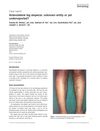
 Almost 40% of older men in the study had hair loss on the front and side of their legs, and most were unaware of it.
 September 2018 in “International Journal of Dermatology”
 Anterolateral leg alopecia is a benign, nonprogressive hair loss condition on the lower legs that is not well understood and may resolve on its own.
 February 2009 in “Journal of The American Academy of Dermatology”
 A man with Klinefelter syndrome had a leg ulcer that didn't heal well, even with treatment.
99 citations
,
July 1996 in “Journal of Investigative Dermatology” Using patient's own hair cells can effectively heal chronic leg ulcers.
15 citations
,
August 2004 in “Journal of the American Academy of Dermatology” Shaving can cause a viral skin infection that looks like bacterial folliculitis.
 3 citations
,
May 2011 in “Journal of the American Academy of Dermatology”
3 citations
,
May 2011 in “Journal of the American Academy of Dermatology” A woman's excessive hair growth around a leg ulcer was linked to a treatment with Prostaglandin E1 ointment.
 1 citations
,
July 2007 in “Plastic and Reconstructive Surgery”
1 citations
,
July 2007 in “Plastic and Reconstructive Surgery” Hair grafts improved the look of a man's leg after an accident and the patient was happy with the results.
 April 2026 in “Frontiers in Bioengineering and Biotechnology”
 Cellulose membranes heal venous leg ulcers faster than standard dressings.
September 2021 in “Pediatrics in review” The girl's leg lesion was a fungal infection that improved with antifungal medication but kept coming back before finally clearing up after 5 years.
Cows moving from tie-stall to free-stall housing had more heel problems, less joint lesions, and higher stress levels.
January 2014 in “Indian dermatology online journal” Different treatments help heal leg ulcers depending on their type, with new therapies showing promise for chronic wounds.