21 citations
,
September 1997 in “British Journal of Dermatology” Monilethrix is linked to the type II keratin gene on chromosome 12q13.
3 citations
,
January 2017 in “Dermatology online journal” Dermoscopy helped diagnose a rare hair disorder in a 2-year-old boy.
14 citations
,
January 2014 in “Annals of Dermatology” Some cases of folliculotropic mycosis fungoides may progress slowly and not need aggressive treatment.
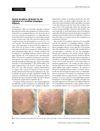
May 2025 in “International Journal of Trichology” Oral Acitretin effectively resolved symptoms in a child with Netherton syndrome.
 22 citations
,
September 2004 in “Journal of The European Academy of Dermatology and Venereology”
22 citations
,
September 2004 in “Journal of The European Academy of Dermatology and Venereology” Bimatoprost can cause longer, thicker, darker eyelashes and eyebrows.
19 citations
,
October 1996 in “International Journal of Dermatology” Pseudopelade is a rare inherited hair loss condition with a genetic cause.
 14 citations
,
January 2015 in “Skin appendage disorders”
14 citations
,
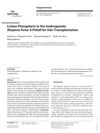
January 2015 in “Skin appendage disorders” Misdiagnosis of LPP in AGA patients can cause hair transplant issues.
 1 citations
,
January 2019 in “International Journal of Medical Reviews and Case Reports”
1 citations
,
January 2019 in “International Journal of Medical Reviews and Case Reports” Treatment with moisturizers improved the skin condition of a girl with a rare genetic skin disorder.
14 citations
,
July 2004 in “Australasian Journal of Dermatology” Follicular mycosis fungoides can look like a B-cell lymphoma, making diagnosis difficult.
75 citations
,
September 1985 in “Archives of dermatology” Two boys had a rare skin condition needing to be differentiated from similar disorders, with unclear inheritance due to few cases.
 40 citations
,
January 2010 in “International Journal of Trichology”
40 citations
,
January 2010 in “International Journal of Trichology” Loose Anagen Syndrome is a hair condition where hairs can be easily pulled out, mainly affecting young girls, and may improve on its own or with treatment.
November 2022 in “Journal of Investigative Dermatology” ILC1-like cells can cause alopecia areata by affecting hair follicles.
September 2025 in “International Journal of Medical Informatics” A machine learning model can predict scarring in lichen planopilaris using factors like vitamin D levels and diagnostic delay.
 81 citations
,
June 2012 in “European journal of human genetics”
81 citations
,
June 2012 in “European journal of human genetics” Inherited ichthyoses cause widespread skin scaling and thickening due to gene mutations.
October 2025 in “Indian Journal of Paediatric Dermatology” Trichoscopy is a helpful tool for diagnosing Netherton syndrome.
August 2024 in “Case Reports in Ophthalmology” Older patients with new retinal lesions may have cancer, and local radiation might not stop it from spreading.
34 citations
,
November 1998 in “Journal of Investigative Dermatology” A common mutation in the hHb6 gene is linked to monilethrix, but other factors may also play a role.
 October 2022 in “JAAD case reports”
 A man with itchy skin lesions and weight loss was diagnosed with a rare skin condition linked to a pancreatic tumor.
3 citations
,
May 2024 in “Skin Appendage Disorders” Trichoscopy helps diagnose and understand Discoid Lupus Erythematosus on the scalp by identifying specific patterns.
2 citations
,
May 1991 in “PubMed” Nevus comedonicus is a rare skin condition causing dark bumps, treatable with retinoic acid or surgery.
2 citations
,
April 2008 in “PubMed” A gene mutation causes monilethrix in a Chinese family.
220 citations
,
June 2013 in “The Journal of Pathology” Lichen planopilaris may be an autoimmune disease causing hair loss due to immune system issues in hair follicles.
97 citations
,
March 2006 in “Journal of Investigative Dermatology” Mutations in the DSG4 gene cause a severe form of brittle hair and skin issues.
 24 citations
,
May 2012 in “International Journal of Dermatology”
24 citations
,
May 2012 in “International Journal of Dermatology” The document concludes that eyelash trichomegaly, which is the abnormal growth of eyelashes, can be present from birth, caused by diseases, or result from certain medications.
4 citations
,
August 2013 in “Chinese Medical Journal” A specific gene mutation in KRT86 is linked to hair disorder in a Chinese Han family.
 April 2023 in “Research Square (Research Square)”
 A specific RNA helps increase the growth of skin cells in Liaoning cashmere goats by working with a protein to boost a growth-related gene.
 3 citations
,
May 2022 in “Clinical and experimental dermatology”
3 citations
,
May 2022 in “Clinical and experimental dermatology” Drugs targeting EMT molecules show promise for treating lichen planopilaris.
32 citations
,
April 2011 in “Journal of the American Academy of Dermatology” Erlotinib may cause scarring hair loss.
 74 citations
,
January 2013 in “Journal of Investigative Dermatology”
74 citations
,
January 2013 in “Journal of Investigative Dermatology” Four genetic risk spots found for hair loss, with WNT signaling involved and a link to curly hair.
 21 citations
,
January 2015 in “Dermatologic Therapy”
21 citations
,
January 2015 in “Dermatologic Therapy” Latanoprost may cause scalp inflammation and delayed healing.