 12 citations
,
January 2010 in “Acta Dermato Venereologica”
12 citations
,
January 2010 in “Acta Dermato Venereologica” Women with early onset androgenetic alopecia have worse lipid profiles.
February 2024 in “Asian Journal of Pharmaceutical and Clinical Research” Expired platelet concentrates can be used effectively for wound healing, reducing waste.
29 citations
,
February 1989 in “Journal of Cutaneous Pathology” A unique hair tumor with a rippled pattern was identified, showing incomplete differentiation and unusual cell arrangements.
 22 citations
,
January 2018 in “Experimental Dermatology”
22 citations
,
January 2018 in “Experimental Dermatology” The meeting focused on understanding, diagnosing, and finding treatments for irreversible hair loss diseases.
November 2022 in “Frontiers in Medicine” PRP shows promise for treating mild alopecia areata but needs more research for cicatricial alopecias.
7 citations
,
January 1973 in “Calcified Tissue International” Hair follicle tissue can induce mineral formation, likely due to a potent nucleator.
27 citations
,
February 2003 in “European Journal Of Oral Sciences” SVpgC2a cells show abnormal growth and keratin changes, modeling early cancer development.
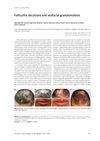 January 2018 in “Advances in Dermatology and Allergology”
 Treatment with dapsone, topical corticosteroids, and antibiotics improved the man's skin conditions.
13 citations
,
September 2012 in “Cell & tissue research/Cell and tissue research” pCLCA2 protein may help maintain skin structure and function.
 1 citations
,
September 2016 in “Dermatologic Surgery”
1 citations
,
September 2016 in “Dermatologic Surgery” New hair loss subtype found, mimics common baldness.
 January 2023 in “Journal of Cutaneous Pathology”
 The study found certain scalp biopsy features can help tell apart alopecia areata from pattern hair loss even when typical immune cells are not seen.

Tumid lupus erythematosus can cause non-scarring hair loss on the scalp and requires careful diagnosis.
2 citations
,
September 2021 in “JAAD case reports” A man with a weakened immune system was diagnosed with a rare skin condition called trichodysplasia spinulosa using skin examination techniques.
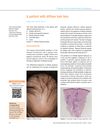 January 2015 in “Indian Dermatology Online Journal”
 The patient's hair loss is most likely due to diffuse alopecia areata.
 160 citations
,
March 2009 in “Seminars in Cutaneous Medicine and Surgery”
160 citations
,
March 2009 in “Seminars in Cutaneous Medicine and Surgery” New insights show Lichen Planopilaris is a rare, scarring hair loss condition, hard to treat, mainly affecting middle-aged women, and significantly impacts mental health.
1 citations
,
December 2023 in “JAAD International” Mast cells may significantly contribute to central centrifugal cicatricial alopecia.
 1 citations
,
December 2017 in “Anais Brasileiros de Dermatologia”
1 citations
,
December 2017 in “Anais Brasileiros de Dermatologia” Frontal fibrosing alopecia can mimic traction alopecia but has distinct features like facial papules and eyebrow thinning.
 June 2025 in “SAS Journal of Medicine”
 Early diagnosis of tufted hair is crucial for managing folliculitis decalvans, a chronic scalp condition.
 July 1976 in “Archives of Dermatology”
 The document suggests more research is needed to understand skin conditions related to toothpaste and other treatments.
November 2012 in “Annales de Dermatologie et de Vénéréologie” Frontal fibrosing alopecia can occur in children, not just postmenopausal women.
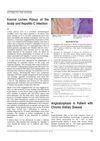
Patients with lichen planus should be tested for hepatitis C.
4 citations
,
November 2019 in “Dermatology - Open Journal” Lichen planus pigmentosus is hard to treat and may be more common in North Africa than previously thought.
September 2020 in “Research Square (Research Square)” Enhanced stem cells from the placenta can reduce fat buildup in eye tissue for Graves' disease.
 39 citations
,
January 2011 in “Archives of Dermatology”
39 citations
,
January 2011 in “Archives of Dermatology” Reflectance confocal microscopy confirms that yellow dots are signs of damaged hair follicles in alopecia areata.
December 2021 in “Journal of pharmaceutical research international” Trichoscopic features can help dermatologists distinguish between female pattern hair loss and chronic telogen effluvium.
 53 citations
,
September 2011
53 citations
,
September 2011 Other common signs, not just the well-known immune cells around hair bulbs, are important for diagnosing hair loss from alopecia areata.
August 2020 in “Research Square (Research Square)” Enhanced stem cells can reduce fat buildup in eye tissue for Graves' disease.
 March 2024 in “Journal of cosmetic dermatology”
 Platelet-rich plasma (PRP) is an effective treatment for lichen planopilaris.
9 citations
,
July 1961 in “Journal of Investigative Dermatology” Cutaneous calcinosis can be induced in young animals using certain compounds, but only in specific areas and with high mortality.
 1 citations
,
January 2025 in “OBM Geriatrics”
1 citations
,
January 2025 in “OBM Geriatrics” Platelets play a key role in the immune system and their lifespan and aging are important for developing new treatments.