November 2024 in “Rheumatology Advances in Practice” Visceral leishmaniasis can mimic rheumatoid arthritis symptoms, especially in immunocompromised patients.
October 2025 in “The American Journal of Gastroenterology” Infliximab can cause SAPHO syndrome, which may improve with Spesolimab and methotrexate.
 January 2007 in “Journal of The American Academy of Dermatology”
 Post-steroid panniculitis is now rare because doctors taper steroids more carefully.
3 citations
,
May 2023 in “Pediatric Dermatology” A 9-year-old boy had a rare scalp condition usually seen in young men.
January 2025 in “Journal of Investigative Dermatology”  278 citations
,
March 2013 in “Gut”
278 citations
,
March 2013 in “Gut” Anti-IL-12/IL-23 antibody therapy effectively treats psoriasiform skin lesions in IBD patients.
September 2019 in “Journal of Investigative Dermatology” Innate lymphoid cells type 1 may contribute to alopecia areata.
 1 citations
,
October 2012 in “QJM”
1 citations
,
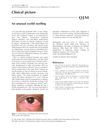
October 2012 in “QJM” A 47-year-old man's eyelid swelling didn't improve with basic treatments, so a biopsy was needed.
51 citations
,
July 2003 in “Annals of the Rheumatic Diseases” Co-trimoxazole may help treat autoimmune diseases.
 April 2026 in “Dermatology and Therapy”
 TNFα inhibitors are effective and well-tolerated for treating severe scalp cellulitis.
 December 2023 in “Curēus”
 A woman with lupus had rare severe symptoms but improved with treatment.
July 2025 in “Cell & Bioscience” Specific immune cells and pathways contribute to hair follicle inflammation and hair loss, suggesting potential treatments for lichen planopilaris.
July 2025 in “Journal of Investigative Dermatology” April 2023 in “Journal of Investigative Dermatology” Interface dermatitis is the most common skin change in drug-induced hypersensitivity syndrome.
 March 2026 in “Biomedicines”
 New treatments like biologics and JAK inhibitors show promise for severe scalp inflammation when traditional methods fail.
 June 2022 in “bioRxiv (Cold Spring Harbor Laboratory)”
 ILC1-like cells can cause alopecia areata by attacking hair follicles.
 January 2026 in “Zenodo (CERN European Organization for Nuclear Research)”
 Thorough evaluation and treatment are crucial for thyroid nodules.
 3 citations
,
January 2010 in “Journal of The European Academy of Dermatology and Venereology”
3 citations
,
January 2010 in “Journal of The European Academy of Dermatology and Venereology” Many people diagnosed with androgenic alopecia might actually have hidden scarring or inflammation.
14 citations
,
August 2004 in “Veterinary Dermatology” The horse had a rare type of hair loss caused by immune cells attacking hair follicles.
August 2021 in “Journal of Investigative Dermatology” ILC1-like cells can cause alopecia areata by disrupting hair follicle immunity, suggesting a new treatment approach.
7 citations
,
April 2025 in “Science Advances” Silicate-based therapy may help treat inflammatory heart disease by reducing immune inflammation.
April 2026 in “Case Reports in Dermatology” Tofacitinib effectively treated a woman's complex autoimmune and autoinflammatory disorders.
ILC1-like cells can independently cause alopecia areata by affecting hair follicles.
 3 citations
,
April 2019 in “The journal of investigative dermatology/Journal of investigative dermatology”
3 citations
,
April 2019 in “The journal of investigative dermatology/Journal of investigative dermatology” ILC1 cells contribute to hair loss in alopecia areata.
13 citations
,
March 2000 in “Veterinary Dermatology” Dogs have a skin condition like human pseudopelade, causing hair loss that doesn't improve with treatment.
 7 citations
,
July 2019 in “The Journal of Dermatology”
7 citations
,
July 2019 in “The Journal of Dermatology” Terbinafine effectively treated kerion celsi despite disrupted immune responses.
 January 2026 in “Zenodo (CERN European Organization for Nuclear Research)”
 The thyroid nodule was benign, and surgery was successful with a smooth recovery.
February 2016 in “Journal of Allergy and Clinical Immunology” Consider DRIF and perform skin biopsies for persistent papular rashes.
3 citations
,
May 2009 in “Journal of Pediatric Gastroenterology and Nutrition” Consider infectious diseases like visceral leishmaniasis before diagnosing autoimmune hepatitis.
7 citations
,
October 2008 in “Arthritis Care & Research” Aggressive immunosuppressive treatment improved a woman's severe heart condition linked to autoimmune disease.