 5 citations
,
March 2023 in “bioRxiv (Cold Spring Harbor Laboratory)”
5 citations
,
March 2023 in “bioRxiv (Cold Spring Harbor Laboratory)” Dynamic, light touch is sensed through a common mechanism involving Piezo2 channels in sensory axons.
 December 2025 in “Nature Communications”
 Club-like receptors detect light touch but not whisking.
19 citations
,
February 2013 in “Journal of Investigative Dermatology” Touch domes in human skin are complex sensory structures not directly linked to hair.
Light tickling can be unpleasant and may feel worse for individuals with autism.
October 2019 in “Journal of Pakistan Association of Dermatologists” Keloids are tough to treat skin growths needing a detailed treatment plan.
 59 citations
,
December 2016 in “Clinical, Cosmetic and Investigational Dermatology”
59 citations
,
December 2016 in “Clinical, Cosmetic and Investigational Dermatology” Acne keloidalis nuchae is a tough-to-treat condition that greatly affects quality of life, especially in men of African descent.

Meis2 is essential for touch sensation and proper nerve connection to touch receptors in certain skin areas of mice.

Meis2 is essential for touch sensation and nerve function in mice.

The transcription factor Meis2 is essential for touch sensation and proper nerve development in touch receptors.
 7 citations
,
April 2020 in “Curēus”
7 citations
,
April 2020 in “Curēus” Combining hair transplantation with microneedling or laser and UV light may help treat tough vitiligo on hands and feet, with microneedling being affordable and easy to learn.
 86 citations
,
June 2017 in “Anais Brasileiros de Dermatologia”
86 citations
,
June 2017 in “Anais Brasileiros de Dermatologia” Antioxidants can benefit skin health but should be used carefully to avoid negative effects.
9 citations
,
October 1994 in “Brain Research” Fetal sheep develop skin nerve pathways and responses to touch and heat between 75 and 134 days of gestation.
April 2019 in “Journal of Investigative Dermatology” FGFR2 signaling controls Merkel cell formation in different skin regions.
 16 citations
,
December 2012 in “The Clinical Journal of Pain”
16 citations
,
December 2012 in “The Clinical Journal of Pain” Chronic scalp pain in trichodynia involves both body-wide and localized increased pain sensitivity.
 December 2002 in “Archives of Dermatology”
 The poem ends by asking for case reports on serious health issues like Telogen Effluvium.
A new imaging method helps see and study touch nerve endings in mouse skin.
 24 citations
,
March 2015 in “Dermatologic Surgery”
24 citations
,
March 2015 in “Dermatologic Surgery” Home-use cosmetic laser and light devices show modest results for hair removal and acne treatment, but more research is needed for confirmation.
 9 citations
,
September 2009 in “Journal of Cutaneous Medicine and Surgery”
9 citations
,
September 2009 in “Journal of Cutaneous Medicine and Surgery” UV light causes skin color loss in bald areas; wear a cap and use sunscreen.
 65 citations
,
March 2016 in “Lasers in Medical Science”
65 citations
,
March 2016 in “Lasers in Medical Science” Most low-level light therapy studies did not accurately report how light was measured, affecting treatment reliability.
 24 citations
,
January 2011 in “International Journal of Trichology”
24 citations
,
January 2011 in “International Journal of Trichology” Light microscopy is useful for diagnosing different hair disorders.
 31 citations
,
November 2016 in “Cell Reports”
31 citations
,
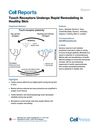
November 2016 in “Cell Reports” Touch sensitivity in mouse skin decreases during hair growth due to changes in touch receptors.
 70 citations
,
April 2017 in “Lasers in surgery and medicine”
70 citations
,
April 2017 in “Lasers in surgery and medicine” Blue light promotes hair growth by interacting with specific receptors in hair follicles.
 September 2018 in “The Medical Journal of Cairo University/The Medical Journal of Cairo University”
 Polarized light therapy helps hair regrowth in alopecia areata patients.
 195 citations
,
January 2008 in “Photochemistry and Photobiology”
195 citations
,
January 2008 in “Photochemistry and Photobiology” Visible light can damage skin and most sunscreens don't block it well; more research is needed on its effects and protection methods.
 19 citations
,
February 2018 in “Lasers in Medical Science”
19 citations
,
February 2018 in “Lasers in Medical Science” Red light and LED treatments help hair grow by activating a specific cell signaling pathway.
 17 citations
,
December 2015 in “International Journal of Cosmetic Science”
17 citations
,
December 2015 in “International Journal of Cosmetic Science” Visible light can improve skin disorders and hair loss, but more research is needed to understand long-term effects.
 8 citations
,
April 2024 in “Cureus”
8 citations
,
April 2024 in “Cureus” CO2 lasers are better for severe acne scars, while Er:YAG lasers are gentler with fewer side effects.
 6 citations
,
July 2021 in “Microbial biotechnology”
6 citations
,
July 2021 in “Microbial biotechnology” The combined treatment with engineered bacteria and yellow LED light improved wound healing in mice.
 April 2024 in “Lasers in medical science”
 Near-infrared LED light improves skin rejuvenation and hair growth better than white LED light.
 81 citations
,
June 2014 in “Cold Spring Harbor perspectives in medicine”
81 citations
,
June 2014 in “Cold Spring Harbor perspectives in medicine” Skin has specialized touch receptors that can tell different sensations apart.