 42 citations
,
February 2017 in “Scientific Reports”
42 citations
,
February 2017 in “Scientific Reports” Researchers found a way to create cells from stem cells that act like human cells important for hair growth and could be used for hair regeneration treatments.
 3 citations
,
January 2017 in “Stem Cells International”
3 citations
,
January 2017 in “Stem Cells International” Adult mesenchymal stem cells can help regenerate tissues and are promising for healing bones, wounds, and hair follicles.
 November 2024 in “Cells Tissues Organs”
 Stem cells from umbilical cord blood are more effective than minoxidil for treating hair loss.
 30 citations
,
June 2017 in “Current stem cell research & therapy”
30 citations
,
June 2017 in “Current stem cell research & therapy” Adipose-derived stem cells (fat cells) show promise in treating hair loss in both men and women.
September 2015 in “International Society of Hair Restoration Surgery” Hair follicle stem cells could lead to new hair loss treatments.
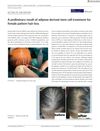 April 2021 in “Journal of Cosmetic Dermatology”
 Stem cell treatment improved hair density in female hair loss patient.
 5 citations
,
August 2013 in “InTech eBooks”
5 citations
,
August 2013 in “InTech eBooks” KLF4 is important for maintaining stem cells and has potential in cancer treatment and wound healing.
 16 citations
,
February 2019 in “Gene”
16 citations
,
February 2019 in “Gene” Researchers found a good way to isolate hair follicle stem cells from newborn goats for further study.
 1 citations
,
September 2023 in “Journal of Fatwa Management and Research”
1 citations
,
September 2023 in “Journal of Fatwa Management and Research” Islamic perspectives in Malaysia raise ethical concerns about using stem cells, especially from embryos, for beauty and medical treatments.
 14 citations
,
February 2020 in “Stem Cells International”
14 citations
,
February 2020 in “Stem Cells International” Umbilical cord cells safely improve healing in long-term nonhealing wounds better than a placebo.
 218 citations
,
April 2008 in “Genes & Development”
218 citations
,
April 2008 in “Genes & Development” Skin stem cells help repair damage and maintain healthy skin.
4 citations
,
June 2021 in “Frontiers in Pharmacology” Bone marrow stem cells and their medium help hair regrowth.
 January 2026 in “Theoretical and Natural Science”
 Targeting Lgr5+ stem cells and Wnt signaling may effectively treat hair loss.
 9 citations
,
January 2017 in “Virchows Archiv”
9 citations
,
January 2017 in “Virchows Archiv” LGR5 and LGR6 are expressed differently in various skin tumors, which may offer clues about their origins.
 6 citations
,
May 2013 in “PloS one”
6 citations
,
May 2013 in “PloS one” The Foxn1(-/-) nude mouse shows disrupted and expanded skin stem cell areas due to high Lhx2 levels.
Stem cell therapy shows promise for better burn healing but needs more research and standardization.
 March 2026 in “Frontiers in Cell and Developmental Biology”
 Understanding how certain proteins and genetic changes control skin stem cells is key to treating skin diseases.
33 citations
,
March 2015 in “Experimental Dermatology” LHX2 and SOX9 identify unique hair follicle cell groups, crucial for hair maintenance.
 April 2025 in “WORLD JOURNAL OF PLASTIC SURGERY”
 Stem cells improve healing of diabetic wounds.
December 2022 in “Nature Communications” Bead-jet printing of stem cells improves muscle and hair regeneration.
 3 citations
,
November 2013 in “Journal of Stem Cells and Regenerative Medicine”
3 citations
,
November 2013 in “Journal of Stem Cells and Regenerative Medicine” Imaging intestinal stem cells might help detect early signs of colorectal cancer.
 September 2013 in “Science”
 Transplanted human Olig2+ astroglia may help improve learning and memory after a stroke.
 April 2026 in “npj Regenerative Medicine”
 Melanocyte stem cells in hair follicles are key to understanding and potentially preventing hair graying.

Enhanced stem cells from the placenta can reduce fat cell formation in eye disease.
 January 2023 in “Biomedicine & Pharmacotherapy”
 Low oxygen conditions improve how well certain stem cells from embryos can make hair grow longer and faster.
 December 2025 in “Academic Journal of Science and Technology”
 Mesenchymal stem cells can effectively aid skin healing and anti-aging.
 31 citations
,
April 2019 in “Cell reports”
31 citations
,
April 2019 in “Cell reports” Patient-derived melanocytes can potentially treat vitiligo by restoring skin pigmentation.

Stem cells can improve skin grafts by enhancing blood flow and hair growth.
January 2003 in “Journal of the Fourth Military Medical University” Hair follicles can regenerate if cut at certain points, with stem cells in the upper part.
 31 citations
,
May 2015 in “Stem Cell Reports”
31 citations
,
May 2015 in “Stem Cell Reports” Stem cells and their surrounding environment in hair follicles work closely together, affecting hair growth and having implications for cancer and tissue regeneration.