990 citations
,
October 1999 in “Development” Activated LEF/TCF complexes are crucial for hair development and cycling.
 April 2023 in “Journal of Investigative Dermatology”
 PTEN was identified as a specific marker for the skin disease cutaneous lupus erythematosus, and it helps increase the expression of harmful type I interferons.
1 citations
,
October 2024 in “World Journal of Gastroenterology” Inhibiting the Wnt pathway may help stop liver cancer growth.
4 citations
,
November 2024 in “Journal of Advanced Research” Targeting NMMHC IIA may help treat blood-brain barrier damage.
April 2023 in “Journal of Investigative Dermatology” AL136131.3 slows hair growth by affecting energy processes in hair loss.
June 2019 in “International journal of dermatology and venereology” The Hedgehog Signaling Pathway is important for skin and hair development and skin cancer treatment, but more research is needed to understand it fully.
 55 citations
,
June 2014 in “Nature Communications”
55 citations
,
June 2014 in “Nature Communications” Tcf3 helps cells move and heal wounds by controlling lipocalin 2.
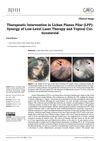 January 2024 in “Brazilian Journal of Hair Health”
 Combining low-level laser therapy with topical corticosteroids effectively improved Lichen Planopilaris symptoms.
 August 2004 in “Journal of the American College of Surgeons”
 Several genes, including Hox-7A, Stra6, and Lim-1, are involved in normal palate formation.
 29 citations
,
February 2016 in “International Journal of Dermatology”
29 citations
,
February 2016 in “International Journal of Dermatology” People with lichen planus are more likely to have dyslipidemia, especially higher triglyceride levels.
 April 2016 in “Journal of Investigative Dermatology”
 Lithocholic acid helps hair growth and regeneration in alopecia by activating vitamin D receptors.
6 citations
,
March 2020 in “Electronic Journal of Biotechnology” LncRNA-599554 helps hair growth in cashmere goats by boosting certain cell functions.
 April 2018 in “The journal of investigative dermatology/Journal of investigative dermatology”
 Mitochondrial dysfunction may contribute to chronic inflammation and immune system issues in Lichen planopilaris.
 8 citations
,
June 2022 in “Scientific Reports”
8 citations
,
June 2022 in “Scientific Reports” LGR5 is a common marker of hair follicle stem cells in different animals and is important for hair growth and regeneration.
June 2009 in “Faculty Opinions – Post-Publication Peer Review of the Biomedical Literature” Lrig1 marks a unique group of stem cells in mouse skin that can become different skin cell types.

Deucravacitinib improves symptoms and reduces inflammation in Lichen Planopilaris.
 165 citations
,
September 2001 in “Genes & development”
165 citations
,
September 2001 in “Genes & development” CDP is crucial for lung and hair follicle cell development.
July 2026 in “Research Square”  25 citations
,
May 2013 in “Journal of mammary gland biology and neoplasia”
25 citations
,
May 2013 in “Journal of mammary gland biology and neoplasia” Hedgehog signaling is crucial for mammary gland development over hair follicles.
April 2026 in “Cytotherapy” Immune activation of hair follicle stem cells can help develop new hair regeneration therapies.
June 2025 in “International Journal of Molecular Sciences” LncRNAs play a crucial role in muscle regulation and could help develop treatments for Duchenne muscular dystrophy.
 1 citations
,
February 2022 in “bioRxiv (Cold Spring Harbor Laboratory)”
1 citations
,
February 2022 in “bioRxiv (Cold Spring Harbor Laboratory)” A peptide from hair follicle stem cells promotes hair growth by activating specific skin cells.
8 citations
,
July 2023 in “Inflammation and Regeneration” ALKBH5 helps wounds heal faster by stabilizing PELI2 mRNA.
17 citations
,
September 2018 in “Matrix Biology” Laminin-511 is essential for proper melanocyte movement and development in mice.
 April 2018 in “Journal of Investigative Dermatology”
 Researchers found that the Leptin receptor is a consistent marker for hair follicle dermal cells, which may help future hair research.
 April 2024 in “Cellular signalling”
 Activating TRPMLs helps human cells important for hair growth and increases hair growth in mice.
10 citations
,
January 2020 in “Genes & Diseases” Circ-Smad5 slows cell growth by blocking a specific cell signaling pathway.
 1 citations
,
April 2017 in “Journal of Investigative Dermatology”
1 citations
,
April 2017 in “Journal of Investigative Dermatology” CCL5 is important for the hair growth potential of human dermal papilla cells.
 194 citations
,
May 2000 in “Journal of Investigative Dermatology”
194 citations
,
May 2000 in “Journal of Investigative Dermatology” The hedgehog signaling pathway is crucial for hair growth but not for the initial creation of hair follicles.
90 citations
,
February 2001 in “The journal of investigative dermatology/Journal of investigative dermatology” Interleukin-1 increases keratin K6 production in skin cells.