 2 citations
,
October 2014 in “International Journal of Trichology”
2 citations
,
October 2014 in “International Journal of Trichology” Low-level laser therapy may increase hair density in pattern hair loss.

Low-Level Light Therapy improves quality of life more for women than men with hair loss.
9 citations
,
November 2021 in “PubMed” FDA-approved low-level light/laser therapy devices can significantly increase hair density in people with pattern hair loss.
 11 citations
,
February 2020 in “Dermatology and therapy”
11 citations
,
February 2020 in “Dermatology and therapy” Low-Level Light Therapy significantly reduced inflammation and promoted hair regrowth in patients with Lichen planopilaris.
 April 2018 in “International journal of nanotechnology and nanomedicine”
 Low-level laser therapy effectively reduces the size of pressure ulcers compared to placebo.
 September 2024 in “Research Square (Research Square)”
 Low-level laser therapy effectively treats hair loss and promotes hair growth.
 November 2021 in “Research Square (Research Square)”
 A 532 nm laser at 15 J/cm2 speeds up tendon healing by increasing tendon stem cell growth and tendon-related gene activity.
4 citations
,
September 2021 in “Medical Lasers” Low-level laser therapy effectively prevents and treats oral mucositis.
 March 2024 in “Cytologia”
 LncRNA MTC boosts growth of goat skin cells, improving cashmere quality.
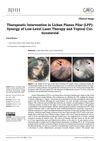 January 2024 in “Brazilian Journal of Hair Health”
 Combining low-level laser therapy with topical corticosteroids effectively improved Lichen Planopilaris symptoms.
 April 2019 in “Journal of Investigative Dermatology”
 Low-level laser therapy helps hair growth and reduces hair loss with few side effects.
Low-level laser therapy is a safe, painless method that effectively treats acne and improves skin without post-treatment care.
 11 citations
,
January 2020 in “Skin appendage disorders”
11 citations
,
January 2020 in “Skin appendage disorders” Low-level laser therapy safely and effectively improves hair growth and coverage for male and female pattern hair loss.
 1 citations
,
January 2019 in “Journal of Nuclear Technologyin Applied Science (JNTAS) (Print)”
1 citations
,
January 2019 in “Journal of Nuclear Technologyin Applied Science (JNTAS) (Print)” Low-level laser therapy speeds up skin healing and stimulates hair follicles in mice after radiation exposure.
53 citations
,
April 2016 in “Stem cell research & therapy” LL-37 helps stem cells grow and move, aiding tissue regeneration and hair growth.
 January 2025 in “Medical Research Archives”
 Low-level laser therapy can help with inflammation but isn't widely accepted yet.
 160 citations
,
December 2016 in “Journal of biophotonics”
160 citations
,
December 2016 in “Journal of biophotonics” Low-level laser therapy, now called photobiomodulation, is recognized for its broad medical applications and scientific backing.
 December 2023 in “Trials”
 The trial is testing if a helmet that uses light can prevent hair loss during chemotherapy.
May 2024 in “International journal of medicine and psychology.” Monoclonal antibodies LT-1, LT-2, and LT-7 help diagnose certain blood cancers.
1 citations
,
January 2021 in “Journal of Cutaneous and Aesthetic Surgery” Low-level light therapy can safely and effectively stimulate hair growth in people with androgenetic alopecia.
3 citations
,
November 2021 in “Clinical, Cosmetic and Investigational Dermatology” Autologous cellular micrografts improve hair density and thickness in the short term for androgenetic alopecia.
14 citations
,
January 2018 in “Indian Journal of Dermatology, Venereology and Leprology” Adding low-level light therapy to minoxidil improves hair growth and patient satisfaction.
July 2017 in “OPAL (Open@LaTrobe) (La Trobe University)” High-throughput LC-MS screening is effective for finding new autotaxin inhibitors for asthma treatment.
 45 citations
,
January 2014 in “International Journal of Trichology”
45 citations
,
January 2014 in “International Journal of Trichology” Low-level laser therapy helps male and female hair loss alone or with other treatments.
64 citations
,
October 2020 in “Journal of lasers in medical sciences” Low-level laser therapy shows promise but needs more research for improvement.
2 citations
,
June 2024 in “Skin Research and Technology” Low-level laser therapy can boost hair growth and speed up wound healing.
January 2026 in “Dermatologic Therapy” Low-level laser therapy is a safe and effective long-term treatment for hair loss, improving hair density and thickness.
 7 citations
,
March 2020 in “Lasers in Medical Science”
7 citations
,
March 2020 in “Lasers in Medical Science” LLLT is a safe, promising hair loss treatment, but more research needed.
 February 2025 in “Journal of Biophotonics”
 Dual-wavelength laser therapy promotes better hair regrowth than single-wavelength treatments.
44 citations
,
June 2017 in “The EMBO Journal” LPA3 signaling in the uterus is crucial for placental formation and fetal development.