Search
for
Sort by
Research
270-300 / 1000+ resultsresearch Randomized clinical trial of low-dose oral minoxidil for the treatment of female pattern hair loss: 0.25 mg versus 1 mg
1 mg/day of low-dose oral minoxidil is effective and safe for treating female hair loss.
research Reply to: “Very-low-dose oral minoxidil in male androgenetic alopecia: A study with quantitative trichoscopic documentation”
Low-dose oral minoxidil effectively treats mild-moderate male hair loss, alone or combined with other therapies.
research Long-term satisfaction and tolerability with low-dose flutamide: a 20-year surveillance study on 120 hyperandrogenic women
Low-dose flutamide improved hirsutism and satisfaction in women but had common side effects, causing some to stop treatment.
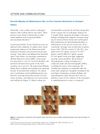
research Reversible Myopathy and Ophthalmoparesis After Low-Dose Finasteride Administration for Androgenic Alopecia
Low-dose finasteride may cause muscle weakness and eye issues, but stopping the drug can lead to recovery.
research Efficacy of low-dose GnRH analogue (Buserelin) in the treatment of hirsutism
Low-dose Buserelin effectively reduces hirsutism with minimal side effects.
research Response to Kang et al, “Efficacy of low-dose oral minoxidil in the management of anticancer therapy-induced alopecia in patients with breast cancer: A retrospective cohort study”
Low-dose oral minoxidil combined with topical minoxidil improves hair density in breast cancer patients but may cause excess hair growth.
research Improving efficacy and maintaining safety in the treatment of alopecia with low-dose oral minoxidil and spironolactone combination therapy: A retrospective review
Combining low-dose oral minoxidil and spironolactone may improve hair growth safely.

research Safety and tolerability of low-dose oral minoxidil in adolescents: A retrospective review
The safety and tolerability of low-dose oral minoxidil for treating hair loss in adolescents is not clearly determined.
research There Is a Positive Dose-Dependent Association between Low-Dose Oral Minoxidil and Its Efficacy for Androgenetic Alopecia: Findings from a Systematic Review with Meta-Regression Analyses
Low-dose oral minoxidil effectively promotes hair growth but has associated risks.
research Comment on “Low dose oral minoxidil for treating alopecia: A 3-year North American retrospective case series”: Adding further evidence about side effects
Low-dose oral minoxidil for hair loss seems to have rare side effects, but more research is needed to confirm its safety.
research Comparison between low-dose chemotherapy and surgery for the treatment of extremity-associated solitary bone lesions in children with Langerhans cell histiocytosis in South China: A case-control study
Low-dose chemotherapy is safer, more effective, and cost-effective than surgery for treating bone lesions in children.
research The influence of low dose finasteride, a type II 5α-reductase inhibitor, on circulating neuroactive steroids
Low dose finasteride decreases certain steroids, possibly increasing depression risk.
research Assessing the influence of medications with antagonistic effects on low-dose oral minoxidil in patients with alopecia: A retrospective study
Low-dose oral minoxidil is effective for alopecia even with other medications.
research Hairy drinking may cause severe hangover symptoms in patients taking low‐dose minoxidil
Avoid alcohol when taking low-dose minoxidil to prevent severe hangovers.
research Low-dose oral minoxidil for persistent chemotherapy and radiotherapy-induced alopecia in a pediatric female patient
research Low dose oral minoxidil and the conundrum of cardiovascular complications
Low dose oral minoxidil can help with hair growth but may cause serious heart problems, so doctors need to be careful.

research 42482 Low dose oral minoxidil as monotherapy in patients with hair loss
Low dose oral minoxidil can help with hair loss when used alone.
research The effects of low-dose radiation therapy in patients with mild-to-moderate Alzheimer's dementia: an interim analysis of a pilot study
Low-dose radiation therapy may improve brain function in some Alzheimer's patients and is generally well-tolerated.
research Serious complication of low-dose oral minoxidil for hair loss
Low-dose oral minoxidil can cause serious heart complications.
research Low‐dose in utero exposure to finasteride promotes developmental changes in both male and female gerbil prostates
Exposure to low doses of finasteride in the womb causes changes in the prostate of both male and female gerbils.
research Change in Prostate Specific Antigen Concentration in Men with Prostate Specific Antigen Less than 2.5 ng/ml Taking Low Dose Finasteride or Dutasteride for Male Androgenetic Alopecia
Low-dose finasteride and dutasteride reduce PSA levels by 27.8% in men with male androgenetic alopecia.
research A Case of Unilateral Idiopathic Gynecomastia Aggravated by Low-dose Finasteride (1mg/day, Propecia$^{(R)}$)
Low-dose finasteride can cause painful breast enlargement in men, which resolves after stopping the medication.
research The Efficacy of Intermittant Low-Dose Systemic Corticosteroid in the Treatment of Alopecia Areata
Low-dose intermittent corticosteroid therapy can effectively treat alopecia areata.
research Low Dose Oral Minoxidil in Androgenetic Alopecia
The 2.5 mg dose of oral minoxidil is more effective for hair growth in androgenetic alopecia.

research Low-Dose Oral Minoxidil Beyond Androgenetic Alopecia: A Comparative Narrative Review of Emerging Evidence
Low-dose oral minoxidil may help with various hair loss types, but more research is needed.

research Rapid Hair Regrowth in Localized Alopecia Areata Following Low-Dose Intralesional Corticosteroid
Low-dose intralesional corticosteroid treatment led to rapid hair regrowth in localized alopecia areata.
research IP28-24 RISK OF ERECTILE DYSFUNCTION AMONG REPRODUCTIVE-AGED MEN FOLLOWING LOW-DOSE FINASTERIDE USE FOR ANDROGENETIC ALOPECIA: A PROPENSITY-MATCHED COHORT STUDY
Low-dose finasteride may increase erectile dysfunction risk over time.
research Comparative Study of effectiveness of low dose Oral Minoxidil vs Topical Minoxidil (5%) in Male Androgenetic Alopecia.
Low-dose oral minoxidil is more effective and convenient for treating male pattern baldness than topical minoxidil.

research Low-Dose Oral Minoxidil Improves Hairline and Eyebrow Coverage in Frontal Fibrosing Alopecia: A Prospective Study
Low-dose oral minoxidil helps improve hairline and eyebrow coverage in frontal fibrosing alopecia.