26 citations
,
March 2018 in “Experimental Dermatology” Prolactin may influence skin glands and could be a target for treating acne and skin aging.
July 2021 in “Authorea (Authorea)” Graham-Little Piccardi Lassueur Syndrome is a rare skin condition with specific hair loss and skin symptoms.
58 citations
,
January 2015 in “Journal of the American Academy of Dermatology” Pioglitazone may help treat lichen planopilaris, but more research is needed.
 5 citations
,
July 2014 in “Acta Crystallographica Section D-biological Crystallography”
5 citations
,
July 2014 in “Acta Crystallographica Section D-biological Crystallography” Mutations in the enzyme don't significantly change how it binds to its specific substances.
 5 citations
,
September 2011 in “Bioorganic & Medicinal Chemistry Letters”
5 citations
,
September 2011 in “Bioorganic & Medicinal Chemistry Letters” Pfizer found that pantolactam-based compounds can reduce sebum (skin oil) production when applied topically.
32 citations
,
August 1982 in “Journal of the American Academy of Dermatology” GLPLS and LPP are variants of lichen planus.
January 2025 in “Indian Journal of Dermatopathology and Diagnostic Dermatology” Dermoscopy helps diagnose rare GLPLS in males.
 105 citations
,
December 2009 in “Archives of dermatology”
105 citations
,
December 2009 in “Archives of dermatology” A specific drug can help treat Lichen Planopilaris, a condition causing permanent hair loss.
Treat active lichen planopilaris early to prevent permanent hair loss.
December 2024 in “Biochemical and Biophysical Research Communications” LMWP-PDGFA shows promise for improving hair health and treating hair loss with fewer side effects.
 March 2025 in “Research Square (Research Square)”
 Lactiplantibacillus plantarum lysate from green tea may help treat scalp seborrheic dermatitis.
 April 2023 in “Journal of Investigative Dermatology”
 MPZL3 protein helps control the size of oil glands and the growth of oil-producing cells in both mice and humans.
 3 citations
,
March 2016 in “Journal of Cosmetic Dermatology”
3 citations
,
March 2016 in “Journal of Cosmetic Dermatology” GPIGS peptide increases thick hair growth in balding Japanese men.
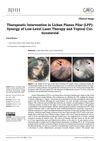 January 2024 in “Brazilian Journal of Hair Health”
 Combining low-level laser therapy with topical corticosteroids effectively improved Lichen Planopilaris symptoms.
 July 2022 in “The journal of investigative dermatology/Journal of investigative dermatology”
 MPZL3 protein helps keep sebaceous gland size and cell growth in check.
24 citations
,
September 2020 in “Pharmaceutics” Lidocaine-loaded microparticles effectively relieve pain and fight bacteria in wounds.
 September 2023 in “Al-Azhar International Medical Journal /Al-Azhar International Medical Journal”
 Laparoscopic sleeve gastrectomy is safe and effective for treating obesity in children and teens.
April 2017 in “Journal of dermatological science” Removing PLCg1 from skin cells caused thicker oil glands and less hair in mice.
 January 2026 in “RSC Advances”
 The hydrogel speeds up diabetic wound healing and reduces scarring.
 May 2023 in “Scientific Reports”
 The seed extract of Lepidium sativum L. can potentially treat hair loss, showing effects similar to 5% minoxidil.
 33 citations
,
October 2013 in “Journal of The American Academy of Dermatology”
33 citations
,
October 2013 in “Journal of The American Academy of Dermatology” Pioglitazone usually doesn't effectively treat or cure lichen planopilaris.
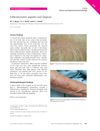 May 2014 in “Clinical and Experimental Dermatology”
 A 70-year-old woman with a rare skin condition improved after treatment with topical steroids and acitretin.
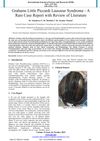 October 2023 in “International Journal of Science and Research (IJSR)”
 Early diagnosis of GLPLS is crucial to prevent complications, but scarring alopecia is irreversible.
January 2026 in “JPRAS Open” PDLLA scalp injections improved hair regrowth in most patients with non-scarring alopecia.
February 2023 in “Materials today bio” The treatment effectively promotes hair regrowth in androgenetic alopecia without causing skin irritation.
253 citations
,
April 2009 in “Journal of Biological Chemistry” p2y5, now called LPA6, is a receptor important for human hair growth.
July 2025 in “Annals of Medicine” Gestrinone pellets may help reduce pelvic pain in endometriosis safely.
24 citations
,
July 2015 in “Molecular Medicine Reports” Lysophosphatidic acid boosts stem cell growth and movement by creating reactive oxygen species.
The new gel effectively treats psoriasis with minimal side effects.
November 2020 in “Acta Medica Bulgarica/Acta medica Bulgarica” The document concludes that treatment improved skin lesions but not scalp hair loss in two patients with Graham-Little-Piccardi-Lassueur syndrome.