 1 citations
,
January 2023 in “Journal of Drugs in Dermatology”
1 citations
,
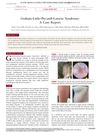
January 2023 in “Journal of Drugs in Dermatology” Early detection of Graham-Little-Piccardi-Lasseur syndrome is key for better management.
 1 citations
,
September 2025 in “Frontiers in Immunology”
1 citations
,
September 2025 in “Frontiers in Immunology” HuR is essential for Treg function and preventing autoimmunity.
January 1969 in “Santes Creus: Boletín del Archivo Bibliográfico de Santes Creus” Planarians regenerate using conserved gene expression mechanisms, with runt-1 crucial for cell type specification.
June 2026 in “Strathprints: The University of Strathclyde institutional repository (University of Strathclyde)” Topical IKKα inhibitors may help prevent CCS tumours.
16 citations
,
July 1996 in “Journal of Investigative Dermatology” 3 citations
,
March 2024 in “iScience” Long-lived proteins may predict age-related diseases.
 2 citations
,
November 2024 in “PeerJ”
2 citations
,
November 2024 in “PeerJ” Long non-coding RNAs play a role in hair growth stages of Hetian sheep, affecting wool quality.
 23 citations
,
August 2018 in “Biochimica and biophysica acta. Molecular and cell biology of lipids”
23 citations
,
August 2018 in “Biochimica and biophysica acta. Molecular and cell biology of lipids” Different sPLA2 enzymes affect immunity, skin and hair health, reproduction, and may be potential targets for therapy.
December 2015 in “OPAL (Open@LaTrobe) (La Trobe University)” QLT0267 stops hair follicle cell growth and movement.
August 2021 in “Journal of Investigative Dermatology” ILC1-like cells can cause alopecia areata by disrupting hair follicle immunity, suggesting a new treatment approach.
 4 citations
,
May 2025 in “npj Parkinson s Disease”
4 citations
,
May 2025 in “npj Parkinson s Disease” PINK1 is important for controlling gut immune responses linked to early Parkinson's disease.
 October 2021 in “Research Square (Research Square)”
 A 532 nm laser helps tendon stem cells grow and become tendon-like by increasing Nr4a1 activity, which may speed up tendon repair.
227 citations
,
January 1998 in “Journal of biological chemistry/The Journal of biological chemistry” Mutations at Val-889 and Arg-752 disrupt key interactions in the androgen receptor, affecting its function.
 January 2021 in “American journal of dermatological research and reviews”
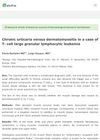
 The muscle damage was caused by T-cell large granular lymphocytic leukemia, not dermatomyositis.
61 citations
,
June 2019 in “BMC Genomics” lncRNAs significantly influence koi carp skin color.
July 2025 in “Zenodo (CERN European Organization for Nuclear Research)” Ritlecitinib helps regrow hair in alopecia areata and is safe for long-term use.
 17 citations
,
June 2019 in “BMC genomics”
17 citations
,
June 2019 in “BMC genomics” Non-coding RNAs help control hair growth in cashmere goats.
5 citations
,
May 2018 in “Veterinary dermatology” Gluconolactone products can significantly reduce skin scaling in golden retrievers with ARCI.
 February 2026 in “International Journal of Nanomedicine”
 The system improved diabetic wound healing in rats.
 3 citations
,
January 2008 in “Endocrine journal”
3 citations
,
January 2008 in “Endocrine journal” A new mutation linked to partial Androgen Insensitivity Syndrome and prostate cancer was found in a patient unhappy with their female gender assignment.
November 2024 in “SKIN The Journal of Cutaneous Medicine” Ritlecitinib effectively reduces severe hair loss in alopecia areata over 24 months.
July 2025 in “Journal of Investigative Dermatology” Nelfb is essential for dermal fat development and survival.
 November 2023 in “The journal of investigative dermatology/Journal of investigative dermatology”
 ARQ-234, a protein designed to treat atopic dermatitis, shows increased effectiveness in early testing.
1 citations
,
December 2020 in “Medical lasers” The laser therapy device effectively increased hair growth in people with androgenetic alopecia.
June 2020 in “bioRxiv (Cold Spring Harbor Laboratory)” IGN genes may regulate hair growth and could be targeted for hair-loss treatments.
 3 citations
,
February 2022 in “Frontiers in Genetics”
3 citations
,
February 2022 in “Frontiers in Genetics” The LncRNA AC010789.1 slows down hair loss by promoting hair follicle growth and interacting with miR-21 and the Wnt/β-catenin pathway.
 September 2019 in “Journal of Investigative Dermatology”
 Targeted therapy with Ustekinumab significantly improved a skin condition called ILVEN, which is caused by mutations in the CARD14 gene.
 37 citations
,
April 2011 in “Journal of Biological Chemistry”
37 citations
,
April 2011 in “Journal of Biological Chemistry” LEF1 interacts with Vitamin D Receptor, affecting hair follicle regeneration and this could be linked to hair loss conditions.
Defective nuclear transport may cause gene expression changes in Progeria.
18 citations
,
February 2023 in “eLife” ILC1-like cells can independently cause alopecia areata.