 November 2024 in “Cureus”
 Scalp edema may be a new variant of conditions reacting to scarring alopecia like LPP.
 April 2023 in “The journal of investigative dermatology/Journal of investigative dermatology”
 HPV8 causes hair follicle stem cells to grow, leading to skin lesions.
7 citations
,
April 2019 in “Animal biotechnology” The POMP gene is active in various goat tissues and affects hair growth, with certain treatments influencing its expression.
166 citations
,
September 2011 in “The Journal of Cell Biology” p63 controls Satb1 to help skin develop properly.
 September 2023 in “bioRxiv (Cold Spring Harbor Laboratory)”
 FOL-026 peptide can help repair blood vessels and promote growth, offering potential treatment for vascular diseases.
5 citations
,
July 2014 in “Molecular Biology Reports”  5 citations
,
November 2022 in “Genetics selection evolution”
5 citations
,
November 2022 in “Genetics selection evolution” Low-coverage sequencing is a cost-effective way to find genetic factors affecting rabbit wool traits.
4 citations
,
April 2024 in “Clinical Cosmetic and Investigational Dermatology” Trichoscopy helps distinguish between scalp Discoid Lupus Erythematosus and Lichen Planopilaris for accurate diagnosis and treatment.
 December 2025 in “Portuguese Journal of Dermatology and Venereology”
 Erosive palmoplantar lichen planus in North-East India mainly affects the feet and often involves nails, with unique inflammatory skin changes.
 May 2024 in “Journal of cosmetic dermatology”
 Heat-treated Limosilactobacillus fermentum with menthol, salicylic acid, and panthenol promotes hair growth and balances scalp microbiome in people with androgenetic alopecia.
47 citations
,
September 2012 in “Human molecular genetics online/Human molecular genetics” Folliculin deficiency causes problems with cell division and positioning due to disrupted RhoA signaling and interaction with p0071.
 September 2024 in “Journal of the Pakistan Medical Association”
 A 589 nm laser increases IL-2 and IFN-y gene expression in human T-cells.
 6 citations
,
May 2013 in “PloS one”
6 citations
,
May 2013 in “PloS one” The Foxn1(-/-) nude mouse shows disrupted and expanded skin stem cell areas due to high Lhx2 levels.
2 citations
,
January 2003 in “Dermatologic surgery” The 800-nm pulsed diode laser is a safe and effective long-term treatment for trichostasis spinulosa in dark-skinned individuals.
 April 2017 in “Journal of Investigative Dermatology”
 Certain mutations in the KLHL24 gene cause a skin disorder by breaking down an important skin protein.
16 citations
,
March 2020 in “Animal Biotechnology” Transgenic sheep embryos with a specific promoter were successfully created, but more research is needed for gene expression in hair follicles.
7 citations
,
April 2021 in “Journal of Lower Genital Tract Disease” Erosive lichen sclerosus is a distinct subtype with specific skin features, and treatment led to complete resolution in half of the cases.
April 2020 in “The Aesthetics” LED-LLLT helps heal wounds, reduce pain, and regrow hair using specific light wavelengths.
 7 citations
,
September 2024 in “BMC Genomics”
7 citations
,
September 2024 in “BMC Genomics” Two genes, ERBB4 and ROR1, may cause the unique pigmentation in Lanping black-boned sheep.
1 citations
,
March 2010 in “International Journal of Cosmetic Science” The Aqualon SLT device measures hair stiffness and slipperiness to evaluate hair treatments.
39 citations
,
March 2008 in “British Journal of Dermatology” Etanercept may cause lichen planopilaris, so doctors should be cautious.

A new syndrome, Teelwani Syndrome, combines features of two rare genetic disorders.
58 citations
,
February 2013 in “Journal of Biological Chemistry” LGR5 mainly stays inside cells, moving to the trans-Golgi network, and this process is important for its role in cell signaling.
 5 citations
,
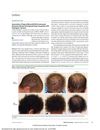
July 2020 in “JAMA Dermatology”
5 citations
,
July 2020 in “JAMA Dermatology” Minoxidil solution applied twice daily improved hair growth in patients with Woolly Hair/Hypotrichosis due to LIPH gene issues, with mild side effects.
 45 citations
,
July 2009 in “Journal of Investigative Dermatology”
45 citations
,
July 2009 in “Journal of Investigative Dermatology” The S100A4 protein is more common in psoriatic skin and could be a target for treating psoriasis.
13 citations
,
March 1999 in “Biochemical Journal” Overexpressing SSAT in mice makes them highly sensitive to polyamine analogues, causing liver damage and high mortality.
3 citations
,
October 2020 in “Arthritis Care & Research” New tools and criteria have been developed to better assess and treat pediatric lupus.
 12 citations
,
February 1998 in “Gene”
12 citations
,
February 1998 in “Gene” The B2 genes are crucial for hair growth in rats.
26 citations
,
September 2009 in “Clinical genetics” Arab APS1 patients have unique and recurrent AIRE gene mutations.
5 citations
,
January 2020 in “Skin Appendage Disorders” The nail strengthener with Pistacia lentiscus and hyaluronic acid improves brittle nails' appearance and strength.