 126 citations
,
January 2010 in “British Journal of Dermatology”
126 citations
,
January 2010 in “British Journal of Dermatology” Baldness is more common in Chinese men than women, increasing with age, and is influenced by genetics.
 107 citations
,
August 2014 in “Dermatologic Surgery”
107 citations
,
August 2014 in “Dermatologic Surgery” PRP injections improve hair thickness for baldness.
 49 citations
,
June 2003 in “European journal of cardiovascular prevention & rehabilitation”
49 citations
,
June 2003 in “European journal of cardiovascular prevention & rehabilitation” Hair loss in middle-aged women is often linked to insulin resistance and a family history of hair loss, particularly from their fathers.
 4 citations
,
February 1995 in “Journal of Clinical Dermatology”
4 citations
,
February 1995 in “Journal of Clinical Dermatology” More men than women have hair loss, it's often inherited, and it's linked with higher testosterone levels. There's been a rise in female hair loss patients.
1 citations
,
April 2019 in “Acta medica Philippina” Androgenetic alopecia is linked to a higher risk of metabolic syndrome.
 1 citations
,
March 2014 in “PubMed”
1 citations
,
March 2014 in “PubMed” Androgenic alopecia (AA) in Indian women is rarely reported, with varying severity and patterns, and hair pull tests and trichograms help understand it better.
June 2026 in “Clinical and Experimental Dermatology” Standardized assessment tools for androgenetic alopecia are needed.
 June 2026 in “European Medical Journal”
 More severe hair loss is linked to more sexual dysfunction in both men and women.
 January 2025 in “International Journal of Trichology”
 Severe hair loss may increase the risk of dying from COVID-19.
 June 2023 in “Journal of General Procedural Dermatology and Venereology Indonesia”
 Older, overweight women with children and a family history of hair loss are more likely to experience female pattern hair loss.
 January 2018 in “Georg Thieme Verlag eBooks”
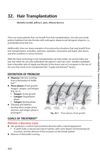
 Hair transplantation is a surgical procedure to move hair to bald areas, requires good donor hair, and results show in about a year.
 September 2017 in “Journal of Investigative Dermatology”
 The combination of Stemoxydine® and Resveratrol improves hair density in women with Female Pattern Hair Loss.
January 2008 in “대한피부과학회지” Androgenetic alopecia is more common in men, often linked to genetics and hormones.
January 1995 in “대한피부과학회지” Androgenetic alopecia is linked to family history and androgen effects.
December 2022 in “Pakistan Armed Forces Medical Journal” Androgenetic alopecia may increase the severity of COVID-19.
Androgenetic alopecia may be linked to severe COVID-19.
 January 2020 in “Medpulse International Journal of General Medicine”
 Trichoscopy helps diagnose and monitor hair loss, showing different signs at various stages of hair thinning.
 1 citations
,
September 2020 in “Pediatric Dermatology”
1 citations
,
September 2020 in “Pediatric Dermatology” Two teenage boys lost hair after taking a drug for growth, which was not a known side effect for kids.
 4 citations
,
October 2019 in “Journal of Dermatological Treatment”
4 citations
,
October 2019 in “Journal of Dermatological Treatment” Monofilament Threads significantly improve hair growth in women with pattern hair loss and are safe.
May 2026 in “International Journal of Dermatology” Higher levels of 3α-diol G are linked to more severe female pattern hair loss.
 666 citations
,
September 1977 in “British Journal of Dermatology”
666 citations
,
September 1977 in “British Journal of Dermatology” Common baldness, also known as Androgenetic Alopecia, is caused by a combination of genetic factors and hormones called androgens.
 33 citations
,
March 2017 in “Dermatologic Surgery”
33 citations
,
March 2017 in “Dermatologic Surgery” Low-level laser therapy effectively treats female hair loss, increasing hair count by 51%.
June 2001 in “European Journal of Dermatology” A 54-year-old woman experienced progressive hair loss starting in adolescence, leading to sparse scalp hair and almost no eyebrows or eyelashes.
 5 citations
,
September 2011 in “Pediatric Dermatology”
5 citations
,
September 2011 in “Pediatric Dermatology” Two young siblings experienced hair loss without hormone issues or other skin problems.
 27 citations
,
July 1982 in “British Journal of Dermatology”
27 citations
,
July 1982 in “British Journal of Dermatology” The antiandrogen 11α-hydroxyprogesterone effectively reduces skin oil and cholesterol when applied to the skin.
 10 citations
,
January 1977 in “Archives of Dermatology”
10 citations
,
January 1977 in “Archives of Dermatology” Androgenetic Alopecia is commonly known as male or female pattern baldness.
1 citations
,
January 1971 Hormones, especially androgens, affect hair growth and can cause hair loss or excess hair in both men and women.
 30 citations
,
April 2009 in “Dermatologic Surgery”
30 citations
,
April 2009 in “Dermatologic Surgery” TrichoScan helps identify subtle hair thinning in women with androgenetic alopecia.
 47 citations
,
December 2000 in “Archives of Dermatological Research”
47 citations
,
December 2000 in “Archives of Dermatological Research” Androgens significantly affect female hair loss, and hormonal treatments may help.
 33 citations
,
November 2012 in “Journal of The American Academy of Dermatology”
33 citations
,
November 2012 in “Journal of The American Academy of Dermatology” FPHL common in Taiwanese women; risk factors include BMI, high glucose, early puberty, fewer childbirths, oral contraceptives, and UV exposure.