 1 citations
,
January 2022 in “Journal of experimental and clinical medicine”
1 citations
,
January 2022 in “Journal of experimental and clinical medicine” PCOS is linked to diabetes and insulin resistance, and managing AGEs may help treat related symptoms.
 1 citations
,
August 2021 in “Canadian journal of neurological sciences”
1 citations
,
August 2021 in “Canadian journal of neurological sciences” Woodhouse-Sakati syndrome can cause writer's cramp and other varied symptoms, highlighting the importance of genetic testing for diagnosis.
 1 citations
,
March 2021 in “Journal of Experimental Biology and Agricultural Sciences”
1 citations
,
March 2021 in “Journal of Experimental Biology and Agricultural Sciences” Flaxseed crackers can help reduce symptoms of PCOS in young women.
 June 2026 in “Quality in Sport”
 Treating hirsutism and acne in women with PCOS needs a personalized approach using oral contraceptives, antiandrogens, and sometimes metformin.
 March 2026 in “Anti-Aging Eastern Europe”
 PCOS treatment should be personalized based on individual symptoms and health goals.
 February 2026 in “World Journal of Interdisciplinary Innovation Sciences”
 Cinnamon may help improve insulin sensitivity in women with PCOS.
 June 2024 in “Georgetown medical review”
 Finasteride treats hair loss but may cause low libido, erectile issues, and depression.
Early-onset baldness is linked to genetics, lifestyle, and can indicate higher risk for heart and metabolic diseases, and affects mental health.
 November 2023 in “Curēus”
 Melatonin may help manage PCOS by improving insulin sensitivity, hormone balance, and mood.
 October 2023 in “Animal production science”
 Vitamin A deficiency changes cattle hair structure, while pregnancy may improve it, suggesting hair can indicate cattle health.
 September 2022 in “Journal of Contemporary medical practice”
 Most women with Polycystic Ovarian Disease have trouble getting pregnant due to hormonal imbalances, but lifestyle changes and certain drugs can help.
 August 2009 in “International Journal of Dermatology”
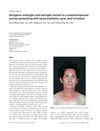
 A postmenopausal woman's facial redness, acne, and excess hair were caused by too much hormone therapy for insomnia, but improved after stopping the treatment.
 June 2003 in “Obstetrical & Gynecological Survey”
 After chemotherapy for a gestational trophoblastic tumor, normal pregnancy rates are possible, but there's a slightly higher risk of the tumor reoccurring in future pregnancies.
 179 citations
,
March 2005 in “British Journal of Dermatology”
179 citations
,
March 2005 in “British Journal of Dermatology” Oral antiandrogens effectively treat female hair loss, with better results in higher hair loss grades.
 77 citations
,
July 2013 in “Best Practice & Research in Clinical Obstetrics & Gynaecology”
77 citations
,
July 2013 in “Best Practice & Research in Clinical Obstetrics & Gynaecology” Menopause reduces skin collagen and elasticity, and while estrogen therapy can help, its risks require careful consideration.
 26 citations
,
October 2016 in “Clinics in Dermatology”
26 citations
,
October 2016 in “Clinics in Dermatology” Hormonal treatments can improve acne, but they come with potential side effects and risks.
 10 citations
,
January 2014 in “Journal of Mid-life Health”
10 citations
,
January 2014 in “Journal of Mid-life Health” Menopause can cause skin issues, and seeing a dermatologist helps.
 June 2024 in “Research Square (Research Square)”
 Young women in West Bengal, India, with PCOS often have estrogen resistance, leptin receptor issues, folate deficiency, T2DM, and acanthosis, commonly linked to obesity.
 2295 citations
,
August 2012 in “The international journal of transgenderism/International journal of transgenderism”
2295 citations
,
August 2012 in “The international journal of transgenderism/International journal of transgenderism” The guidelines recommend informed consent for gender-affirming treatments and stress the importance of personalized, culturally sensitive care for transgender individuals.
 93 citations
,
February 2009 in “Annals of the New York Academy of Sciences”
93 citations
,
February 2009 in “Annals of the New York Academy of Sciences” 5α‐reductase isozymes are crucial for prostate development and health, and targeting them can help prevent and treat prostate issues.
 59 citations
,
August 1998 in “International Journal of Dermatology”
59 citations
,
August 1998 in “International Journal of Dermatology” Genetics and hormones cause hair loss; finasteride treats it safely.
 54 citations
,
November 2017 in “Scientific Reports”
54 citations
,
November 2017 in “Scientific Reports” The study found that certain microRNAs are higher in the cells and lower in the fluid of women with a specific type of polycystic ovary syndrome, and one microRNA could potentially help diagnose the condition.
 38 citations
,
October 2006 in “Fertility and Sterility”
38 citations
,
October 2006 in “Fertility and Sterility” The document concludes that identifying the cause of amenorrhea is crucial for proper treatment.
 30 citations
,
July 2004 in “Fertility and Sterility”
30 citations
,
July 2004 in “Fertility and Sterility” Amenorrhea is when a woman doesn't have periods, with primary amenorrhea starting by age 15 or within five years of breast development, and secondary amenorrhea when periods stop for three months. It affects 3-4% of women not pregnant, breastfeeding, or in menopause, mainly due to polycystic ovary syndrome, hypothalamic amenorrhea, hyperprolactinemia, and ovarian failure.
 21 citations
,
February 2016 in “Reproductive Biomedicine Online”
21 citations
,
February 2016 in “Reproductive Biomedicine Online” The conclusion suggests that PCOS may persist due to genetic traits that, while harmful for female fertility, could have provided survival and reproductive benefits to males.
 21 citations
,
September 2004 in “Fertility and Sterility”
21 citations
,
September 2004 in “Fertility and Sterility” Amenorrhea, or the absence of periods, should be evaluated by age 15 or within five years of early breast development, and is most commonly caused by conditions like polycystic ovary syndrome and hypothalamic amenorrhea.
 17 citations
,
July 2017 in “Molecular and Cellular Endocrinology”
17 citations
,
July 2017 in “Molecular and Cellular Endocrinology” Effective treatments for spinal and bulbar muscular atrophy are not yet available; more research is needed.
 16 citations
,
September 2018 in “Clinical Biochemistry”
16 citations
,
September 2018 in “Clinical Biochemistry” The document concludes that more research is needed to fully understand the causes of PCOS.
 16 citations
,
March 2014 in “Journal of the European Academy of Dermatology and Venereology”
16 citations
,
March 2014 in “Journal of the European Academy of Dermatology and Venereology” Korean patients with PCOS often have skin problems like acne and excess hair, with different symptoms based on their specific PCOS type.
 13 citations
,
August 1980 in “Cancer”
13 citations
,
August 1980 in “Cancer” Multimodal primary treatment improves survival in premenopausal breast cancer patients and is also beneficial for postmenopausal women.