 50 citations
,
September 2014 in “Stem cell reports”
50 citations
,
September 2014 in “Stem cell reports” BLIMP1 is essential for skin maintenance but not for defining sebaceous gland progenitors.
 28 citations
,
February 2019 in “Genes”
28 citations
,
February 2019 in “Genes” Proper control of β-catenin activity is crucial for development and preventing diseases like cancer.
25 citations
,
November 2020 in “Cell Reports Medicine” Developing human skin has immune cells with memory-like features.
15 citations
,
July 2015 in “Developmental Dynamics” Orai1 protein is crucial for tooth development and affects enamel thickness and mineralization.
7 citations
,
February 2009 in “Cell and tissue biology” November 2025 in “Journal of Investigative Dermatology” TEDAR is crucial for skin cell differentiation and barrier formation.
 April 2018 in “Journal of Investigative Dermatology”
 DPP4 is important for scarring and skin regeneration, and managing its activity could improve skin healing treatments.
 January 2007 in “Elsevier eBooks”
 Alopecia areata is a reversible, autoimmune-related hair loss that can have significant emotional impact and uncertain treatment effectiveness.
 37 citations
,
November 2003 in “Veterinary pathology”
37 citations
,
November 2003 in “Veterinary pathology” Hair loss in mice starts with immune cells damaging hair roots before it becomes visible.
 19 citations
,
September 2016 in “Journal of the European Academy of Dermatology and Venereology”
19 citations
,
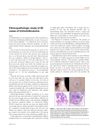
September 2016 in “Journal of the European Academy of Dermatology and Venereology” Trichofolliculoma is a unique benign tumor mainly affecting middle-aged adults' faces, often misdiagnosed without histopathology.
 9 citations
,
August 2017 in “Photochemistry and Photobiology”
9 citations
,
August 2017 in “Photochemistry and Photobiology” Red light at 627 nm can safely trigger IL-4 release in skin cells, potentially helping treat inflammatory skin conditions.
 5 citations
,
August 2013 in “InTech eBooks”
5 citations
,
August 2013 in “InTech eBooks” KLF4 is important for maintaining stem cells and has potential in cancer treatment and wound healing.
 5 citations
,
January 2013 in “Otorhinolaryngology clinics : an international journal”
5 citations
,
January 2013 in “Otorhinolaryngology clinics : an international journal” Platelet-rich plasma may improve healing and hair growth in cosmetic surgery but results vary.
1 citations
,
January 2026 in “JDDG Journal der Deutschen Dermatologischen Gesellschaft” LC-OCT can help diagnose different types of scarring alopecia.
79 citations
,
December 1999 in “Mechanisms of Development” Whn is crucial for hair growth in certain areas by controlling a specific gene.
 253 citations
,
March 1994 in “Developmental dynamics”
253 citations
,
March 1994 in “Developmental dynamics” Apoptosis is essential for human skin development and forming a functional epidermis.
 143 citations
,
September 2008 in “Experimental gerontology”
143 citations
,
September 2008 in “Experimental gerontology” Skin aging is due to impaired stem cell mobilization or fewer responsive stem cells.
 119 citations
,
July 2016 in “Annals of the New York Academy of Sciences”
119 citations
,
July 2016 in “Annals of the New York Academy of Sciences” Vitamin D has potential benefits for cancer prevention, heart health, diabetes, obesity, muscle function, skin health, and immune function, but clinical results are mixed and more research is needed.
 90 citations
,
July 2008 in “Dermatologic therapy”
90 citations
,
July 2008 in “Dermatologic therapy” Lichen planopilaris is a chronic, scarring hair loss condition with no definitive cure, requiring accurate diagnosis and treatment to manage symptoms.
 46 citations
,
June 2015 in “Journal of Investigative Dermatology”
46 citations
,
June 2015 in “Journal of Investigative Dermatology” Androgen receptor activity blocks Wnt/β-catenin signaling, affecting hair growth and skin cell balance.
 41 citations
,
February 2001 in “Current pharmaceutical design”
41 citations
,
February 2001 in “Current pharmaceutical design” Current and future treatments for alopecia areata focus on immunosuppression, immunomodulation, and protecting hair follicles.
 38 citations
,
August 2005 in “Veterinary dermatology”
38 citations
,
August 2005 in “Veterinary dermatology” A disease causing skin issues in young adult German short-haired pointers is hereditary, with most affected dogs not responding to treatment.
 27 citations
,
August 2014 in “Wiley interdisciplinary reviews. Developmental biology”
27 citations
,
August 2014 in “Wiley interdisciplinary reviews. Developmental biology” The skin and thymus develop similarly to protect and support immunity.
 25 citations
,
December 1992 in “Seminars in cell biology”
25 citations
,
December 1992 in “Seminars in cell biology” Skin stem cells are maintained by signals from nearby cells and vary in their ability to renew and mature.
 19 citations
,
January 2018 in “Scientific Reports”
19 citations
,
January 2018 in “Scientific Reports” Non-immune factors play a significant role in alopecia areata.
 18 citations
,
September 1990 in “Veterinary Dermatology”
18 citations
,
September 1990 in “Veterinary Dermatology” Lambs' skin showed similar but more severe responses to a second orf virus infection, involving immune cells and new skin formation.
 13 citations
,
December 2024 in “Cellular and Molecular Life Sciences”
13 citations
,
December 2024 in “Cellular and Molecular Life Sciences” Caspases do more than kill cells; they also help in cell growth and disease, and targeting them could lead to new treatments.
 11 citations
,
March 2020 in “Immunology”
11 citations
,
March 2020 in “Immunology” Human prenatal skin develops an immune network early on that helps with skin formation and healing without scarring.
 7 citations
,
January 2011 in “Veterinary Pathology”
7 citations
,
January 2011 in “Veterinary Pathology” A horse with severe hair loss was diagnosed with alopecia areata and a yeast infection.
 5 citations
,
July 2022 in “Orphanet journal of rare diseases”
5 citations
,
July 2022 in “Orphanet journal of rare diseases” RSPO1 mutations in certain patients lead to skin cells that don't develop properly and are more likely to become invasive, increasing the risk of skin cancer.