 17 citations
,
February 2018 in “Journal of Cosmetic and Laser Therapy”
17 citations
,
February 2018 in “Journal of Cosmetic and Laser Therapy” The QR 678 hair growth treatment was safe and effective for hair regrowth in men and women.
April 2019 in “Journal of Investigative Dermatology” Frontal Fibrosing Alopecia involves disrupted cholesterol pathways, fibrosis, and increased mast cells.
Frontal Fibrosing Alopecia mainly affects postmenopausal women and is linked to thyroid disease, hyperlipidemia, and anemia.
 2 citations
,
April 2018 in “Journal of Investigative Dermatology”
2 citations
,
April 2018 in “Journal of Investigative Dermatology” Frontal fibrosing alopecia shows increased inflammation and JAK-STAT pathway activity without reduced hair proteins.
 August 2023 in “Journal of Cosmetic Dermatology”
 Exosomes from hair papilla cells and the Chinese medicine Liao Tuo Fang can potentially promote hair growth and could be used to develop hair growth drugs.
1 citations
,
January 2024 in “Pharmaceuticals” A new carrier improves skin delivery of tofacitinib for treating inflammatory skin diseases.
136 citations
,
July 2014 in “Proceedings of the National Academy of Sciences of the United States of America” FGF5 gene mutations cause unusually long eyelashes by affecting hair growth regulation.
 10 citations
,
November 2010 in “Journal of Dermatology”
10 citations
,
November 2010 in “Journal of Dermatology” Longer CAG repeats in gene linked to more severe hair loss in females.
1 citations
,
January 2009 in “Elsevier eBooks” Using Eflornithine cream with laser treatments improves facial hair removal.
July 2024 in “Journal of Controlled Release” Nanostructured lipid carriers effectively deliver tofacitinib to hair follicles, reversing hair loss in alopecia areata.
November 2024 in “Dermatology and Therapy” Dermatologists should carefully choose treatments for FFA to avoid worsening the condition.
September 2025 in “Indian Journal of Dermatology” A Turkish woman has a hair condition caused by a LIPH gene mutation.
6 citations
,
January 2014 in “Genetics and Molecular Research” The method successfully created stable transfection donor cells for goat hair follicle research.
 August 2019 in “Research Square (Research Square)”
 Certain long non-coding RNAs in cashmere goats affect hair growth when treated with a specific growth factor.
2 citations
,
December 2024 in “Microscopy Research and Technique” A new laser-based microscope can clearly image biological structures without labels.
April 2016 in “CRC Press eBooks” Biotechnology could lead to new hair growth products.
May 2018 in “Digital ProScholar Media eBooks” The new fluoroquinolone effectively fights certain bacteria.
1 citations
,
April 2022 in “Journal of Biological Regulators and Homeostatic Agents/Journal of Biological Regulators & Homeostatic Agents” Biocompatible artificial hair is safe, effective, and improves quality of life for alopecia patients.
![The Synthesis of (−)-4-Methyl-8-Chloro-Trans-1,2,3,4,4a,5,6,10b-Octahydrobenzo-[f]-Quinolin-3-One-[3-14C] (LY300502-14C) via a Circuitous Route](/images/assets/73bab8dc-bdf0-45e3-8ef7-73d0d4b93cb1/small/21074.jpg) 3 citations
,
October 1994 in “Journal of Labelled Compounds and Radiopharmaceuticals”
3 citations
,
October 1994 in “Journal of Labelled Compounds and Radiopharmaceuticals” Scientists made a carbon-14 labeled version of a drug with a 48% yield and over 99% purity.
 10 citations
,
March 2016 in “Journal of The American Academy of Dermatology”
10 citations
,
March 2016 in “Journal of The American Academy of Dermatology” Antiandrogenic drugs could be a good treatment option for frontal fibrosing alopecia.
January 2016 in “Indian dermatology online journal” The patient has frontal fibrosing alopecia (FFA).
Protein profiling of forehead skin can help distinguish between frontal fibrosing alopecia and androgenetic alopecia.
27 citations
,
November 2012 in “Journal of Biomedical Optics” Confocal Raman microscopy can effectively study drug delivery in hair follicles using pig ear models.
8 citations
,
January 2019 in “Nanomedicine” Egyptian researchers are advancing in pharmaceutical nanotechnology, potentially improving health outcomes and the economy.
 206 citations
,
September 2010 in “PLoS ONE”
206 citations
,
September 2010 in “PLoS ONE” The PIRL laser cuts tissue with less damage and scarring than traditional methods.
7 citations
,
July 2021 in “The Journal of Dermatology” Facial care products are not linked to causing frontal fibrosing alopecia.
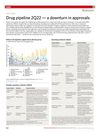 August 2022 in “Nature Biotechnology”
 Drug approvals slowed in 2Q22, but notable drugs like Amvuttra, Camzyos, and Olumiant were approved.
6 citations
,
August 2022 in “International journal of molecular sciences” α-Phellandrene may help prevent hair loss by increasing growth factors and cell growth in hair cells through a specific signaling pathway.
May 2026 in “Journal of Medicinal Chemistry” dAR-6–1 is a promising new treatment for hair loss that works better than minoxidil.